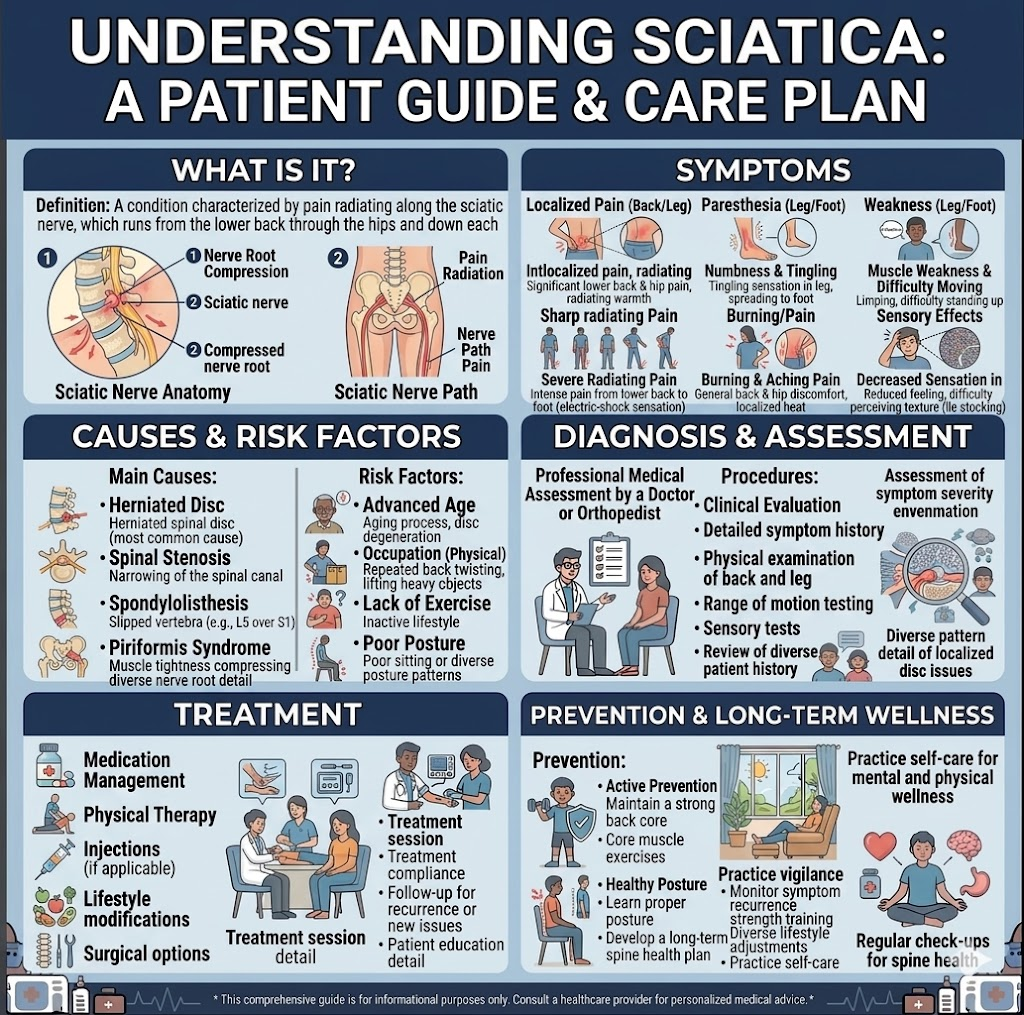
Sciatica describes a type of pain that travels along the path of the sciatic nerve. This large nerve begins in your lower back, runs through your buttocks, and extends down each leg. Sciatica typically occurs when nerve roots in your lower spine, which eventually form the sciatic nerve, become pinched or irritated. This often happens due to a 'slipped' or herniated disc, where the soft cushioning between your spinal bones bulges out, or from an overgrowth of bone (bone spurs) on your spine. The pressure on these nerve roots can lead to inflammation, pain, and sometimes numbness or weakness in the affected leg. While sciatica pain can be intense, many cases improve with treatment within a few weeks to months. Severe cases, especially those with significant leg weakness or bowel/bladder issues, might require surgery.
Understanding the Condition
Sciatica: Understanding and Managing Nerve Pain
Understanding the Condition
Common Symptoms
Pain Location and Pattern: Sciatica pain can appear almost anywhere along the nerve's path, most commonly tracing from the low back to the buttock, and down the back of one thigh and calf. It usually affects only one side of the body.
Pain Characteristics: The pain can range from a mild ache to a sharp, burning sensation. Some people describe it as a sudden jolt or electric shock. Activities like coughing, sneezing, or sitting for long periods can worsen the discomfort.
Other Sensations: Beyond pain, you might experience numbness, a tingling 'pins and needles' feeling, or muscle weakness in the affected leg or foot. It's possible to feel pain in one part of the leg and numbness in another.
Consultation Guide
Which Specialist to Meet
You should start by consulting your primary care doctor, who can then refer you to specialists if needed. These might include a neurologist (nerve specialist), an orthopedic specialist (bone and joint specialist), a pain management specialist, or a physical therapist. Seek immediate medical attention if you experience sudden numbness or muscle weakness in a leg, severe pain after a violent injury (like a car accident), or have trouble controlling your bowels or bladder.
Preparations Before Your Visit
Before your visit, make a list of your symptoms, including when they started, their exact location, how severe they are, and what makes them better or worse. Note any medications you are currently taking, your complete medical history, and any questions you have for the doctor. This information helps your doctor accurately diagnose and recommend the best course of action.
Book a doctor visit near me
Regular Follow-ups: Keep scheduled appointments with your doctor, especially if your symptoms persist, worsen, or if you develop new concerns like increasing numbness, weakness, or changes in bowel/bladder control.
Diagnostic Procedures
An X-ray is a quick, painless imaging test that uses a small amount of radiation to create pictures of the structures inside your body, especially your bones. It can help identify bone problems that might be pressing on a nerve.
What to Expect
During an X-ray, you will typically lie or stand in various positions on an examination table. A technician will position your body to capture specific views. You might be asked to hold your breath for a few seconds to prevent blurry images. The process is quick and generally takes only a few minutes. You might wear a protective lead apron over other parts of your body to shield them from radiation.
CT Scan (Computerized Tomography Scan)
A CT scan uses specialized X-ray equipment and computer processing to create detailed cross-sectional images, or 'slices,' of your bones, blood vessels, and soft tissues. It provides more detailed views than standard X-rays, helping to pinpoint issues like herniated discs or bone spurs.
What to Expect
For a CT scan, you will lie on a narrow table that slides into a large, donut-shaped machine. The table will move slowly through the scanner while it takes pictures. You'll need to stay very still to ensure clear images, and you might hear humming or clicking noises. In some cases, a contrast dye might be given through an injection or swallowed beforehand; this substance helps highlight certain areas on the images. The procedure typically lasts 15-30 minutes.
Treatment Options
Sciatica describes a type of pain that travels along the path of the sciatic nerve. This large nerve begins in your lower back, runs through your buttocks, and extends down each leg. Sciatica typically occurs when nerve roots in your lower spine, which eventually form the sciatic nerve, become pinched or irritated. This often happens due to a 'slipped' or herniated disc, where the soft cushioning between your spinal bones bulges out, or from an overgrowth of bone (bone spurs) on your spine. The pressure on these nerve roots can lead to inflammation, pain, and sometimes numbness or weakness in the affected leg. While sciatica pain can be intense, many cases improve with treatment within a few weeks to months. Severe cases, especially those with significant leg weakness or bowel/bladder issues, might require surgery.
Home Remedies & Self-Care
Cold and Heat Packs: Apply cold packs to the painful area initially to reduce inflammation, then switch to heat packs after a few days to relax muscles and increase blood flow. (Duration: 15-20 minutes, several times a day, as needed.)
Over-the-Counter Pain Relievers: Non-prescription medications can help manage mild pain and inflammation. (Duration: As directed on the packaging or by a doctor, typically short-term.)
Medications
Anti-inflammatory Drugs: Prescription-strength medications to reduce swelling and pain. (Duration: Short-term, as prescribed by your doctor.)
Muscle Relaxants: Medications that can help ease muscle spasms often associated with sciatica. (Duration: Short-term, as prescribed by your doctor.)
Nerve Pain Medications: Specific drugs designed to target and reduce nerve-related pain. (Duration: As prescribed by your doctor, can be longer-term.)
Corticosteroid Injections: Injections containing anti-inflammatory medication and a local anesthetic delivered near the affected nerve roots to reduce swelling and provide pain relief. (Duration: Pain relief can last weeks to months; the number of injections per year is usually limited.)
Therapies
Physical Therapy: A customized program of exercises to improve posture, strengthen core muscles (abdomen and lower back), increase flexibility, and help reduce pressure on the sciatic nerve. (Duration: Typically several weeks to months, with ongoing home exercises for maintenance.)
Surgical Procedures
Diskectomy: A surgical procedure to remove the damaged portion of a herniated disk that is pressing on a spinal nerve. This often involves minimally invasive techniques. (Duration: Recovery typically takes a few weeks to months. Reserved for severe cases where other treatments have failed, or if there's significant nerve damage.)
Prevention & Long-Term Wellbeing
Prevention
Regular Exercise: Strengthen your core muscles (in your abdomen and lower back) through regular physical activity. These muscles are essential for good posture and spinal alignment.
Maintain Good Posture: When sitting, choose a chair with good lower back support. You can place a pillow or rolled towel in the small of your back to maintain its natural curve. Keep your knees and hips level.
Use Proper Body Mechanics: When lifting heavy objects, bend your knees and let your legs do the work, keeping the load close to your body. Avoid lifting and twisting simultaneously. If an object is too heavy, ask for help.
Manage Weight: Maintaining a healthy weight reduces the overall stress on your spine, which can help prevent disc problems.
Avoid Prolonged Sitting: If your job requires extended sitting, take regular breaks to stand, walk around, or stretch to reduce pressure on your spine.
Manage Chronic Conditions: If you have conditions like diabetes, follow your doctor's recommendations to manage it, as uncontrolled diabetes can increase the risk of nerve damage.
Long-Term Wellbeing
Adhere to Therapy: Consistently follow your physical therapy regimen and recommended exercises to maintain strength, flexibility, and proper body mechanics, even after pain subsides.
Tags & Topics
Notice an error or need an update?
Help us keep medical information accurate. Report incorrect info or suggest an edit.


