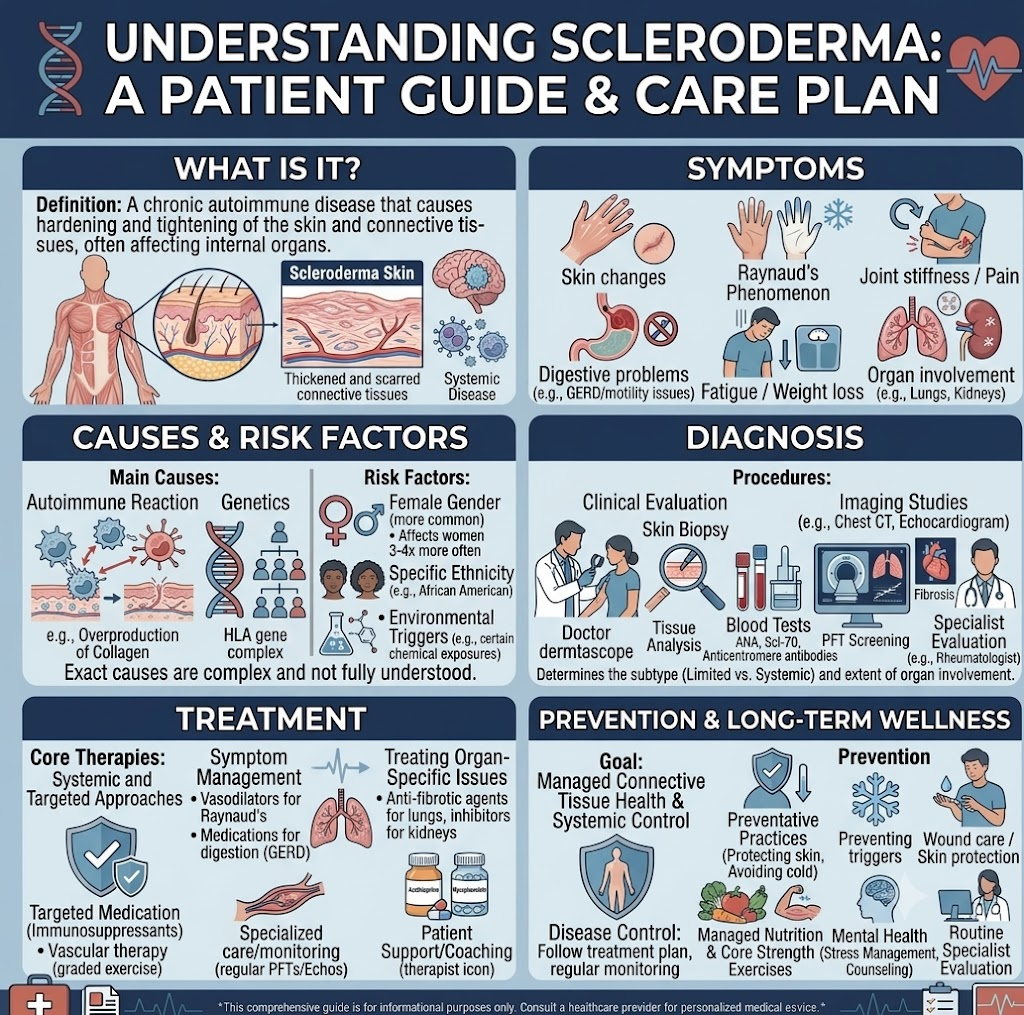
Scleroderma (pronounced sklair-oh-DUR-muh), also known as systemic sclerosis, is a group of rare diseases where the body produces too much collagen, a fibrous protein, leading to hardening and tightening of the skin. This condition can also affect blood vessels, internal organs like the lungs, heart, kidneys, and the digestive system. It's often categorized as 'limited' or 'diffuse' based on how much skin is involved, but both types can impact internal systems. A specific form, localized scleroderma or morphea, affects only the skin. While there is no cure, various treatments can help ease symptoms, slow its progression, and improve quality of life.
Understanding the Condition
Scleroderma: Understanding Skin Hardening and Systemic Effects
Understanding the Condition
Scleroderma (pronounced sklair-oh-DUR-muh), also known as systemic sclerosis, is a group of rare diseases where the body produces too much collagen, a fibrous protein, leading to hardening and tightening of the skin. This condition can also affect blood vessels, internal organs like the lungs, heart, kidneys, and the digestive system. It's often categorized as 'limited' or 'diffuse' based on how much skin is involved, but both types can impact internal systems. A specific form, localized scleroderma or morphea, affects only the skin. While there is no cure, various treatments can help ease symptoms, slow its progression, and improve quality of life.
Common Symptoms
Skin Hardening and Tightening: Almost everyone with scleroderma experiences skin hardening and tightening, which commonly starts in the fingers, hands, feet, and face. It can also extend to the forearms, upper arms, chest, abdomen, and legs. Early signs often include swelling and itchiness. Affected skin might change color (becoming lighter or darker) and appear shiny due to its tightness.
Small Red Spots and Calcium Deposits: Some individuals develop small, visible red spots on their hands and face, known as telangiectasia. Hard calcium deposits can also form under the skin, especially at the fingertips, creating bumps that may be visible on X-rays.
Raynaud's Phenomenon: This is a common symptom in scleroderma where small blood vessels in the fingers and toes overreact to cold temperatures or emotional stress. During an attack, digits may become painful, numb, and change color (white, blue, gray, or red). Raynaud's phenomenon can also occur in people without scleroderma.
Digestive Issues: Scleroderma can impact any part of the digestive system, from the tube connecting the mouth to the stomach (esophagus) to the rectum. Depending on the affected area, symptoms can include difficulty swallowing, heartburn, constipation, or accidental bowel leakage.
Heart and Lung Problems: When scleroderma affects the heart or lungs, it can lead to symptoms like shortness of breath, reduced ability to exercise, and dizziness. Scarring of the lung tissues can progressively worsen breathing difficulties over time. Medications are available to help slow the progression of this lung damage.
Consultation Guide
Which Specialist to Meet
You should seek care from a rheumatologist, a doctor specializing in autoimmune diseases and conditions affecting joints, muscles, and bones. Depending on your symptoms, they may collaborate with other specialists such as dermatologists (for skin issues), pulmonologists (for lung involvement), cardiologists (for heart issues), and gastroenterologists (for digestive problems) to provide comprehensive care.
Preparations Before Your Visit
Before your visit, create a detailed list of all your symptoms, including when they started, how frequently they occur, and how they impact your daily life. Compile your complete medical history, including any other health conditions you have and all medications, supplements, or herbal remedies you are currently taking. Prepare a list of questions you want to ask the doctor to ensure all your concerns are addressed.
Book a doctor visit near me
Blood Vessel Medications: Medicines used to improve blood flow by relaxing narrowed blood vessels, which helps to reduce the frequency and severity of Raynaud's phenomenon attacks and manage high blood pressure in the lungs. (Duration: Ongoing or as needed, depending on symptom severity and organ involvement.)
Digestive System Medications: Prescribed to manage symptoms such as heartburn, difficulty swallowing, constipation, diarrhea, and to address bacterial overgrowth in the intestine, which can impair nutrient absorption. (Duration: As needed or ongoing, based on specific digestive symptoms.)
Pain Relief Medications: Over-the-counter or prescription medications to manage pain associated with joint stiffness, skin discomfort, or other scleroderma-related pain. (Duration: As needed for symptom management.)
Physical and Occupational Therapy: These therapies help maintain flexibility, improve strength, and manage joint stiffness and skin tightness. Therapists can teach specific exercises and adaptive techniques to help with daily activities. (Duration: Ongoing, with regular sessions and home exercise programs.)
Dietary Adjustments: Eating smaller, more frequent meals, identifying and avoiding trigger foods, and elevating the head of the bed can help manage heartburn. Maintaining adequate hydration is also important. (Duration: Daily, as needed for digestive symptom management.)
Smoking Cessation: Quitting smoking is vital to protect the lungs and blood vessels, as smoking can significantly worsen scleroderma symptoms and increase the risk of severe complications. (Duration: Permanent cessation for optimal health.)
Procedures for Complications
Awareness of Environmental Triggers: While the exact cause is often unknown, if specific environmental triggers (e.g., certain chemicals) are identified in an individual, avoiding exposure may help prevent symptom flares or progression. However, for most people, specific triggers are not identified.
Prompt Diagnosis and Management: Recognizing early symptoms and seeking timely medical evaluation for diagnosis is crucial. Early intervention allows for quicker initiation of treatments, which can help slow disease progression and manage potential complications more effectively.
Long-Term Monitoring and Support
Symptom and Treatment Tracking: Keeping a detailed record of your symptoms, their severity, and any side effects from treatments to share with your healthcare team helps them make informed decisions and adjust your care as needed.
Adherence to Treatment Plan: Consistently taking prescribed medications and following recommended therapies are vital for managing the disease, controlling symptoms, and preventing the development or worsening of severe complications.
Healthy Lifestyle Practices: Maintaining a balanced, nutritious diet, engaging in regular, gentle exercise (as tolerated and advised by your doctor), and practicing stress-reduction techniques can significantly contribute to overall well-being and symptom management.
Seeking Support Networks: Connecting with support groups, patient advocacy organizations, or mental health professionals can provide valuable emotional and psychological support, helping you cope with the challenges of living with a chronic condition like scleroderma.
Staying Up-to-Date on Immunizations: Ensuring you receive recommended vaccinations (such as for influenza and pneumonia) is important to prevent infections that could potentially complicate or worsen your scleroderma symptoms and overall health.
Consultation Guide
Management of Fingertip Sores: Specific procedures or medications may be used to improve blood flow to the fingertips and promote healing of chronic sores caused by severe Raynaud's phenomenon. (Duration: As needed, until healing is complete.)
Diagnostic Procedures
Antinuclear Antibodies (ANA) Blood Test
This blood test checks for antinuclear antibodies, which are specific proteins produced by the immune system that mistakenly attack the body's own healthy tissues. A positive result can indicate the presence of an autoimmune disease, including scleroderma.
What to Expect
A healthcare professional will draw a small sample of blood, typically from a vein in your arm, using a needle. You might feel a brief sting or pinch during this process. The blood sample is then sent to a laboratory for analysis. The entire procedure usually takes only a few minutes.
Extractable Nuclear Antigen (ENA) Panel Blood Test
Often performed as a follow-up test after a positive ANA result, the ENA panel specifically looks for several different types of autoantibodies. These autoantibodies are associated with various autoimmune diseases, including different forms of scleroderma, helping to identify the specific condition.
What to Expect
Similar to the ANA test, a small blood sample will be taken from a vein in your arm. This process is quick, usually lasting a few minutes, and you may experience a brief pinch as the needle is inserted. The sample is then sent for detailed laboratory analysis.
X-rays for Calcium Deposits
An X-ray is a medical imaging test that uses a small amount of radiation to create pictures of the inside of your body. It is particularly useful for detecting calcium deposits that can form under the skin, especially at the fingertips, in people with scleroderma.
What to Expect
You will be asked to remove any jewelry or metallic objects that could interfere with the image. You will sit or lie on an examination table, and a technician will position the specific part of your body to be X-rayed. You'll need to stay very still for a few seconds while the image is captured. The procedure is quick and generally painless.
Treatment Options
Medications
Disease-Modifying Therapies: Medications designed to suppress the overactive immune system or reduce the production of excess collagen. These aim to slow the progression of the disease and prevent further damage to internal organs, especially the lungs. (Duration: Ongoing, as prescribed by your doctor.)
Aggressive Blood Pressure Control for Kidney Crisis: Prompt and aggressive management of suddenly high blood pressure with specific medications is crucial during a scleroderma renal crisis to protect kidney function and prevent rapid kidney failure. (Duration: Intensive short-term treatment, followed by ongoing blood pressure management.)
Regular Medical Check-ups: Consistent follow-up appointments with your rheumatologist and other specialists (e.g., pulmonologist, cardiologist) are essential for ongoing assessment of organ function, disease activity, and the effectiveness of your treatment plan.
Prevention & Long-Term Wellbeing
Lifestyle and Home Remedies
Skin Care Practices: Regular moisturizing and gentle stretching can help keep the skin supple and prevent cracking. Protecting affected skin from cold is especially important for hands and feet. (Duration: Daily, as a lifelong routine.)
Warmth for Raynaud's: Wearing warm clothing, gloves, and socks, and consciously avoiding sudden changes in temperature can help prevent episodes of Raynaud's phenomenon. (Duration: Ongoing, particularly in cold environments.)
Prevention and Early Intervention
Tags & Topics
Notice an error or need an update?
Help us keep medical information accurate. Report incorrect info or suggest an edit.


