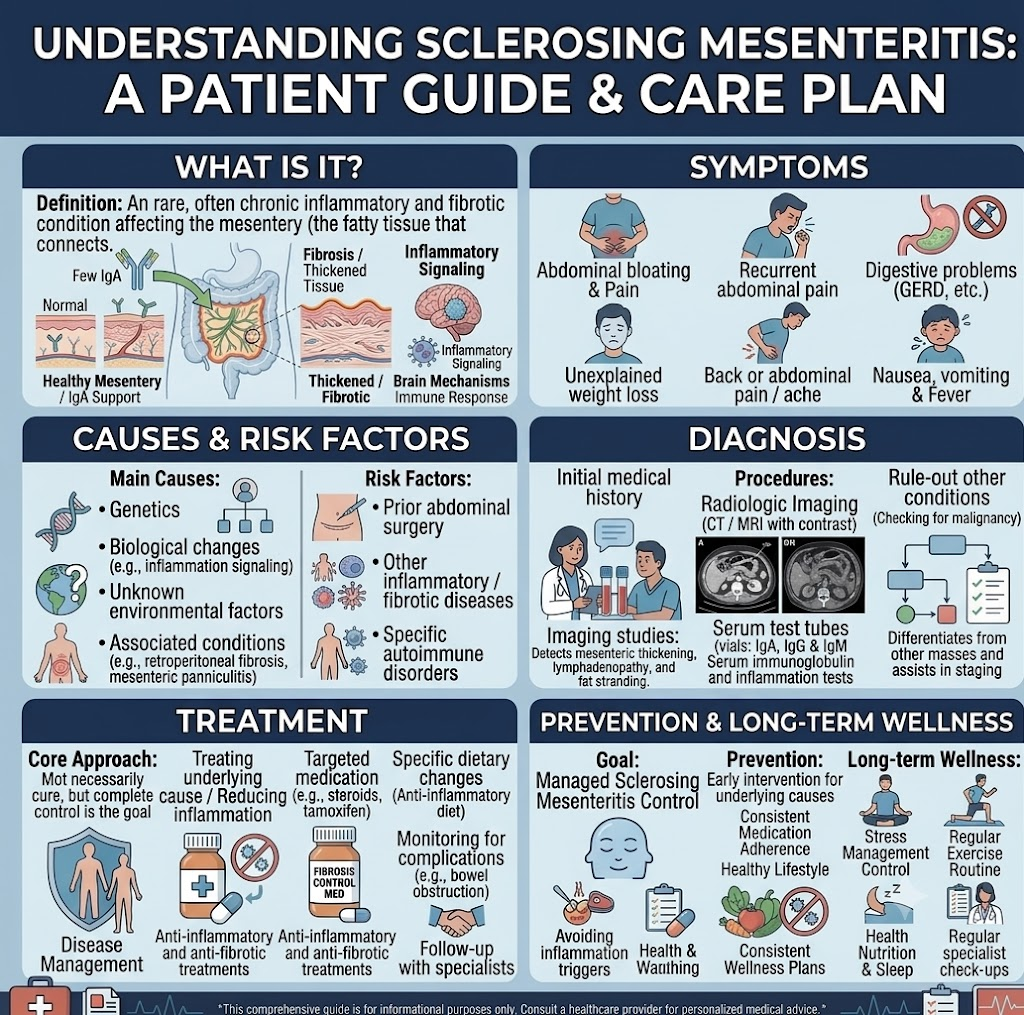
Sclerosing mesenteritis is a rare, non-cancerous condition affecting the mesentery, which is the fold of tissue that anchors the small intestines to the back of the abdomen. In this condition, the mesentery undergoes chronic inflammation, tissue breakdown, and progressive scarring (fibrosis). While some individuals experience no symptoms and require no intervention, others may suffer from chronic abdominal pain, bloating, and bowel blockages. The exact cause is unknown, but it is believed to be linked to immune system dysregulation, prior abdominal surgeries, or localized infections.
Understanding the Condition
Understanding Sclerosing Mesenteritis: A Guide to Inflammation of the Mesentery
Understanding the Condition
Sclerosing mesenteritis is a rare, non-cancerous condition affecting the mesentery, which is the fold of tissue that anchors the small intestines to the back of the abdomen. In this condition, the mesentery undergoes chronic inflammation, tissue breakdown, and progressive scarring (fibrosis). While some individuals experience no symptoms and require no intervention, others may suffer from chronic abdominal pain, bloating, and bowel blockages. The exact cause is unknown, but it is believed to be linked to immune system dysregulation, prior abdominal surgeries, or localized infections.
Common Symptoms
Abdominal Pain: A persistent dull ache, cramping, or sharp pain typically located in the middle or upper abdomen, which may intensify after eating.
Before your appointment, document all of your symptoms and when they occur. Bring a complete medical history, including any records of past abdominal surgeries, infections, or autoimmune conditions. Compile a list of all current medications, vitamins, and supplements. Write down any questions you have and be prepared to discuss whether you need to fast for potential imaging scans.
Book a doctor visit near me
Dietary Modifications: Adopting a low-residue diet or consuming liquid meal replacements during symptomatic periods to ease digestion and reduce stress on the inflamed intestines. (Duration: Utilized as needed during flare-ups, guided by a clinical dietitian or your gastroenterologist.)
Symptom and Food Diary: Keeping a detailed daily log of the foods you eat and any digestive symptoms that follow, which helps identify personal dietary triggers that worsen abdominal discomfort.
Stress-Reduction Techniques: Engaging in daily stress-management practices such as mindfulness meditation, deep-breathing exercises, or gentle yoga, which can soothe the gut-brain axis and alleviate gastrointestinal symptoms.
Consultation Guide
Abdominal Bloating and Swelling: A noticeable feeling of fullness or visible distension of the belly, caused by underlying tissue swelling or slowed bowel function.
Nausea and Vomiting: Feeling sick to your stomach or vomiting, which can occur when the inflamed tissue puts pressure on the digestive tract or slows down food transit.
You will lie on a padded scanning table that glides into a long, tube-like scanner. Because the machine generates loud tapping and thumping noises, you will be given earplugs or headphones. An IV line may be placed to inject contrast dye. It is vital to remain perfectly still to avoid blurring the images. The scan typically takes between 30 and 45 minutes.
Diagnostic Procedures
Changes in Bowel Habits: Experiencing frequent diarrhea, constipation, or alternating cycles of both as the inflamed mesentery disrupts normal intestinal movement.
Unexplained Fever: Recurrent low-grade fevers that occur as a direct result of the body's ongoing inflammatory response.
Unintended Weight Loss: Loss of weight and a reduced appetite due to discomfort experienced during or after meals, or poor absorption of nutrients.
Consultation Guide
Which Specialist to Meet
You should consult a Gastroenterologist, a specialist in digestive system disorders. If your condition requires tissue analysis or surgical management, you may also be referred to a General Surgeon. A Rheumatologist may also assist if an underlying autoimmune disorder is suspected.
Preparations Before Your Visit
Abdominal CT (Computed Tomography) Scan
An imaging test that uses multiple X-ray measurements from different angles to construct detailed cross-sectional views of the abdominal organs and mesentery.
What to Expect
During the scan, you will lie flat on a motorized table that slides into a large, doughnut-shaped machine. You may be asked to drink an oral contrast fluid beforehand, or receive an intravenous (IV) contrast dye through a vein in your arm to highlight blood vessels and tissue structures. You must lie completely still and hold your breath for a few seconds when instructed. The scan is painless and takes about 10 to 15 minutes.
Abdominal MRI (Magnetic Resonance Imaging)
A diagnostic procedure that uses powerful magnets and radio waves to generate highly detailed, non-invasive images of the soft tissues in the abdomen, helping to evaluate the extent of inflammation versus scarring.
What to Expect
The extraction of a small tissue sample from the affected mesentery for analysis under a microscope. This is the gold standard diagnostic method to confirm sclerosing mesenteritis and definitively rule out other conditions like cancer.
What to Expect
Immunosuppressants: Medicines that suppress or regulate the body's overactive immune response, used if corticosteroids are ineffective or cannot be used long-term. (Duration: Long-term management, frequently lasting several months to years, requiring periodic safety blood tests.)
Surgical Bowel Resection or Bypass: An operation to remove or bypass a portion of the intestine that has become completely blocked or has had its blood supply cut off by dense scar tissue. (Duration: A one-time inpatient surgical procedure, requiring 3 to 7 days of hospitalization followed by a 4 to 6-week recovery period at home.)
Supportive and Home Care
Routine Blood Testing: Undergoing scheduled blood draws to monitor inflammatory markers, kidney function, and liver health, especially when taking long-term medications.
Treatment Options
Medications
Corticosteroids: These powerful anti-inflammatory medications are used to quickly calm the immune response and reduce swelling in the mesenteric tissue. (Duration: Typically prescribed for 4 to 12 weeks, with the dosage gradually lowered (tapered) over time to prevent side effects.)
Hormone Therapies: Certain hormone-modulating medications can help prevent or slow the overproduction of collagen and dense scar tissue in the mesentery. (Duration: Often taken daily for several months to a year, depending on regular follow-up imaging results.)
Prevention & Long-Term Wellbeing
This procedure is performed in a hospital setting under general anesthesia, meaning you will be asleep and feel no pain. It is usually done laparoscopically, where a surgeon makes a few tiny incisions in your abdomen to insert a miniature camera and specialized surgical tools. After the sample is taken, the incisions are closed with sutures or medical tape. You will wake up in a recovery area and may feel mild soreness around the incision sites for a few days.
Long-Term Monitoring
Periodic Imaging Studies: Scheduling routine follow-up CT scans or MRIs as recommended by your physician to monitor the size of the mesenteric mass and ensure no new blockages are developing.
Lifestyle and Preventive Habits
Anti-Inflammatory Nutrition: Focusing on a balanced diet rich in whole foods, antioxidants, lean proteins, and omega-3 fatty acids, while minimizing processed foods, refined sugars, and saturated fats to naturalize the body's inflammatory response.
Tags & Topics
Notice an error or need an update?
Help us keep medical information accurate. Report incorrect info or suggest an edit.


