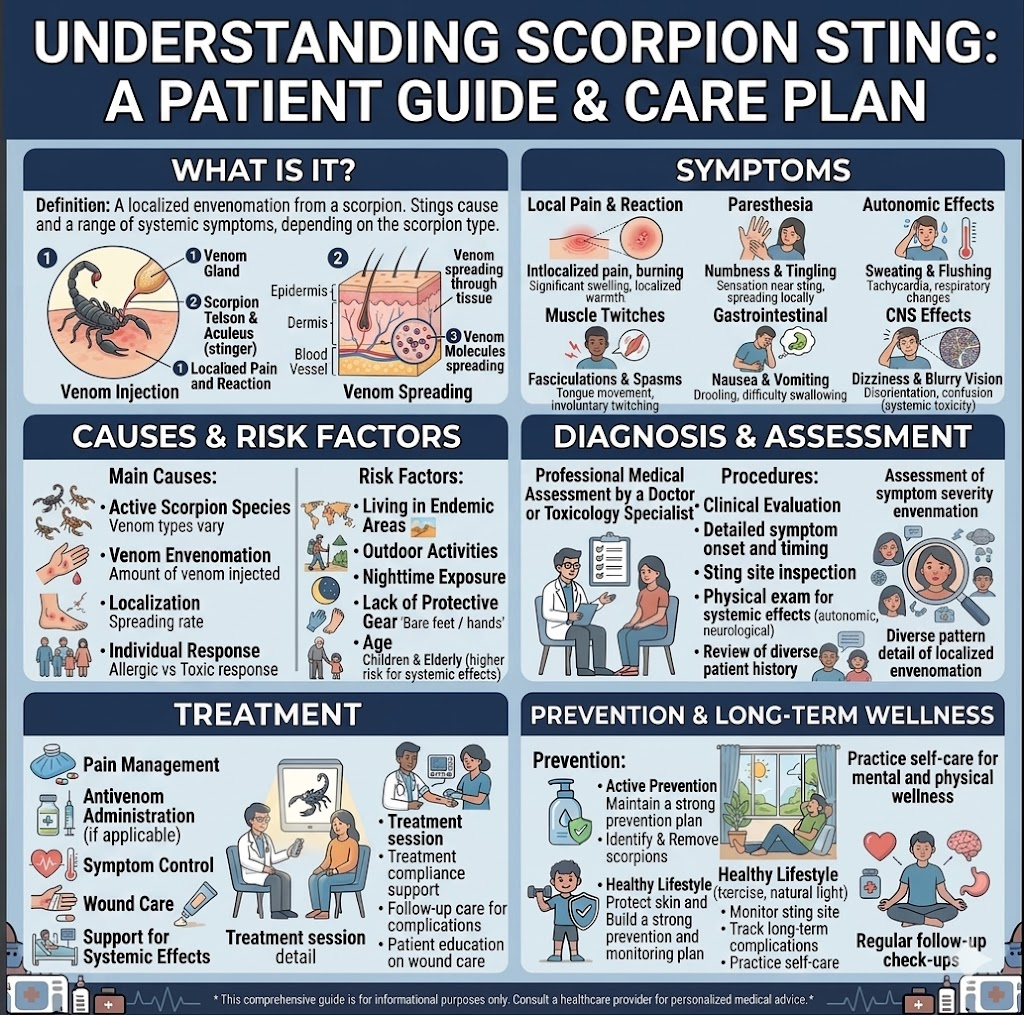
Scorpion stings are typically painful but rarely fatal for healthy adults. Young children and older individuals face a higher risk of severe complications. Scorpions, arthropods related to spiders, possess eight legs, pinchers, and a venomous tail stinger. Most of the 2,000+ global species are harmless, but about 100 produce potent venom. In the U.S., the Bark Scorpion is the main concern, found in the desert Southwest. These nocturnal creatures usually sting only when provoked, often by accidental contact.
Understanding the Condition
Scorpion Sting: Understanding and Managing the Risk
Understanding the Condition
Scorpion stings are typically painful but rarely fatal for healthy adults. Young children and older individuals face a higher risk of severe complications. Scorpions, arthropods related to spiders, possess eight legs, pinchers, and a venomous tail stinger. Most of the 2,000+ global species are harmless, but about 100 produce potent venom. In the U.S., the Bark Scorpion is the main concern, found in the desert Southwest. These nocturnal creatures usually sting only when provoked, often by accidental contact.
Common Symptoms
Pain: Can be intense and immediate at the sting site.
Numbness and Tingling: A pins-and-needles sensation around the sting.
Slight Swelling: Minor puffiness around the sting site.
Breathing Difficulty: Shortness of breath or gasping, especially in children.
Muscle Twitching or Thrashing: Involuntary muscle spasms, jerking, or uncontrolled movements.
Unusual Head, Neck, and Eye Movements: Jerky or abnormal movements of the head, neck, or eyes.
Slurred Speech: Difficulty speaking clearly.
Nausea and Vomiting: Feeling sick to the stomach and throwing up.
High Blood Pressure (Hypertension): Abnormally elevated blood pressure readings.
Fast Heart Rate (Tachycardia): A rapid, pounding heartbeat.
Restlessness or Irritability: In adults, feeling agitated; in children, inconsolable crying or extreme excitability.
Consultation Guide
Which Specialist to Meet
For mild local reactions, your primary care physician or an urgent care clinic can provide initial assessment and care. In cases of severe pain, widespread symptoms, or if the person stung is a child or older adult, seek immediate emergency medical attention at the nearest hospital emergency department. A neurologist may be consulted for potential long-term nerve issues, or an allergist for suspected severe allergic reactions.
Preparations Before Your Visit
When seeking medical help, be prepared to describe exactly when and where the sting occurred, the symptoms you are experiencing, and any underlying health conditions. If possible and safe, try to describe the scorpion's appearance or take a picture; do not attempt to catch a live scorpion unless safely possible to avoid another sting.
Book a doctor visit near me
A doctor will examine the sting site for signs like swelling or redness and assess your overall condition, checking for systemic symptoms such as breathing difficulty, muscle spasms, heart rate, and neurological responses.
The doctor will ask about symptoms and medical history, visually inspect the sting area, and use a stethoscope to listen to your heart and lungs. Reflexes may be checked, and simple movements assessed. This is a non-invasive physical assessment.
Clean Sting Site: Gently wash the affected area with soap and water to help prevent infection. (Duration: Continue until risk of infection passes or symptoms subside.)
Apply Cool Compress: Place a cold pack or cloth soaked in cold water on the sting site in 10-minute intervals to help reduce pain and swelling. (Duration: As needed for a few hours to a day or two until local symptoms subside.)
Pain Relief: Use over-the-counter pain relievers to manage discomfort. (Duration: As needed for a few hours to a day or two.)
Prescription Pain Management: Healthcare providers may prescribe stronger pain relievers if over-the-counter options are insufficient. (Duration: As needed for symptom control, typically for a few days.)
Muscle Relaxants/Sedatives: For severe muscle twitching, spasms, or extreme restlessness, specific medications can help calm the nervous system. (Duration: As needed for symptom control, typically for a few days.)
Antivenom: In severe, life-threatening cases, especially for young children or those with widespread systemic symptoms, a specialized antivenom may be administered intravenously to neutralize the venom. (Duration: Usually a single intravenous dose, followed by observation.)
Supportive Care and Procedures
Intravenous (IV) Fluids: Administered to maintain hydration and support overall body function, particularly if vomiting or unable to drink. (Duration: Continues as long as systemic symptoms persist, typically hours to several days.)
Oxygen Therapy: If breathing becomes difficult, supplemental oxygen can be provided to ensure adequate oxygen levels in the blood. (Duration: As needed until normal breathing is restored.)
Ventilator Support: In very rare and severe cases of respiratory failure, a machine may be used to assist or take over breathing. (Duration: Until the patient can breathe independently, potentially several days in intensive care.)
Monitor for Lingering Symptoms: After a sting, continue to watch for any unusual or persistent symptoms, especially if systemic reactions occurred.
Follow-Up Care: If you experienced severe symptoms or received antivenom, follow up with your doctor as advised to ensure complete recovery and monitor for any delayed complications.
Allergy Awareness: If you had any signs of an allergic reaction (like hives, widespread rash, severe swelling, or difficulty breathing), consult an allergist. Your doctor might recommend carrying an auto-injector for future emergencies.
Diagnostic Procedures
What to Expect
Blood samples evaluate organ function (heart, kidney, liver), electrolyte levels, and signs of inflammation, determining the venom's systemic impact.
What to Expect
A healthcare professional will draw a small amount of blood from a vein, usually in your arm. You might feel a brief pinch. The sample is sent for lab analysis, typically taking only a few minutes.
Electrocardiogram (ECG or EKG)
An ECG measures the heart's electrical activity, detecting abnormal rhythms or stress, which can occur with severe stings.
What to Expect
Small, sticky electrodes are attached to your chest, arms, and legs. Wires connect them to an ECG machine, recording heart signals. The procedure is painless, takes about 5-10 minutes, and requires you to lie still.
For breathing difficulties or suspected fluid in the lungs, a chest X-ray creates images of the lungs and heart, identifying potential complications.
What to Expect
You stand or sit against an X-ray plate, holding your breath briefly. It's quick, painless, and involves minimal radiation exposure.
Treatment Options
Medications
Blood Pressure Management: Medications may be used to stabilize dangerously high or low blood pressure. (Duration: As needed to maintain stable blood pressure, potentially for several days.)
Prevention & Long-Term Wellbeing
Prevention Strategies
Clear Outdoor Areas: Remove piles of rocks, lumber, and trash from around your home. Avoid storing firewood directly against your house or indoors.
Maintain Landscaping: Keep grass closely mowed and prune bushes and tree branches that hang over your roof or near windows to eliminate potential scorpion pathways.
Seal Your Home: Caulk cracks and openings in your foundation, walls, and around pipes. Install weatherstripping around doors and windows, and repair any torn screens to prevent entry.
Inspect Before Use: Always shake out gardening gloves, clothing, shoes, and boots that haven't been used for a while before putting them on, as scorpions often hide in dark, undisturbed places.
Be Mindful When Traveling/Outdoors: When in areas where scorpions are common, especially while camping or staying in rustic accommodations, wear closed-toe shoes. Shake out clothing, bedding, and camping gear frequently.
Use a Black Light: Scorpions glow under ultraviolet (black) light, making them easier to spot at night. If found, use long tongs to gently move them far away from people.
Long-Term Wellbeing
Tags & Topics
Notice an error or need an update?
Help us keep medical information accurate. Report incorrect info or suggest an edit.


