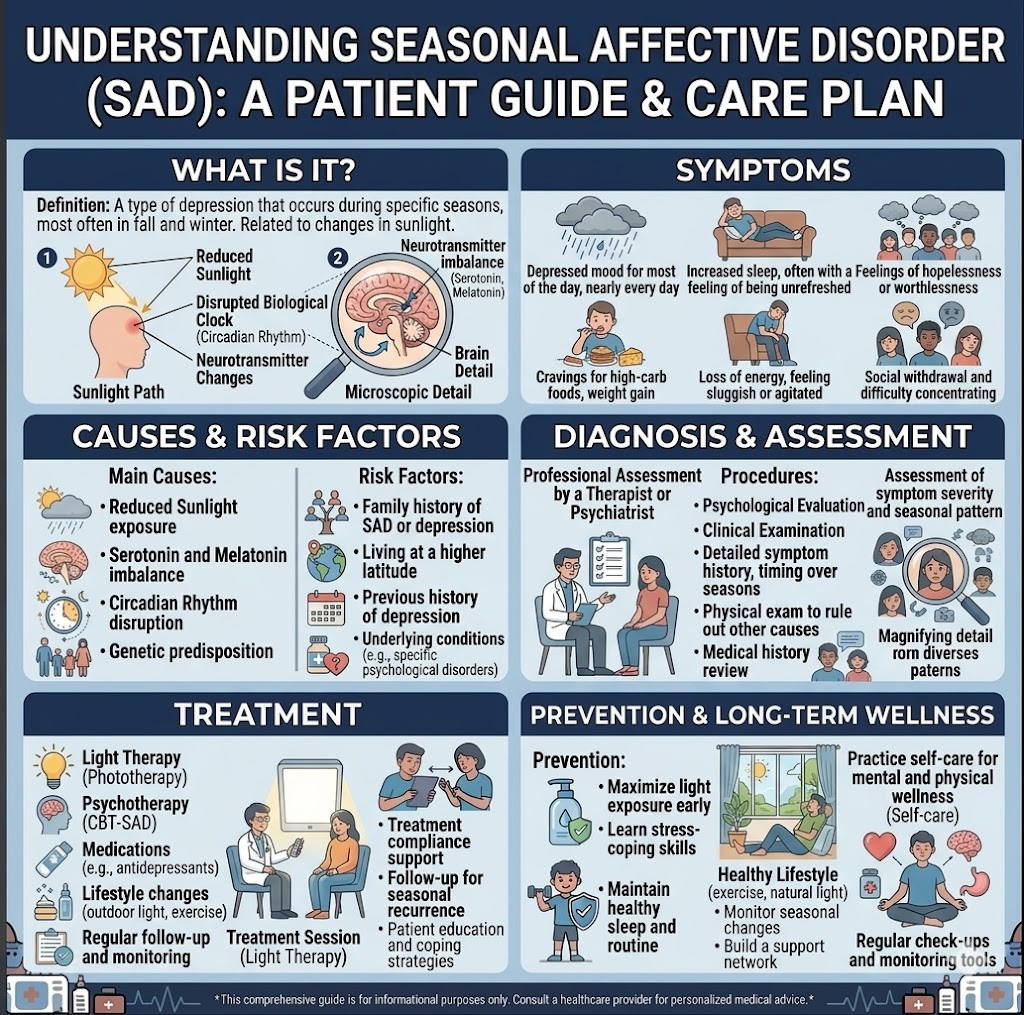
Seasonal Affective Disorder (SAD) is a type of depression tied to changes in seasons. For most people, symptoms begin in the fall and continue through winter, leading to low energy and a moody feeling. These symptoms usually improve or disappear during spring and summer. Less commonly, SAD can cause depression during spring or early summer, resolving in fall or winter. It's more than just "winter blues" and can significantly impact daily life. Treatment options include light therapy, talk therapy, and medications.
Understanding the Condition
Seasonal Affective Disorder (SAD)
Understanding the Condition
Seasonal Affective Disorder (SAD) is a type of depression tied to changes in seasons. For most people, symptoms begin in the fall and continue through winter, leading to low energy and a moody feeling. These symptoms usually improve or disappear during spring and summer. Less commonly, SAD can cause depression during spring or early summer, resolving in fall or winter. It's more than just "winter blues" and can significantly impact daily life. Treatment options include light therapy, talk therapy, and medications.
Common Symptoms
Persistent Low Mood: Feeling sad, down, or hopeless for days at a time.
Loss of Interest: No longer enjoying activities that were once pleasurable.
Low Energy and Fatigue: Feeling constantly tired or having less energy than usual.
Sleep Problems: Sleeping too much (often with winter-onset SAD) or having trouble sleeping (often with summer-onset SAD).
Appetite and Weight Changes: Increased appetite and craving carbohydrates, leading to weight gain (winter-onset); or decreased appetite and weight loss (summer-onset).
Difficulty Concentrating: Problems focusing, making decisions, or remembering things.
Social Withdrawal: Avoiding social activities and interaction.
Feelings of Worthlessness or Guilt: Excessive self-blame or feelings of inadequacy.
Agitation or Restlessness: Feeling keyed up, anxious, or unable to relax, especially with summer-onset SAD.
Thoughts of Death or Suicide: Experiencing suicidal thoughts requires immediate professional help.
Consultation Guide
Which Specialist to Meet
Start by consulting your primary care doctor. They can help determine if your symptoms are related to SAD or another condition. If needed, they may refer you to a mental health professional such as a psychiatrist, psychologist, or therapist. If you have existing eye conditions like glaucoma, cataracts, or diabetes-related eye damage, consult an eye specialist (ophthalmologist) before considering light therapy.
Preparations Before Your Visit
Before your visit, make a list of your symptoms, noting when they typically start and end each year, and how long they last. Describe how these symptoms affect your daily life, mood, sleep, and appetite. Be prepared to discuss your medical history, any other health conditions you have, and all medications or supplements you are currently taking. Write down any questions you have for your doctor.
Book a doctor visit near me
This is the primary method for diagnosing SAD. Your doctor will ask detailed questions about your symptoms, including their onset, duration, severity, and the specific seasonal pattern. They will also inquire about your medical history, family history of depression or other mental health conditions, and any other medications you might be taking. This helps rule out other forms of depression or medical conditions that might cause similar symptoms.
You will have a confidential conversation with your doctor or mental health professional. They will listen carefully to your experiences and ask specific questions about your mood, energy levels, sleep patterns, appetite, and how these change throughout the year. They might use questionnaires or screening tools to help assess the severity of your symptoms and how they align with diagnostic criteria for SAD. This process is typically non-invasive and primarily involves verbal communication.
Your doctor may perform a general physical exam and order blood tests to rule out other medical conditions that can mimic depression symptoms, such as an underactive thyroid (hypothyroidism) or vitamin deficiencies.
Light Therapy (Phototherapy): Involves daily exposure to a special light box that mimics natural outdoor light. This light is thought to cause chemical changes in the brain that improve mood and relieve symptoms like fatigue and oversleeping. It's important to use a light box with a 10,000-lux intensity and a UV filter, positioned correctly. (Duration: Typically used for 30 to 60 minutes each morning, starting in early fall and continuing until spring. Effects may be noticed within a few days to two weeks.)
Psychotherapy (Talk Therapy): A mental health professional helps you identify and change unhealthy thought patterns and behaviors that contribute to SAD. It teaches coping skills for managing symptoms and stress, often through Cognitive Behavioral Therapy (CBT). (Duration: Can vary from a few weeks to several months, or even longer, depending on individual needs and the specific type of therapy.)
Antidepressants: Certain medications can help balance brain chemicals involved in mood regulation. These are often used when light therapy or talk therapy alone aren't sufficient, or for more severe symptoms. (Duration: May take several weeks for effects to become noticeable. Treatment typically continues throughout the season when symptoms occur, and sometimes longer, as directed by a doctor.)
Early Intervention: Don't dismiss yearly mood changes as just "winter blues." If symptoms consistently appear with the seasons and affect your quality of life, seek professional help.
Consistent Light Exposure: If using light therapy, maintain a consistent daily schedule, especially during the darker months, as prescribed by your doctor.
Seasonal Planning: Plan engaging activities and social events during the times of year when you typically experience SAD symptoms. This can help combat isolation and low mood.
Stress Management: Learn and practice stress-reduction techniques such as mindfulness, meditation, or deep breathing exercises.
Avoid Self-Medication: Do not rely on alcohol or other substances to cope with symptoms, as this can worsen depression.
Monitor Symptoms: Keep a journal of your mood and symptoms throughout the year to help you and your doctor understand your patterns and adjust treatment as needed.
Professional Support: Continue regular check-ups with your healthcare provider or mental health professional, even when symptoms improve, for long-term management and prevention of recurrence.
Diagnostic Procedures
Clinical Evaluation and History Review
What to Expect
Physical Exam and Lab Tests
What to Expect
A physical exam is a standard check-up where the doctor assesses your general health. Blood tests involve drawing a small sample of blood, usually from a vein in your arm. This is a quick procedure, and you might feel a brief pinch or sting. The sample is then sent to a lab for analysis.
Treatment Options
Therapies
Medications
Prevention & Long-Term Wellbeing
Home Remedies & Lifestyle Adjustments
Regular Exercise: Engaging in physical activity daily can help boost mood and energy levels. (Duration: As advised)
Spending Time Outdoors: Even on cloudy days, getting some natural light can be beneficial. (Duration: As advised)
Healthy Diet: Eating balanced meals and limiting sugary or processed foods can support overall well-being. (Duration: As advised)
Social Engagement: Actively seeking out social activities and maintaining connections can combat social withdrawal. (Duration: As advised)
Healthy Routine: Stick to a regular sleep schedule, aim for a balanced diet, and incorporate regular physical activity into your daily life.
Outdoor Time: Maximize your exposure to natural light by spending time outdoors daily, even on overcast days. Consider arranging your home or workspace to get more natural light.
Tags & Topics
Notice an error or need an update?
Help us keep medical information accurate. Report incorrect info or suggest an edit.


