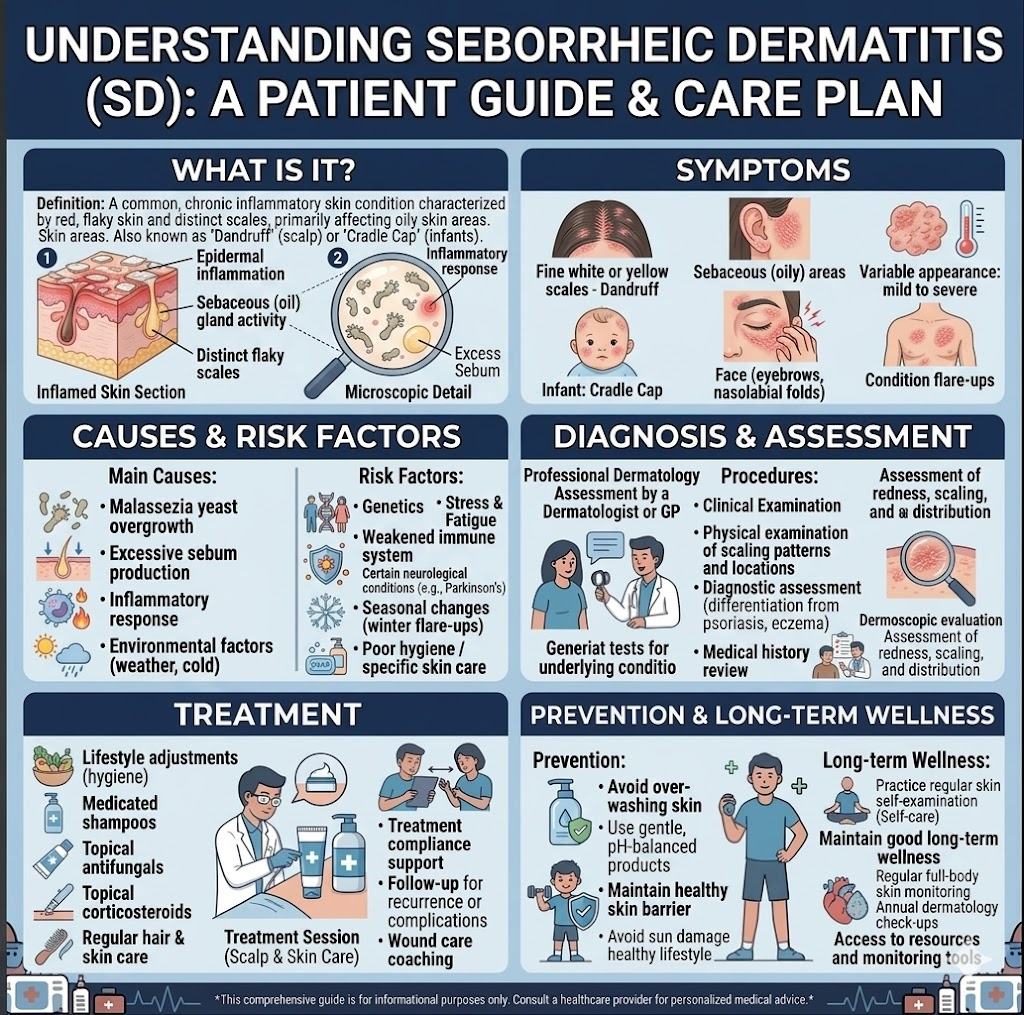
Seborrheic dermatitis (pronounced seb-o-REE-ik der-muh-TIE-tis) is a very common, ongoing skin condition mainly affecting the scalp, but also other oily body areas like the face, nose sides, eyebrows, ears, eyelids, and chest. It causes scaly patches, red or inflamed skin, and persistent dandruff. While bothersome and itchy, it's not contagious and doesn't cause permanent hair loss. It might clear up on its own, or require long-term specific shampoos or skin treatments to control symptoms and prevent flare-ups. Also known as dandruff, seborrheic eczema, or seborrheic psoriasis; in infants, it's called cradle cap.
Understanding the Condition
Seborrheic Dermatitis: Understanding and Managing a Common Skin Condition
Understanding the Condition
Seborrheic dermatitis (pronounced seb-o-REE-ik der-muh-TIE-tis) is a very common, ongoing skin condition mainly affecting the scalp, but also other oily body areas like the face, nose sides, eyebrows, ears, eyelids, and chest. It causes scaly patches, red or inflamed skin, and persistent dandruff. While bothersome and itchy, it's not contagious and doesn't cause permanent hair loss. It might clear up on its own, or require long-term specific shampoos or skin treatments to control symptoms and prevent flare-ups. Also known as dandruff, seborrheic eczema, or seborrheic psoriasis; in infants, it's called cradle cap.
Common Symptoms
Flaking Skin: Dandruff on the scalp, hair, eyebrows, beard, or mustache.
Greasy Patches with Scales: Oily skin areas covered with flaky white or yellow scales or crusts, commonly on the scalp, face (around the nose), eyebrows, ears, eyelids, chest, armpits, groin, or under breasts.
Skin Rash: Appears redder on lighter skin, or as lighter/darker patches on brown/Black skin.
Ring-shaped Rash: A specific type, petaloid seborrheic dermatitis, may show a circular rash.
Itchiness: A common and often irritating symptom. Symptoms tend to worsen with stress, tiredness, or seasonal changes.
Consultation Guide
Which Specialist to Meet
Start with your general practitioner. For persistent or severe cases, they may refer you to a dermatologist, a skin specialist.
Preparations Before Your Visit
Before your appointment, list your symptoms (onset, frequency, triggers), all medications/supplements, and your medical history. Prepare questions for your doctor.
Book a doctor visit near me
Identify Triggers: Note and avoid factors that worsen symptoms (e.g., products, weather).
Avoid Scratching: Prevents irritation and infection; keep nails short, use cool compresses for itching.
Sun Protection: Moderate sunlight can help, but avoid excessive exposure; use sunscreen and protective clothing.
Diagnostic Procedures
A procedure to remove a small skin sample for microscopic examination. This helps confirm seborrheic dermatitis or rule out other skin conditions. Your skin has layers housing glands, hair follicles, and blood vessels.
What to Expect
Preparation: The site is cleaned and numbed with a local anesthetic; you'll feel a brief pinch from the injection, but no pain during sample removal.Shave Biopsy: A scalpel or razor scrapes off the superficial skin layer. Stitches are usually not needed, and it heals like a scrape.Punch Biopsy: A round, hollow tool removes a deeper, cylindrical skin piece. Stitches might be needed depending on size.Excisional Biopsy: A scalpel removes an entire abnormal skin area, including surrounding healthy skin. Stitches are always required.Afterward: The site is bandaged. You'll get wound care instructions. The sample goes to a lab, and results will be discussed with your doctor.
Treatment Options
Anti-fungal Creams/Shampoos/Gels: Products reducing yeast growth on the skin. (Duration: Daily or few times weekly for several weeks to clear flare-ups, then as needed for maintenance.)
Corticosteroid Creams/Lotions: Low-dose options to reduce inflammation and itching. (Duration: Short-term (days to weeks) for flare-ups, as directed, due to potential side effects with prolonged use.)
Calcineurin Inhibitors: Non-steroidal creams controlling inflammation and itching, especially for the face. (Duration: Used as directed for weeks to months, or as needed for maintenance.)
Anti-fungal Medications: For severe cases unresponsive to topical treatments, oral pills target yeast from within. (Duration: Prescribed for a few weeks to months, under medical supervision.)
Oral Corticosteroids: Rarely used for very severe, widespread inflammation due to significant side effects. (Duration: Very short-term (days), for severe cases only.)
Phototherapy: Exposure to specific UV light, sometimes with a sensitizing medication, reduces inflammation and yeast. (Duration: Clinic-based, typically 2-3 sessions per week for several weeks or months.)
Regular Doctor Visits: Schedule follow-ups to monitor your condition and adjust treatments.
Adherence to Treatment: Consistent use of prescribed and recommended routines is crucial for control.
Educate Yourself: Understanding your condition and triggers empowers better self-management.
Prevention & Long-Term Wellbeing
Home Remedies and Lifestyle Adjustments
Gentle Cleansing: Wash affected areas regularly with mild soap to remove scales and oil. (Duration: Ongoing.)
Warm Olive Oil: For cradle cap or thick scales, apply warm olive oil for hours before gently brushing and shampooing. (Duration: As needed until scales soften, typically days to weeks.)
Avoid Irritants: Steer clear of harsh soaps, alcohol-based products, and irritating hair products. (Duration: Ongoing.)
Prevention and Managing Flare-ups
Maintain Good Hygiene: Regularly wash hair and skin with mild cleansers to control oil and prevent scale buildup.
Moisturize: Use a light, non-comedogenic moisturizer on dry areas after cleansing.
Manage Stress: Practice stress-reduction (meditation, yoga) as stress can trigger flare-ups.
Diet: Discuss potential dietary changes (e.g., reducing sugary foods) with your doctor if you suspect they play a role.
Long-Term Monitoring
Tags & Topics
Notice an error or need an update?
Help us keep medical information accurate. Report incorrect info or suggest an edit.


