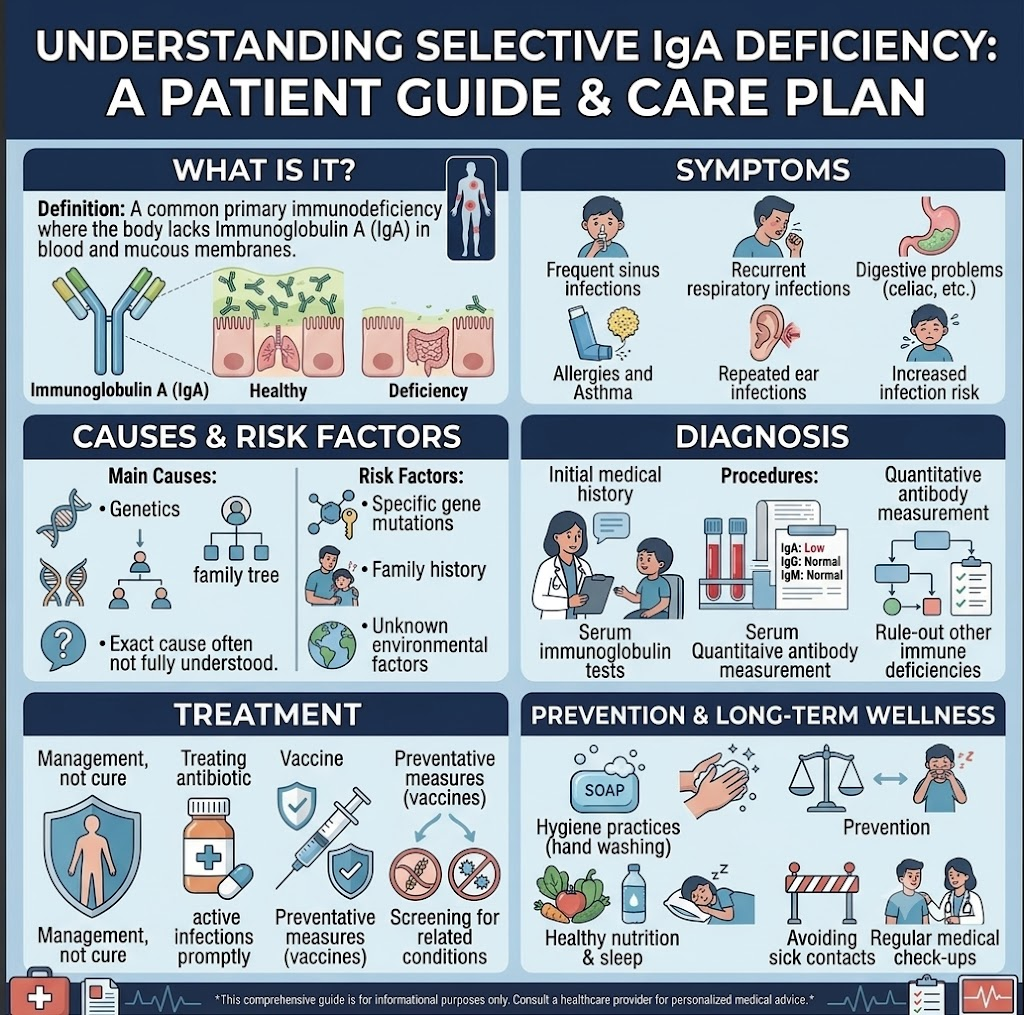
Selective IgA deficiency is a condition where the body does not produce enough of a specific disease-fighting antibody called immunoglobulin A (IgA). IgA antibodies are crucial for protecting surfaces of the body, such as the lining of the airways, lungs, and digestive system, as well as in tears and saliva, against bacteria, viruses, and other harmful agents. While most people with this deficiency experience no symptoms, some may suffer from frequent or recurrent infections, particularly in the respiratory and digestive systems. Selective IgA deficiency can also increase the risk of developing other immune-related conditions like allergies, asthma, and autoimmune diseases. There is no specific cure for the deficiency itself; instead, treatment focuses on managing and preventing the associated health problems.
Understanding the Condition
Understanding Selective IgA Deficiency: A Guide for Non-Medical Persons
Understanding the Condition
Selective IgA deficiency is a condition where the body does not produce enough of a specific disease-fighting antibody called immunoglobulin A (IgA). IgA antibodies are crucial for protecting surfaces of the body, such as the lining of the airways, lungs, and digestive system, as well as in tears and saliva, against bacteria, viruses, and other harmful agents. While most people with this deficiency experience no symptoms, some may suffer from frequent or recurrent infections, particularly in the respiratory and digestive systems. Selective IgA deficiency can also increase the risk of developing other immune-related conditions like allergies, asthma, and autoimmune diseases. There is no specific cure for the deficiency itself; instead, treatment focuses on managing and preventing the associated health problems.
Common Symptoms
Frequent Ear Infections: Especially common in young children, these infections can recur often.
Sinus Infections: Repeated infections of the sinus cavities, leading to congestion, pain, and discharge.
Lung Illnesses: Increased susceptibility to respiratory infections such as bronchitis or pneumonia.
Digestive System Infections: Conditions like giardiasis, a parasitic infection causing diarrhea, abdominal cramps, and nausea, may occur more frequently.
Poor Growth in Children: Children with frequent illnesses, especially digestive issues, may struggle to eat well or gain weight appropriately for their age.
Consultation Guide
Which Specialist to Meet
An immunologist, a doctor specializing in immune system disorders, is the primary specialist. Depending on specific symptoms, you might also see an allergist, infectious disease specialist, or gastroenterologist.
Preparations Before Your Visit
Prepare a list of your symptoms, including when they started and how often they occur. Bring a complete list of all medications, vitamins, and supplements you are currently taking. Note any known allergies. Be ready to discuss your family's medical history, especially if immune disorders are present. Write down any questions you have for the doctor.
Book a doctor visit near me
Allergy and Asthma Medications: Includes antihistamines, nasal sprays, and inhalers to manage allergy symptoms and asthma. (Duration: As needed or daily for long-term control, potentially lifelong.)
Regular Medical Check-ups: Routine visits with your immunologist or primary care physician are important to monitor your health, manage symptoms, and screen for potential complications.
Monitoring for Autoimmune Conditions: Be aware of symptoms that could indicate the development of allergies, asthma, or autoimmune diseases, and report them to your doctor promptly.
Medical Alert Identification: Wear a medical alert bracelet or carry a card indicating Selective IgA Deficiency, especially highlighting the need for modified blood products in an emergency. This information is vital for healthcare providers.
Consultation Guide
Modified Blood Products: For individuals requiring blood transfusions, it's crucial to receive specially prepared blood products that have very low or no IgA to prevent severe allergic reactions. This is because the body may perceive foreign IgA as a threat. (Duration: During blood transfusion or procedures involving blood products.)
Diagnostic Procedures
Blood Test for Immunoglobulin Levels
This is the primary diagnostic test. It involves taking a small sample of your blood to measure the levels of different types of antibodies, including IgA, IgG, and IgM. In Selective IgA Deficiency, the IgA level will be significantly low or undetectable, while other immunoglobulin levels are typically normal.
What to Expect
A healthcare professional will draw blood, usually from a vein in your arm. This is a quick procedure, typically causing only a brief pinch or sting. The blood sample is then sent to a laboratory for analysis. You usually don't need to do anything specific to prepare, such as fasting, unless instructed otherwise by your doctor.
Treatment Options
Medications
Antibiotics: Prescribed to treat bacterial infections of the ears, sinuses, lungs, or other parts of the body. (Duration: Typically a 7-14 day course, but can vary based on the infection.)
Antiparasitic or Antifungal Medications: Used to treat parasitic infections like giardiasis or fungal infections, if present. (Duration: Varies from a single dose to several weeks, depending on the specific infection.)
Anti-inflammatory Medications: Used to manage autoimmune conditions like rheumatoid arthritis or inflammatory bowel disease, if they develop. (Duration: Often long-term, guided by ongoing medical supervision.)
Prevention & Long-Term Wellbeing
Nutritional Support: For children experiencing poor growth due to frequent illnesses, dietary counseling and nutritional supplements may be recommended. (Duration: Ongoing as needed, adjusted with growth.)
Respiratory Therapies: May be beneficial for individuals with chronic lung issues to help clear airways and improve lung function. (Duration: As needed, potentially ongoing.)
Special Considerations for Procedures
Prevention of Infections
Good Hygiene Practices: Frequent handwashing, especially before eating and after using the restroom or being in public places, helps reduce the spread of germs.
Avoid Sick Contacts: Minimize exposure to individuals who are ill to reduce the risk of infection.
Vaccinations: Stay up-to-date with routine vaccinations as advised by your doctor to prevent common infectious diseases.
Balanced Diet and Healthy Lifestyle: Maintaining a healthy diet, getting regular exercise, and adequate sleep supports overall immune function.
Long-Term Monitoring and Management
Tags & Topics
Notice an error or need an update?
Help us keep medical information accurate. Report incorrect info or suggest an edit.


