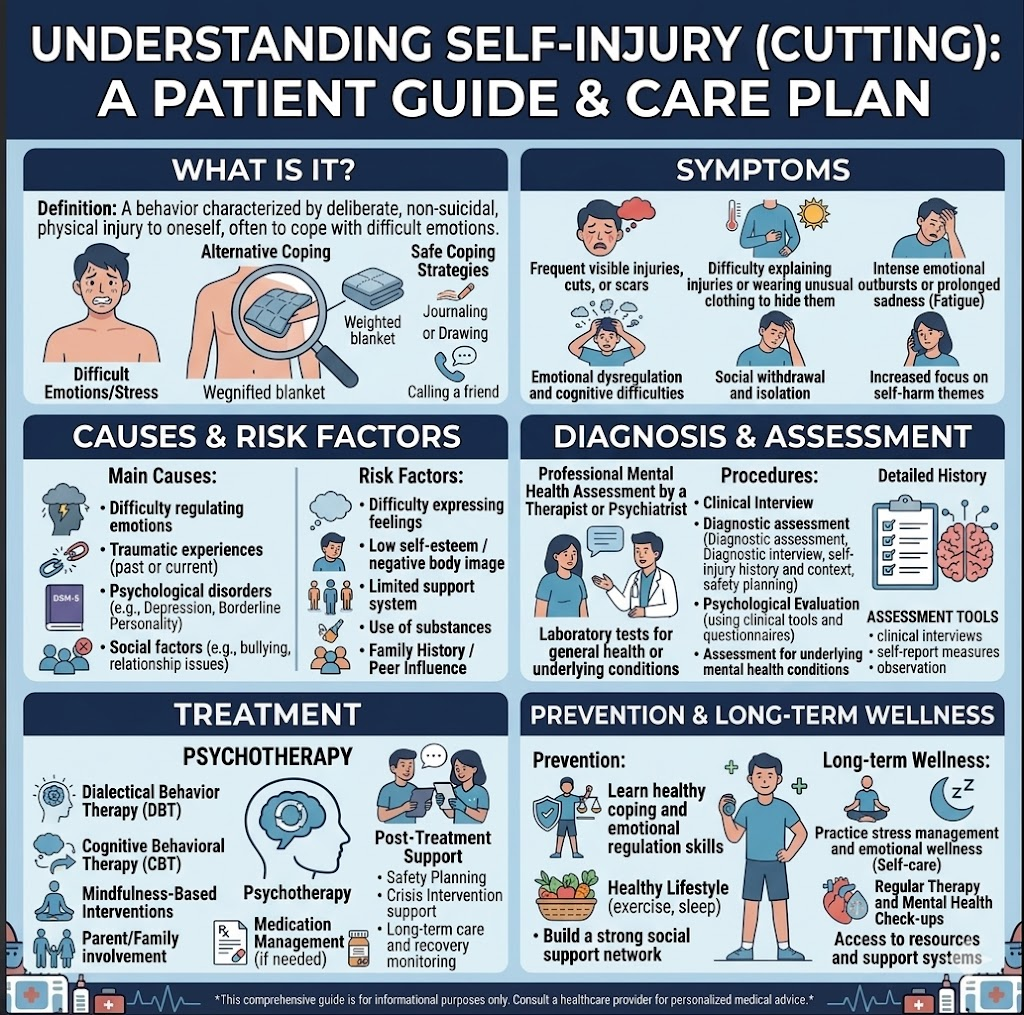
Self-injury, sometimes called self-harm, is intentionally hurting your own body, often by cutting or burning. It's typically not an attempt to end one's life, but rather a way to cope with intense emotional pain, sadness, anger, or stress. While it may offer temporary relief from overwhelming feelings, it's usually followed by guilt, shame, and the return of those painful emotions. Although severe harm is often not intended, there's a risk of serious or even life-threatening injury. Seeking professional help can guide individuals toward healthier coping strategies.
Understanding the Condition
Understanding Self-Injury (Self-Harm)
Understanding the Condition
Self-injury, sometimes called self-harm, is intentionally hurting your own body, often by cutting or burning. It's typically not an attempt to end one's life, but rather a way to cope with intense emotional pain, sadness, anger, or stress. While it may offer temporary relief from overwhelming feelings, it's usually followed by guilt, shame, and the return of those painful emotions. Although severe harm is often not intended, there's a risk of serious or even life-threatening injury. Seeking professional help can guide individuals toward healthier coping strategies.
Common Symptoms
Scars and Wounds: Visible marks like scars (often in patterns), fresh cuts, scratches, bruises, or bite marks.
Increase Awareness: Educate yourself and others about the causes, symptoms, and warning signs of self-injury to reduce stigma and encourage early intervention.
Encourage Peers to Seek Help: Teach children, teens, and young adults the importance of breaking secrecy and reaching out to a trusted adult if they are concerned about a friend or family member who might be self-injuring.
Discuss Media Influence: Talk about how news, music, or social media might portray self-injury. Help individuals develop critical thinking skills to evaluate these influences and understand their potential harmful impact.
Ongoing Therapy and Support: Continuing with therapy, even after initial improvement, can provide long-term tools and support for managing emotions and preventing relapse. Regular check-ins with a mental health professional can be beneficial.
Consultation Guide
Creating Burns: Rubbing areas excessively to cause friction burns.
Hiding Tools: Keeping sharp objects or other items specifically for self-injury on hand.
Concealing Injuries: Consistently wearing long sleeves or pants, even in warm weather, to hide marks.
Frequent 'Accidents': Regularly reporting accidental injuries that might be self-inflicted.
Relationship Challenges: Persistent difficulties in forming or maintaining relationships.
Sudden Mood Shifts: Rapid, intense, and unpredictable changes in behavior and emotions, often impulsive.
Feelings of Despair: Expressing feelings of helplessness, hopelessness, or worthlessness.
Consultation Guide
Which Specialist to Meet
You should consult a mental health professional such as a psychologist, psychiatrist, licensed therapist, or counselor. A primary care doctor can also be a good first point of contact for guidance and referrals.
Preparations Before Your Visit
Before your visit, try to think about when self-injury started, how often it occurs, and what feelings or situations trigger it. Be prepared to discuss your emotions, life stressors, and any previous attempts to cope. It's helpful to be open and honest, as this helps the professional understand your situation better. You might also list any questions you have.
Book a doctor visit near me
Psychotherapy (Talk Therapy): Psychotherapy, or talk therapy, involves talking with a mental health professional to explore your thoughts, feelings, and behaviors. It helps you understand the root causes of self-injury, develop self-awareness, improve communication skills, and learn to respond to challenges in healthy ways. Many different types of talk therapy exist, tailored to individual needs. (Duration: Varies widely, from short-term (a few months) to longer-term (a year or more), depending on individual needs and progress.)
Self-Care & Coping Strategies
Developing Healthy Coping Skills: Learning and practicing healthy ways to deal with stress and intense emotions is crucial. This can include journaling, exercise, mindfulness, creative expression, deep breathing, or reaching out to trusted friends and family. A therapist can help you identify and build these skills. (Duration: Ongoing, lifelong practice.)
Diagnostic Procedures
Mental Health Assessment
Diagnosis of self-injury is made through a comprehensive mental health assessment. This involves a trained mental health professional having a detailed conversation with the individual to understand their behaviors, thoughts, feelings, and life experiences. The goal is to identify patterns of self-harm, underlying emotional distress, and any co-occurring mental health conditions.
What to Expect
During the assessment, you will meet with a mental health professional in a private and confidential setting. They will ask you questions about your experiences with self-injury, including when it started, how often it happens, and what situations or feelings might lead to it. You'll also discuss your general emotional well-being, personal history, relationships, and any stress you might be experiencing. It's a safe space to share openly, and the professional's role is to listen without judgment and help you understand your situation.
Treatment Options
Medications
Medications for Underlying Conditions: While there are no specific medications for self-injury itself, medicines can be very helpful in managing underlying mental health conditions often associated with self-harm, such as depression, anxiety, or mood disorders. These may include antidepressants, mood stabilizers, or anti-anxiety medications. A doctor will determine if medication is appropriate and monitor its effects. (Duration: Duration varies; typically long-term under medical supervision.)
Therapies
Cognitive Behavioral Therapy (CBT): CBT is a structured therapy that helps you identify and change unhealthy thinking patterns and behaviors. It teaches you how to recognize triggers for self-injury and develop healthier coping mechanisms. You learn to manage stressful situations and difficult emotions more effectively. (Duration: Typically involves fewer sessions (e.g., 10-20 sessions) over several weeks or months, often with 'homework' to practice skills.)
Managing Underlying Conditions: If self-injury is linked to other mental health conditions like depression or anxiety, consistent management of these conditions through medication (if prescribed) and therapy is essential for overall well-being.
Emergency Preparedness: Have a safety plan in place for moments of intense distress, including contact numbers for support hotlines or trusted individuals, and strategies to delay or distract from self-harm urges.
Prevention & Long-Term Wellbeing
Prevention
Recognize and Offer Help: Learn to identify warning signs of self-injury in yourself or others. If you suspect someone is struggling, offer support and encourage them to seek professional help to learn healthier ways to manage stress and emotional pain.
Build Supportive Networks: Loneliness and feeling disconnected can worsen self-injury. Foster healthy relationships with people who are supportive and do not engage in self-harm. This can improve communication and strengthen emotional resilience.
Tags & Topics
Notice an error or need an update?
Help us keep medical information accurate. Report incorrect info or suggest an edit.


