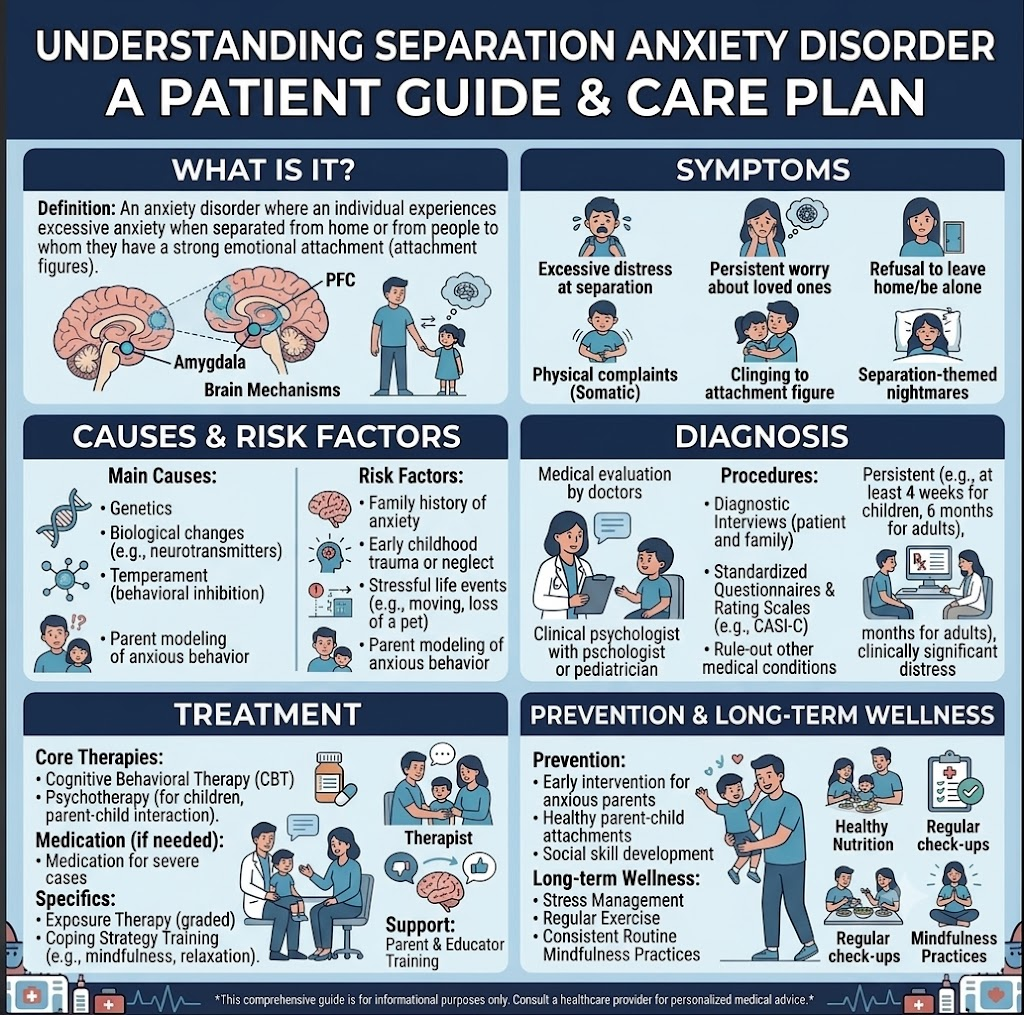
Separation anxiety is a normal part of growing up for many young children, especially infants and toddlers. It's common for them to feel worried or upset when separated from a parent or main caregiver, like crying at daycare drop-off. This usually improves by age 2 or 3. However, when separation anxiety is unusually intense, lasts longer than expected for a child's age, significantly disrupts daily life, or involves panic attacks, it might indicate a more serious condition called Separation Anxiety Disorder (SAD). SAD can affect children as young as preschool age, and less commonly, can occur in teenagers and adults, leading to difficulties leaving home or going to work. Effective treatments, often involving specific types of therapy and sometimes medication, can significantly reduce symptoms.
Understanding the Condition
Separation Anxiety Disorder
Understanding the Condition
Separation anxiety is a normal part of growing up for many young children, especially infants and toddlers. It's common for them to feel worried or upset when separated from a parent or main caregiver, like crying at daycare drop-off. This usually improves by age 2 or 3. However, when separation anxiety is unusually intense, lasts longer than expected for a child's age, significantly disrupts daily life, or involves panic attacks, it might indicate a more serious condition called Separation Anxiety Disorder (SAD). SAD can affect children as young as preschool age, and less commonly, can occur in teenagers and adults, leading to difficulties leaving home or going to work. Effective treatments, often involving specific types of therapy and sometimes medication, can significantly reduce symptoms.
Common Symptoms
Repeated Distress During Separation: Intense worry or upset when thinking about or experiencing separation from home or loved ones. This can include being unusually clingy or having tantrums that are more severe or last longer than expected for their age.
Constant Worry About Harm to Loved Ones: Persistent and intense fear that a parent or loved one might get sick, die, or experience a disaster, leading to permanent separation.
Fear of Being Separated: Continuous worry that something bad will happen, like getting lost or kidnapped, resulting in separation from parents or other close individuals.
Refusal to Be Away From Home: Not wanting to or actively refusing to leave home due to the fear of being separated.
Difficulty Being Alone: Unwillingness to be home alone or in places without a parent or loved one nearby, especially if they are old enough to be expected to manage this.
Resistance to Sleeping Away: Refusing to sleep away from home or to go to sleep without a parent or loved one nearby, when developmentally appropriate for such activities.
Nightmares About Separation: Frequent bad dreams centered around themes of being separated from loved ones.
Physical Complaints: Repeated headaches, stomachaches, or other physical symptoms that arise during or just before separation from a parent or loved one.
Panic Attacks: Sudden, repeated episodes of intense anxiety, fear, or terror that peak within minutes, sometimes accompanying separation anxiety disorder.
Consultation Guide
Which Specialist to Meet
You should consult with your primary care provider (such as a pediatrician or family doctor), who can then refer you to mental health professionals like a child psychologist, child psychiatrist, or a general psychiatrist or therapist specializing in anxiety disorders for teenagers and adults.
Preparations Before Your Visit
Before your visit, make a list of your child's (or your own) symptoms, including when they started, how often they occur, and how they impact daily life. Note any recent life changes or stressors. Gather information on family medical history, especially regarding anxiety or other mental health conditions. Prepare a list of questions to ask the doctor.
Book a doctor visit near me
Diagnosing Separation Anxiety Disorder involves a comprehensive evaluation by a mental health professional. This process is based on carefully reviewing symptoms, developmental history, and how these symptoms affect daily functioning in various settings like home, school, or work. The professional will compare the intensity and duration of the symptoms against what is considered typical for the individual's age.
Psychotherapy (Talk Therapy): A broader term for various types of talk therapy where individuals work with a mental health provider to understand their specific issues and how thoughts, emotions, and behaviors affect their mood. It helps in developing healthy coping skills for challenging situations and managing life's stresses. Specific approaches can be tailored to the individual's needs. (Duration: Can range from short-term (several weeks) to longer-term (months or more), depending on individual needs and the complexity of symptoms.)
Anti-Anxiety or Antidepressant Medications: In some cases, especially when symptoms are severe or don't fully respond to therapy alone, a doctor may prescribe medication. These medicines can help manage the intense anxiety symptoms, making it easier for individuals to engage in therapy and develop coping skills. They work by affecting brain chemistry to reduce feelings of fear and panic. (Duration: Varies widely; often prescribed for several months to a year or more, with regular review and adjustment by a doctor.)
Early Recognition and Intervention: If you notice signs of unusually intense separation anxiety in a child or yourself, seek professional advice promptly. Early diagnosis and treatment can significantly reduce symptoms and prevent the condition from worsening or leading to other mental health issues.
Adherence to Treatment Plan: Consistently follow the prescribed treatment plan, whether it involves therapy sessions, medication, or specific home strategies. This is crucial for managing symptoms, preventing relapses, and fostering long-term improvement.
Develop Healthy Coping Skills: Learn and practice healthy ways to manage stress and anxiety. For children, parents can model these skills, such as relaxation techniques, problem-solving, and positive self-talk. For adults, this might involve mindfulness, exercise, or engaging in hobbies.
Diagnostic Procedures
Clinical Assessment and Psychological Evaluation
What to Expect
The evaluation typically includes an in-depth interview with the individual (or parents/guardians for a child) about their worries, fears, and behaviors related to separation. The specialist may also observe interactions and use standardized questionnaires or rating scales to assess anxiety levels and other mental health concerns. For children, information might be gathered from teachers or other caregivers. This process helps to rule out other conditions and ensure an accurate diagnosis.
Treatment Options
Therapies
Cognitive Behavioral Therapy (CBT): CBT is a structured, goal-oriented talk therapy that helps individuals identify and change negative thinking patterns and behaviors contributing to their anxiety. It focuses on practical coping strategies. For separation anxiety, this might involve gradually exposing the individual to separation situations in a safe and controlled way to build tolerance and reduce fear, along with teaching relaxation techniques. (Duration: Often involves 8-20 sessions over several weeks to a few months, with ongoing practice at home.)
Medications
Prevention & Long-Term Wellbeing
Prevention and Long-Term Strategies
Manage Co-occurring Conditions: If other mental health concerns like depression or other anxiety disorders are present, ensure they are also addressed and treated. Managing these alongside separation anxiety disorder is vital for overall mental health and recovery.
Foster Secure Attachments: For children, ensuring a consistent and loving environment with secure attachments to caregivers can help build resilience. For adults, cultivating strong, supportive relationships can also provide a sense of security and reduce isolation.
Gradual Exposure and Independence: For children, gradually introduce short periods of separation in a supportive way to help them build confidence. For adults, gradually challenging the urge to avoid situations that trigger separation anxiety can help rebuild independence.
Tags & Topics
Notice an error or need an update?
Help us keep medical information accurate. Report incorrect info or suggest an edit.


