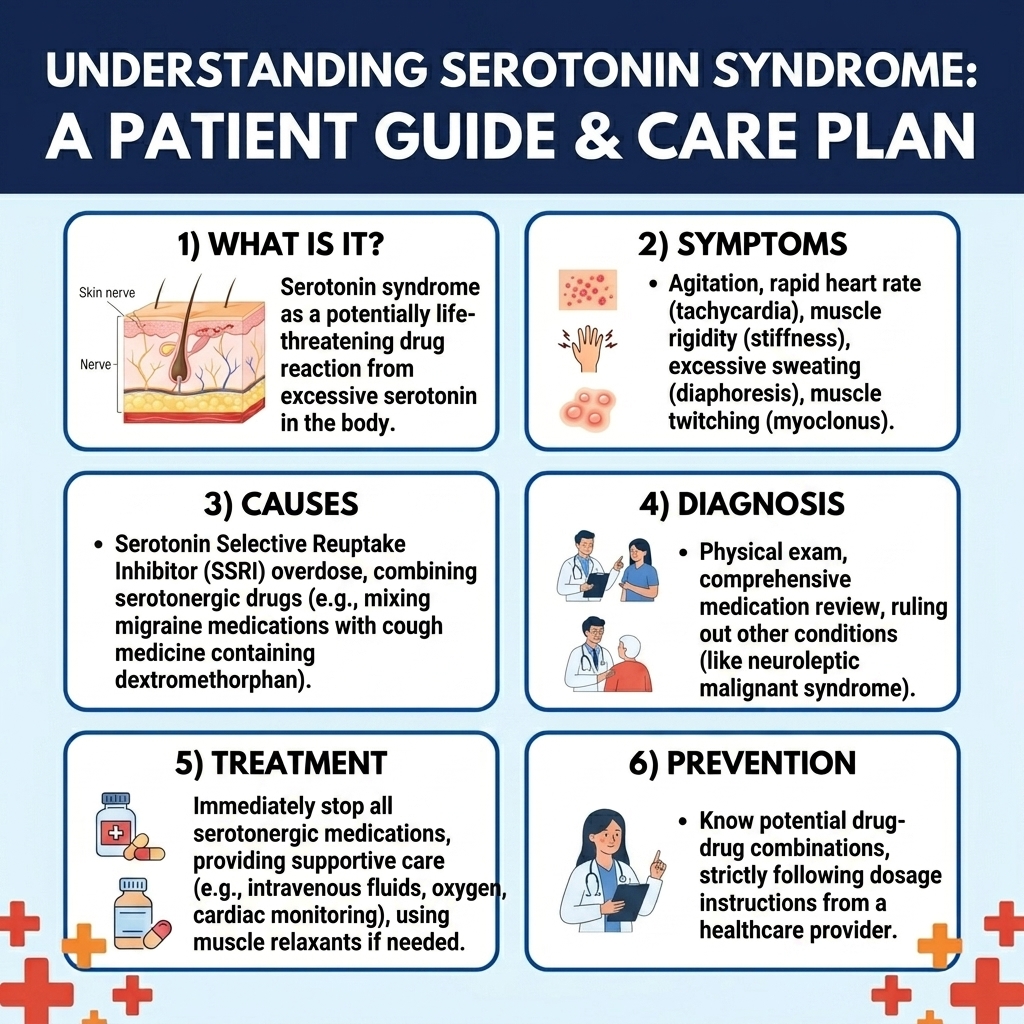
Serotonin syndrome is a potentially serious reaction caused by certain medications, supplements, or illicit drugs that lead to dangerously high levels of a natural chemical called serotonin in the brain and body. Serotonin is vital for nerve cells and brain function, regulating mood, attention, behavior, and body temperature. However, an excess can overwhelm the body's systems, causing symptoms that range from mild (like shivering and diarrhea) to severe and life-threatening (including muscle stiffness, high fever, and seizures). Severe cases require immediate medical attention and can be fatal if untreated. It typically occurs when combining certain medications, especially antidepressants with migraine drugs, or when increasing the dose of a medication that affects serotonin. Symptoms usually appear within several hours of starting a new medication, increasing a dose, or combining interacting substances.
Understanding the Condition
Serotonin Syndrome: Understanding a Potentially Serious Drug Reaction
Understanding the Condition
Serotonin syndrome is a potentially serious reaction caused by certain medications, supplements, or illicit drugs that lead to dangerously high levels of a natural chemical called serotonin in the brain and body. Serotonin is vital for nerve cells and brain function, regulating mood, attention, behavior, and body temperature. However, an excess can overwhelm the body's systems, causing symptoms that range from mild (like shivering and diarrhea) to severe and life-threatening (including muscle stiffness, high fever, and seizures). Severe cases require immediate medical attention and can be fatal if untreated. It typically occurs when combining certain medications, especially antidepressants with migraine drugs, or when increasing the dose of a medication that affects serotonin. Symptoms usually appear within several hours of starting a new medication, increasing a dose, or combining interacting substances.
Common Symptoms
Mild Symptoms: Shivering, diarrhea, agitation or restlessness, fast heart rate, slightly high blood pressure, dilated pupils, overactive reflexes.
Moderate Symptoms: Increased body temperature, excessive sweating, muscle rigidity or stiffness, tremors, confusion.
Severe Symptoms (Seek Emergency Care Immediately): Very high fever (above 101.5°F or 38.6°C), seizures, irregular heartbeat, unconsciousness, severe muscle stiffness or spasms, rapid and severe changes in blood pressure.
Consultation Guide
Which Specialist to Meet
Initial consultation should be with a general practitioner or primary care physician. If symptoms are severe, emergency physicians are the first point of contact. For ongoing management or complex cases, a neurologist (brain and nerve specialist) or a psychiatrist (mental health specialist) may be involved.
Preparations Before Your Visit
Before your visit, compile a complete and accurate list of all medications you are taking, including prescription drugs, over-the-counter medicines, herbal remedies, and any dietary supplements. Note when your symptoms started and how they have changed. Be prepared to discuss your medical history, recent medication changes, and any illicit drug use.
Book a doctor visit near me
Serotonin syndrome is diagnosed based on your symptoms and your recent medical and medication history, rather than a single specific test. Your doctor will assess your symptoms, check your vital signs (heart rate, blood pressure, temperature), and carefully review your complete list of medications and supplements to identify potential triggers.
The doctor will ask detailed questions about your recent health, any new medications or changes in dosages, and the timeline of your symptoms. They will perform a physical examination, including neurological checks like testing your reflexes, muscle tone, pupil dilation, and mental status. They might also check your skin for sweating and listen to your heart and lungs.
Blood tests are not used to directly diagnose serotonin syndrome. Instead, they help rule out other conditions that might cause similar symptoms, such as infections, other drug overdoses, or metabolic imbalances. They can also assess how your organs, like kidneys, are functioning if affected by severe serotonin syndrome.
Similar to blood tests, urine tests can help rule out other conditions or identify the presence of certain substances (like illicit drugs) that could be contributing to your symptoms.
An ECG measures the electrical activity of your heart. It can help identify any irregular heartbeats or other heart problems that might be related to serotonin syndrome or mimic its symptoms, especially since serotonin syndrome can affect heart rate and rhythm.
Discontinuation of Causing Agents: The most crucial first step is to immediately stop all medications, supplements, or illicit drugs suspected of causing the syndrome. This often resolves milder cases within a short period. (Duration: Immediate cessation; symptoms may begin to resolve within 24-48 hours.)
Serotonin-Blocking Medications: For more moderate cases, medications that block the effects of serotonin in the body may be prescribed to counteract the excess serotonin. These are typically used for a short period to help symptoms subside. (Duration: Typically a few days, depending on symptom resolution.)
Sedatives: To control agitation, tremors, and seizures, certain sedatives can be administered. These help relax muscles and calm the central nervous system. (Duration: As needed for symptom control, usually for a few hours to a couple of days.)
Admission to Intensive Care Unit (ICU): Patients with severe serotonin syndrome, especially those with very high fever, severe muscle rigidity, or seizures, require close monitoring and specialized treatment in an ICU setting to manage critical symptoms and prevent complications. (Duration: Typically several days to a week, depending on the severity and recovery progress.)
Educate Yourself and Loved Ones: Understanding the symptoms of serotonin syndrome is crucial for early detection. Educate family members or close contacts so they can recognize signs and seek help on your behalf if you are unable to communicate your symptoms.
Consultation Guide
Intravenous (IV) Fluids: IV fluids are administered to help rehydrate the body and support kidney function, which is especially important if severe sweating or fever has caused dehydration or electrolyte imbalances. (Duration: Administered continuously until hydration and electrolyte balance are restored, typically 1-3 days.)
Oxygen Support: In severe cases, supplemental oxygen may be provided to ensure adequate oxygenation of the body's tissues and support breathing. (Duration: As needed, until breathing and oxygen levels normalize.)
Diagnostic Procedures
Physical Examination and Medical History Review
What to Expect
What to Expect
A healthcare professional will draw a small sample of blood, usually from a vein in your arm. You might feel a brief sting or pinch. The sample will then be sent to a lab for analysis.
What to Expect
You will be asked to provide a urine sample in a sterile container. Instructions will be provided on how to collect the sample properly.
Electrocardiogram (ECG or EKG)
What to Expect
You will lie down while several small, sticky electrode patches are placed on your chest, arms, and legs. These patches are connected by wires to a machine that records your heart's electrical signals. The procedure is painless and takes only a few minutes.
Treatment Options
Medications
Blood Pressure and Heart Rate Control: Medications may be used to stabilize a dangerously fast heart rate or high blood pressure, which can occur in severe cases, ensuring your cardiovascular system remains stable. (Duration: Administered as necessary, often in an emergency setting, until vital signs stabilize.)
Fever Reduction: To lower dangerously high body temperature, especially if it's severe, cooling blankets or other medical interventions may be used, in addition to addressing the underlying serotonin excess. (Duration: Continuous monitoring and intervention until body temperature normalizes.)
Inform Your Doctor About All Medications: Always provide your healthcare provider with a complete and up-to-date list of all medications (prescription, over-the-counter), herbal remedies, and supplements you are taking. This is crucial for identifying potential interactions.
Understand Medication Interactions: If you are prescribed a new medication or have a dosage change, ask your doctor or pharmacist about potential interactions, especially if you are already taking drugs that affect serotonin levels (e.g., certain antidepressants, migraine medications, or pain relievers).
Avoid Self-Medicating or Combining Without Advice: Do not combine medications or supplements, particularly those that affect mood or pain, without explicit guidance from a healthcare professional, as some combinations can be dangerous.
Be Aware of Illicit Drugs: Certain illicit drugs can significantly increase serotonin levels and should be avoided, especially when taking prescribed medications that also influence serotonin.
Long-Term Monitoring & Management
Careful Medication Management: If you have experienced serotonin syndrome, your doctor will carefully review your medication regimen and may recommend alternative treatments or closer monitoring if serotonin-influencing drugs are deemed necessary. Dosage adjustments should always be done under strict medical supervision.
Medical Alert Information: Consider carrying a medical alert card or wearing a medical alert bracelet if you are at high risk or have a history of serotonin syndrome, especially if you must continue taking medications that influence serotonin levels. This can provide vital information to emergency responders.
Prevention & Long-Term Wellbeing
Prevention
Tags & Topics
Notice an error or need an update?
Help us keep medical information accurate. Report incorrect info or suggest an edit.


