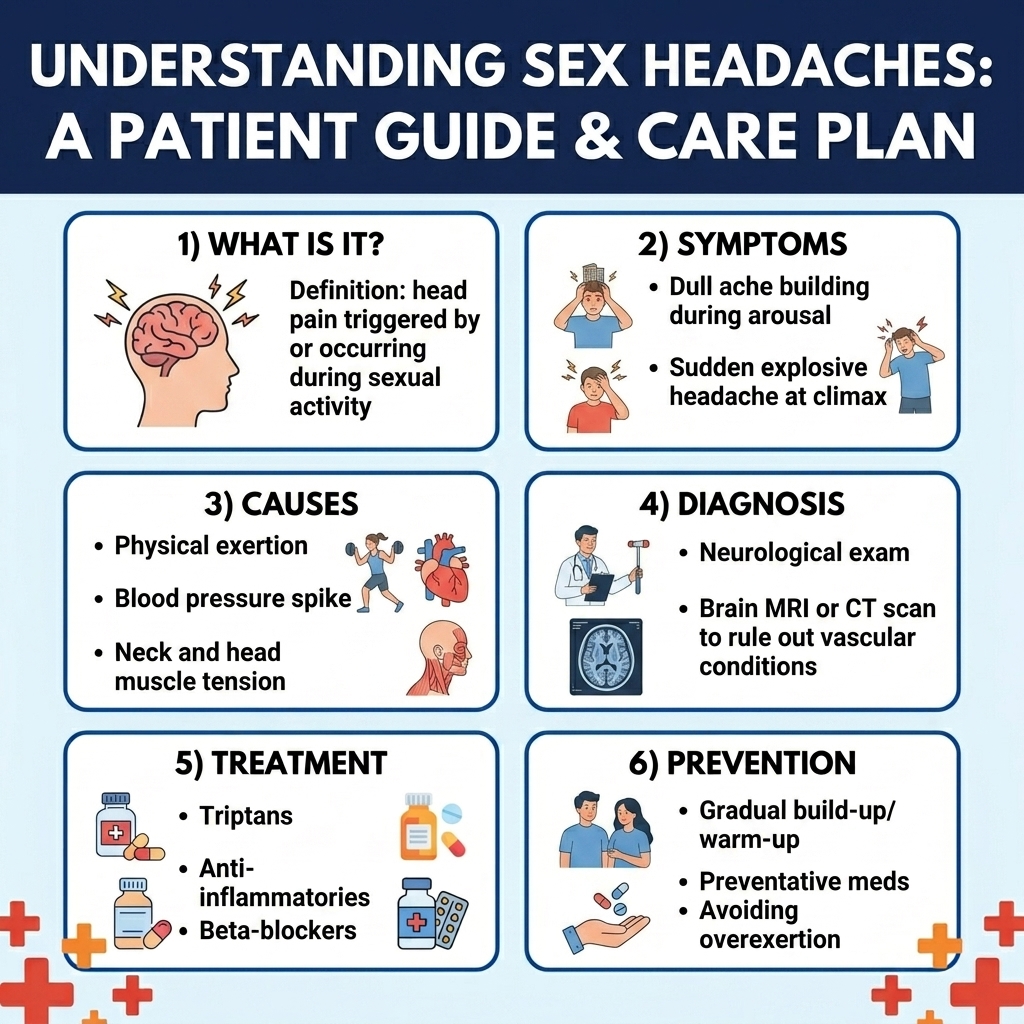
Sex headaches are distinct headaches that occur during or after any sexual activity, most commonly at the point of orgasm. While often harmless, they can sometimes signal more serious underlying issues, particularly problems with blood vessels in the brain. These headaches can manifest as a dull ache that gradually builds with excitement, or more frequently, as a sudden, intense pain during climax.
Understanding the Condition
Sex Headaches: Understanding Headaches During Sexual Activity
Understanding the Condition
Sex headaches are distinct headaches that occur during or after any sexual activity, most commonly at the point of orgasm. While often harmless, they can sometimes signal more serious underlying issues, particularly problems with blood vessels in the brain. These headaches can manifest as a dull ache that gradually builds with excitement, or more frequently, as a sudden, intense pain during climax.
Common Symptoms
Slow-Onset Headache: A dull, throbbing ache in the head and neck that slowly increases in intensity as sexual excitement builds. This type of headache may last from several minutes to a few hours.
Sudden, Severe Headache: An intense, explosive headache that strikes abruptly just before or during orgasm. This type of headache is typically very severe and can linger for hours or even up to two to three days.
Consultation Guide
Which Specialist to Meet
You should initially consult your primary care physician for any headache experienced during sexual activity, especially if it's sudden or a new type of headache for you. Depending on their assessment, you may be referred to a neurologist, a specialist in brain and nervous system disorders.
Preparations Before Your Visit
Before your visit, be prepared to describe your headaches in detail: when they started, how often they occur, their intensity, duration, and whether they are associated with other symptoms. Also, provide a complete medical history, including any other health conditions and all medications you currently take. This information helps your doctor understand your condition and plan appropriate diagnostic steps.
Book a doctor visit near me
A brain MRI uses powerful magnets and radio waves to generate highly detailed images of your brain, and sometimes your neck and spine. Unlike CT scans, it does not use radiation. MRI is excellent for detecting subtle changes in brain tissue and is often used to diagnose conditions like strokes, tumors, or multiple sclerosis, or to investigate the cause of symptoms such as persistent headaches, changes in vision, or seizures.
Acute Pain Relievers: Over-the-counter or prescription medications can be used to manage the pain of an acute sex headache. These are taken at the onset of a headache. (Duration: As needed for symptoms.)
Rest and Relaxation: Lying down in a quiet, dark room and allowing yourself to rest can help alleviate headache symptoms. (Duration: As needed during a headache episode.)
Hydration: Ensuring adequate fluid intake throughout the day can sometimes help with overall headache management. (Duration: Ongoing daily practice.)
Pacing Sexual Activity: If you experience the slow-onset type of headache, pausing or changing positions during sexual activity might sometimes prevent the headache from becoming more severe. (Duration: As needed during sexual activity.)
Symptom Tracking: Continue to keep a headache diary to record dates, intensity, duration, and any associated factors. This ongoing information is valuable for your doctor in assessing the condition and adjusting treatment if necessary.
Diagnostic Procedures
Brain CT Scan (Computed Tomography)
A brain CT scan uses X-rays and computer processing to create detailed cross-sectional images, or 'slices,' of your head, including your brain, bones, blood vessels, and soft tissues. It provides more detail than standard X-rays and is particularly useful for quickly identifying issues like bleeding, swelling, or tumors in emergency situations, such as after a head injury or suspected stroke.
What to Expect
You will lie on a movable table that slides into a large, donut-shaped machine. The scanner will rotate around your head, taking multiple X-ray images. You will need to lie still during the scan, which typically takes only a few minutes. In some cases, a special dye called contrast may be injected into a vein in your arm to highlight specific blood vessels or tissues. You might feel a brief warm sensation during the injection.
Brain MRI (Magnetic Resonance Imaging)
What to Expect
You will lie on a padded table that slides into a long, tube-shaped machine. The machine makes loud knocking or thumping noises during the scan, so you may be offered earplugs or headphones. It's crucial to remain very still throughout the procedure to ensure clear images. Some people find the enclosed space uncomfortable, but wider or open MRI machines are available. The procedure can last from 30 minutes to an hour or more.
Lumbar Puncture (Spinal Tap)
A lumbar puncture involves taking a small sample of cerebrospinal fluid (CSF) from your lower back. CSF is the clear fluid that surrounds and protects your brain and spinal cord. Analyzing this fluid can help diagnose serious infections (like meningitis), bleeding around the brain, certain neurological diseases such as Guillain-Barré syndrome or multiple sclerosis, or cancers affecting the brain or spinal cord. Sometimes it is also used to inject medications.
What to Expect
You will typically lie on your side with your knees pulled up towards your chest, or sometimes sit leaning forward. The doctor will clean your lower back and inject a numbing medicine into the skin. Then, a thin needle is carefully inserted between two bones in your lower spine (vertebrae) to collect a small amount of CSF. You might feel some pressure or a brief sharp sensation as the needle is inserted. The procedure usually takes about 30-45 minutes.
Treatment Options
Medications
Preventative Medications: For individuals who experience frequent or severe sex headaches, a doctor may prescribe daily medications to reduce the frequency or intensity of attacks. These might include certain blood pressure medications or anti-inflammatory drugs. (Duration: Ongoing, as directed by your doctor, often for several months to a year, or as long as headaches persist.)
Prevention & Long-Term Wellbeing
Home Remedies & Lifestyle Adjustments
Prevention
Identify and Avoid Triggers: While often not linked to specific triggers beyond sexual activity, observing any patterns or specific types of activity that consistently lead to headaches might help in managing them. Keeping a diary can assist in this.
Stress Management: High stress levels can exacerbate many types of headaches. Practicing relaxation techniques, mindfulness, or engaging in stress-reducing activities like yoga or meditation may be beneficial.
Maintain a Healthy Lifestyle: A balanced diet, regular physical activity, and sufficient sleep contribute to overall health and can potentially reduce the frequency and severity of headaches.
Long-Term Monitoring
Regular Medical Check-ups: Follow up with your healthcare provider to monitor your condition, especially if headaches recur, change in pattern, or worsen over time.
Tags & Topics
Notice an error or need an update?
Help us keep medical information accurate. Report incorrect info or suggest an edit.


