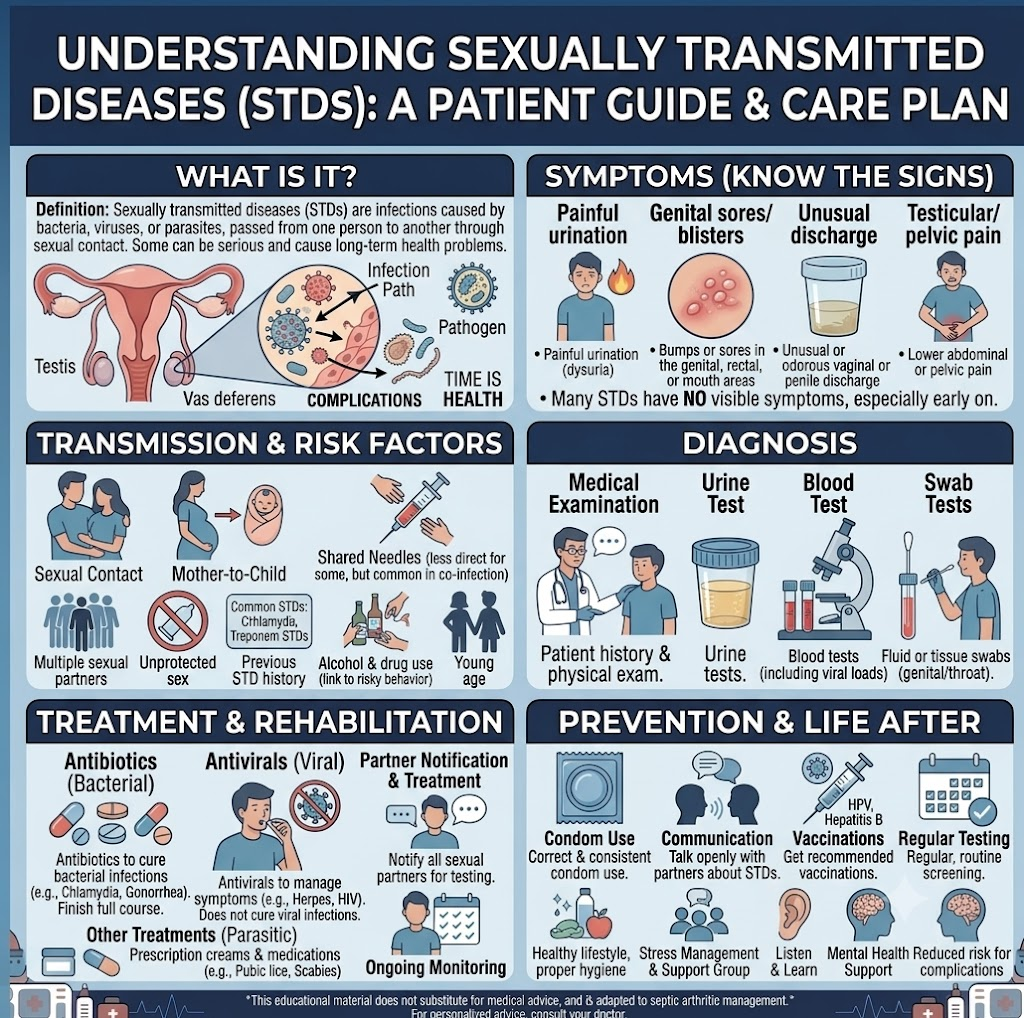
Sexually Transmitted Infections (STIs), often called Sexually Transmitted Diseases (STDs), are infections primarily passed from person to person during sexual activity. These infections are caused by tiny living things like bacteria, viruses, or parasites. STIs can spread through blood, semen, vaginal fluids, and other bodily fluids during sexual contact. They can also be passed from a mother to her baby during pregnancy or childbirth, and sometimes through shared needles or blood transfusions. A key concern with STIs is that they often have no obvious symptoms, meaning a person can be infected and unknowingly pass the infection to others, sometimes for years, before realizing they have it.
Understanding the Condition
Understanding Sexually Transmitted Infections (STIs)
Understanding the Condition
Sexually Transmitted Infections (STIs), often called Sexually Transmitted Diseases (STDs), are infections primarily passed from person to person during sexual activity. These infections are caused by tiny living things like bacteria, viruses, or parasites. STIs can spread through blood, semen, vaginal fluids, and other bodily fluids during sexual contact. They can also be passed from a mother to her baby during pregnancy or childbirth, and sometimes through shared needles or blood transfusions. A key concern with STIs is that they often have no obvious symptoms, meaning a person can be infected and unknowingly pass the infection to others, sometimes for years, before realizing they have it.
Common Symptoms
No Symptoms: Many STIs cause no noticeable symptoms, which is why they may go undetected until complications arise or a partner is diagnosed.
Genital Sores or Bumps: Sores, bumps, or warts can appear on the genitals, around the anus, or in the mouth.
Painful Urination: A burning sensation or pain when urinating can be a sign of an STI.
Unusual Discharge: Discharge from the penis or an unusual, possibly odorous, vaginal discharge.
Unusual Vaginal Bleeding: Bleeding from the vagina that is not part of a regular menstrual period.
Pain During Sex: Discomfort or pain experienced during sexual intercourse.
Swollen Lymph Nodes: Enlarged or tender glands, especially in the groin area, but sometimes more widespread in the body.
Lower Abdominal Pain: Pain or discomfort in the lower stomach area.
Body Rash: A rash appearing on the trunk of the body, hands, or feet.
Consultation Guide
Which Specialist to Meet
You can start by seeing your family doctor or general practitioner. Depending on your symptoms or diagnosis, they may refer you to a gynecologist (a doctor specializing in women's reproductive health), a urologist (a doctor specializing in men's urinary and reproductive health), or an infectious disease specialist.
Preparations Before Your Visit
Before your visit, it's important to be honest and open with your doctor about your sexual history. Write down any symptoms you've experienced, even if they seem minor, and any questions you have. If you are a woman preparing for a gynecological exam, avoid douching, using vaginal deodorants, or having sex for 24-48 hours before your appointment, as these can affect test results.
Book a doctor visit near me
Antibiotic Treatment: For bacterial STIs like chlamydia, gonorrhea, and syphilis, specific antibiotics are prescribed to cure the infection. (Duration: Typically a single dose or a course of several days to weeks. It is crucial to take all prescribed medication, even if symptoms improve.)
Antiviral Medications: For viral STIs like herpes and HIV, these medications help manage symptoms, reduce the frequency and severity of outbreaks (for herpes), and significantly reduce the viral load and transmission risk (for HIV). Viral STIs are generally not curable, but they are manageable. (Duration: May be taken short-term during outbreaks or daily for long-term management, as directed by a doctor.)
Complete Full Course of Treatment: Always finish all prescribed medication for an STI, even if symptoms improve or disappear. This ensures the infection is fully treated and helps prevent drug resistance.
Manage Complications: If you experience any complications such as persistent pelvic pain, unusual bleeding, or other concerning symptoms, seek prompt medical attention to manage them effectively and prevent long-term health issues.
Consultation Guide
This test identifies the virus that can cause serious liver inflammation.
While you lie on an exam table, a doctor or nurse will gently insert a small instrument (speculum) into your vagina to hold the vaginal walls open and see the cervix. A small brush or spatula is then used to collect cells from the surface of the cervix. This may cause a sensation of pressure or mild discomfort, but it is typically not painful.
Wart Removal Procedures: For STIs like HPV that cause genital warts, various methods can be used to remove them, including freezing (cryotherapy), burning (electrocautery), laser treatment, or surgical removal. (Duration: May involve a single procedure or a series of treatments, depending on the number and size of the warts.)
Diagnostic Procedures
Chlamydia and Gonorrhea Testing
These tests detect bacterial infections that can affect the genitals, rectum, or throat.
What to Expect
You will typically be asked to provide a urine sample. In some cases, a doctor or nurse might use a small cotton swab to gently collect fluid from your throat, anus, or the cervix (for women) if those areas might be infected. The samples are then sent to a laboratory for analysis.
HIV Test (Human Immunodeficiency Virus)
This test checks for the virus that weakens the immune system, potentially leading to AIDS.
What to Expect
An HIV test usually involves taking a small sample of blood from a vein in your arm. Rapid tests are also available that use a finger-prick blood sample or saliva, providing results within minutes.
Hepatitis B Screening
What to Expect
A small amount of blood will be drawn from a vein in your arm and sent to a lab for testing.
HPV Test (Human Papillomavirus)
This test looks for specific types of HPV that can lead to cervical cancer, anal cancer, or genital warts.
What to Expect
For women, cells are collected from the cervix, similar to a Pap smear. In certain situations, particularly for individuals at higher risk (e.g., people with HIV), cells may be collected from the anus using a swab.
This procedure screens for abnormal or precancerous cells on the cervix that could develop into cervical cancer. It is often performed alongside an HPV test.
What to Expect
A general urine test that examines the appearance, concentration, and content of your urine. While not specific for diagnosing STIs, it can help detect signs of infection or other issues that might warrant further STI-specific testing.
What to Expect
You will be asked to provide a urine sample in a sterile cup.
Complete Blood Count (CBC)
A common blood test that measures different components of your blood, such as red and white blood cells. While not used to diagnose a specific STI, it can provide a general overview of your health and help detect signs of infection or inflammation that may prompt additional investigation.
What to Expect
A small amount of blood will be drawn from a vein in your arm.
Mutual Monogamy and Testing: Staying in a long-term sexual relationship where both partners have sex only with each other and have both tested negative for STIs.
Wait and Get Tested: Before engaging in sexual activity with a new partner, both individuals should get tested for STIs and share their results.
Vaccination: Vaccines are available to protect against certain STIs, including Human Papillomavirus (HPV) and Hepatitis A and B. Discuss with your doctor if these vaccines are right for you.
Consistent and Correct Barrier Use: Use a new latex or polyurethane condom for every act of vaginal, anal, and oral sex. Use a dental dam for oral sex on the vulva or anus. It's important to note that barriers may not protect against all STIs that involve exposed skin sores (e.g., HPV, herpes) if the sores are outside the protected area.
Limit Sexual Partners: The risk of acquiring an STI generally increases with the number of sexual partners you have.
Avoid Substance Misuse: Excessive alcohol consumption or recreational drug use can impair judgment, potentially leading to risky sexual behaviors.
Open Communication: Talk openly and honestly with your sexual partner(s) about STI status, testing, and safer sex practices before any sexual contact.
Male Circumcision: For men, circumcision has been shown to reduce the risk of acquiring HIV from a female partner, and may also help prevent the spread of genital HPV and genital herpes.
Partner Notification: If diagnosed with an STI, it's crucial to inform your sexual partners so they can also get tested and treated. This prevents reinfection and further spread.
Treatment Options
Medications
Antiparasitic Treatment: For parasitic STIs such as trichomoniasis, specific antiparasitic medications are used to eliminate the parasite. (Duration: Often a single oral dose or a course of several days.)
Pre-Exposure Prophylaxis (PrEP): For individuals at very high risk of HIV infection, taking specific daily medications can significantly lower their chances of getting HIV. Discuss with a healthcare provider if PrEP is appropriate for you.
Long-Term Monitoring and Health
Regular Screening: If you are sexually active, particularly with multiple or new partners, discuss appropriate STI screening frequency with your doctor.
Emotional Support After Forced Sexual Activity: If you have been forced to engage in sexual activity, seek immediate medical attention for STI screening, necessary treatment, and emotional support services.
Prevention & Long-Term Wellbeing
Prevention
Abstinence: Choosing not to have any sexual contact (vaginal, anal, or oral sex) is the most effective way to prevent STIs.
Tags & Topics
Notice an error or need an update?
Help us keep medical information accurate. Report incorrect info or suggest an edit.


