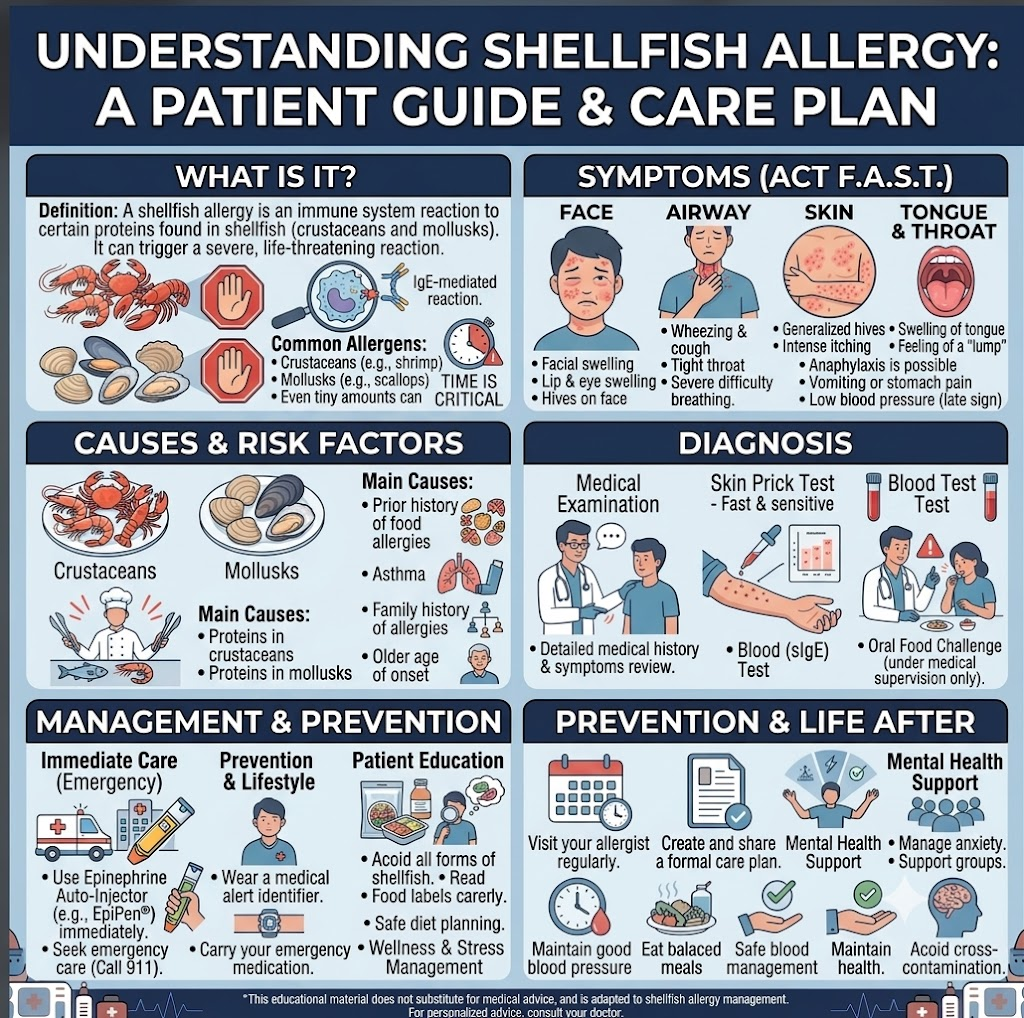
A shellfish allergy is an immune system overreaction to proteins found in certain marine animals, specifically crustaceans (like shrimp, crabs, and lobsters) and mollusks (such as clams, oysters, and squid). It is one of the most common food allergies, particularly in adults. While some individuals react to all shellfish, others may only react to specific types. Symptoms can range from mild skin rashes to severe, life-threatening allergic emergencies.
Understanding the Condition
Understanding Shellfish Allergy: Symptoms, Diagnosis, and Management
Understanding the Condition
A shellfish allergy is an immune system overreaction to proteins found in certain marine animals, specifically crustaceans (like shrimp, crabs, and lobsters) and mollusks (such as clams, oysters, and squid). It is one of the most common food allergies, particularly in adults. While some individuals react to all shellfish, others may only react to specific types. Symptoms can range from mild skin rashes to severe, life-threatening allergic emergencies.
Common Symptoms
Skin Reactions: Itchy, red, or irritated skin, including raised welts known as hives (urticaria).
Swelling (Angioedema): Swelling that commonly affects the lips, face, tongue, throat, or other areas of the body.
Respiratory Issues: Difficulty breathing, wheezing, persistent coughing, or a tight feeling in the chest and throat.
Digestive Distress: Abdominal pain, severe stomach cramps, nausea, vomiting, or diarrhea.
Cardiovascular and Neurological Symptoms: Dizziness, lightheadedness, confusion, or fainting due to a sudden drop in blood pressure.
Anaphylaxis: A severe, rapid, and potentially life-threatening allergic reaction that requires immediate medical emergency intervention.
Consultation Guide
Which Specialist to Meet
Keep a detailed diary of what you eat and any symptoms you experience. List all medications and supplements you take. Ask your specialist beforehand if you need to stop taking antihistamines, as these can interfere with allergy test results.
Book a doctor visit near me
Oral Antihistamines: Over-the-counter or prescription medications that block histamines to relieve mild symptoms like hives, itching, or nasal congestion. (Duration: Taken as needed during a mild reaction; typically provides relief within hours.)
Allergen Avoidance Therapy: The primary and most effective strategy, involving strict, proactive avoidance of all forms of shellfish. (Duration: Lifelong strategy, as shellfish allergies rarely resolve on their own.)
Diagnostic Procedures
You should see a board-certified allergist and immunologist, a specialist who diagnoses and treats allergies and asthma.
Preparations Before Your Visit
This test introduces tiny amounts of shellfish proteins into the skin's surface to check for an immediate allergic response.
What to Expect
A nurse or doctor will apply diluted allergen drops onto your forearm or back, then gently prick the skin with a tiny, sterile needle. You will wait about 15 to 20 minutes. If you are allergic, a small, itchy bump resembling a mosquito bite will appear at the test site.
Allergen-Specific IgE Blood Test
This test measures the concentration of specific immunoglobulin E (IgE) antibodies to shellfish proteins in your bloodstream.
What to Expect
A healthcare professional will perform a standard blood draw from a vein in your arm. The sample is sent to a laboratory for analysis. Results typically take a few days to return, and this test is completely safe for individuals with severe skin conditions.
The most definitive allergy test, where you consume small, gradually increasing amounts of the suspected shellfish under close observation.
What to Expect
This test is conducted exclusively in a specialized medical facility with emergency resuscitation equipment on hand. You will eat tiny portions of shellfish at timed intervals. Medical staff will monitor your vital signs and skin continuously for any signs of an allergic reaction.
Treatment Options
Emergency Medical Intervention
Emergency Adrenaline Injection: An immediate rescue injection used to halt a severe allergic reaction (anaphylaxis) by relaxing airway muscles and raising blood pressure. (Duration: Administered immediately during an emergency; requires immediate follow-up care at an emergency room.)
Prevention & Long-Term Wellbeing
Prevention & Safety Strategies
Rigorous Label Reading: Always read ingredient labels. Look for declarations of crustacean ingredients. Be aware that mollusks may not always be clearly labeled under standard regulations.
Preventing Cross-Contamination: Avoid seafood restaurants where shared grills, fryers, or utensils increase the risk of shellfish coming into contact with safe foods.
Emergency Preparedness: Always carry two emergency adrenaline auto-injectors with you at all times and regularly check their expiration dates.
Informing Others: Explicitly communicate your severe allergy to restaurant staff, chefs, family, and coworkers before eating any prepared food.
Medical Identification: Wear a medical alert bracelet or necklace that clearly states your shellfish allergy to inform first responders in an emergency.
Environmental Caution: Stay away from areas where shellfish is being cooked, as inhaling airborne steam or vapors containing shellfish proteins can trigger a reaction.
Tags & Topics
Notice an error or need an update?
Help us keep medical information accurate. Report incorrect info or suggest an edit.


