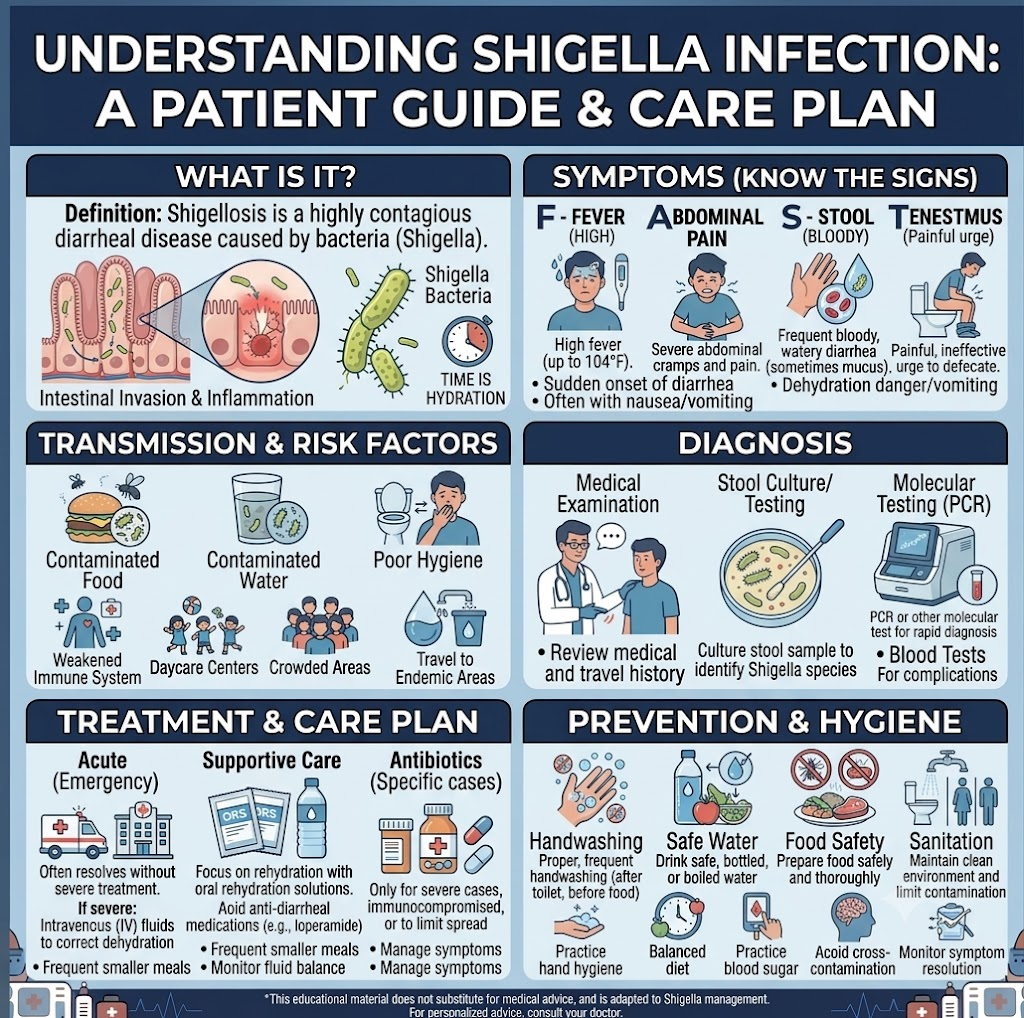
Shigella infection, also known as shigellosis, is an illness that primarily affects the intestines. It's caused by a group of germs called Shigella bacteria. This condition often leads to diarrhea, which can sometimes be severe, bloody, or long-lasting. While anyone can get sick, children under five years old are most commonly affected. The bacteria spread easily through contact with infected stool, contaminating hands, surfaces, food, or water. Most people recover within a week, but severe cases may require specific medications.
Understanding the Condition
Shigella Infection: Understanding and Preventing a Common Gut Illness
Understanding the Condition
Common Symptoms
Diarrhea: Loose, watery stools that may contain blood or mucus. This can be persistent and last for more than three days.
Stomach Pain and Cramps: Discomfort, aching, or sharp pains in the belly area.
Persistent Urge to Go: A feeling of needing to pass stool even when the bowels are empty, often called tenesmus.
Nausea and Vomiting: Feeling sick to your stomach or throwing up food and liquids.
Fever: An elevated body temperature, which can sometimes be quite high.
Consultation Guide
Which Specialist to Meet
For initial evaluation, consult your primary care doctor or a pediatrician for children. If the infection is severe, persistent, or leads to complications, an infectious disease specialist may be involved.
Preparations Before Your Visit
Before your visit, track your symptoms carefully, noting their onset, type (e.g., watery, bloody diarrhea), severity, and how long they've lasted. Keep a record of your temperature, any recent travel, and contact with sick individuals. Be prepared to share your diet history and all current medications. Seek immediate medical attention if you or your child experiences bloody diarrhea, signs of severe dehydration (like little or no urination, very dry mouth, dizziness upon standing), diarrhea with a fever of 102°F (39°C) or higher, terrible stomach cramps, or frequent vomiting that prevents fluid intake.
Book a doctor visit near me
Rest: Allowing your body sufficient rest is crucial for recovery from the infection, as the body expends energy fighting off the illness. (Duration: As needed, until symptoms subside and energy levels return to normal, often 3-7 days.)
Preventing Spread When Sick: If you or your child has diarrhea or a known Shigella infection, stay home from work (especially if you work in healthcare, food service, or childcare), school, or childcare. Do not go swimming until fully recovered and symptom-free.
Safe Sexual Practices: Avoid sexual contact that involves the anus for at least two weeks after recovering from diarrhea, particularly if a Shigella infection has been confirmed, to prevent germ transmission.
Long-Term Wellbeing and Monitoring
Monitoring for Complications: Although most people recover without issues, be vigilant for rare complications such as severe dehydration, persistent high fever, severe abdominal pain, or unusual joint pain and eye irritation that may occur weeks after the initial infection. Seek medical advice if these arise.
Consultation Guide
Shigella infection, also known as shigellosis, is an illness that primarily affects the intestines. It's caused by a group of germs called Shigella bacteria. This condition often leads to diarrhea, which can sometimes be severe, bloody, or long-lasting. While anyone can get sick, children under five years old are most commonly affected. The bacteria spread easily through contact with infected stool, contaminating hands, surfaces, food, or water. Most people recover within a week, but severe cases may require specific medications.
Fluid Replacement: Drinking plenty of clear liquids like water, broths, or oral rehydration solutions to prevent and treat dehydration caused by diarrhea and vomiting. Avoid sugary drinks or plain water alone in severe cases. (Duration: Continue until diarrhea stops and hydration is fully restored, typically several days to a week.)
Diagnostic Procedures
A laboratory test used to identify specific bacteria causing intestinal infections by examining a sample of your stool. This helps doctors confirm a Shigella infection and guides appropriate treatment.
What to Expect
You will be given a sterile container and clear instructions on how to collect a small sample of your stool at home. It's important to collect the sample cleanly to avoid contamination. Once collected, you will seal the container and bring it to your clinic or a designated laboratory. The lab technicians will then grow bacteria from the sample to specifically identify the presence of Shigella.
Treatment Options
Home Remedies and Supportive Care
Medications
Antibiotics: These prescription medicines specifically target and eliminate the Shigella bacteria. They are often prescribed for severe infections, individuals with weakened immune systems, or those at high risk of spreading the illness. (Duration: Typically a course of 3-7 days, depending on the specific medication and the severity of the infection, as directed by your doctor. It is vital to complete the full course of treatment.)
Prevention & Long-Term Wellbeing
Dietary Adjustments: Eating bland, easily digestible foods like bananas, rice, applesauce, and toast (often referred to as the BRAT diet) can help ease digestive upset. Avoid spicy, fatty, or sugary foods, which can worsen diarrhea. (Duration: During the acute phase of illness, typically for a few days, gradually reintroducing other foods as tolerated.)
Prevention Strategies
Excellent Hand Hygiene: Wash hands thoroughly with soap and water for at least 20 seconds, especially after using the bathroom, changing diapers, and before preparing or eating food. Supervise small children to ensure they wash their hands properly.
Safe Food Handling: Avoid preparing food for others if you have diarrhea. Ensure all food is prepared under sanitary conditions, especially if handling raw produce or meat.
Safe Water Practices: Do not swallow water from untreated sources such as ponds, lakes, rivers, or inadequately chlorinated swimming pools, as these can be contaminated.
Restoring Gut Health: After recovery, focusing on a balanced diet rich in fiber and potentially incorporating probiotics (beneficial bacteria) can help restore the natural balance of your gut microbiome.
Tags & Topics
Notice an error or need an update?
Help us keep medical information accurate. Report incorrect info or suggest an edit.


