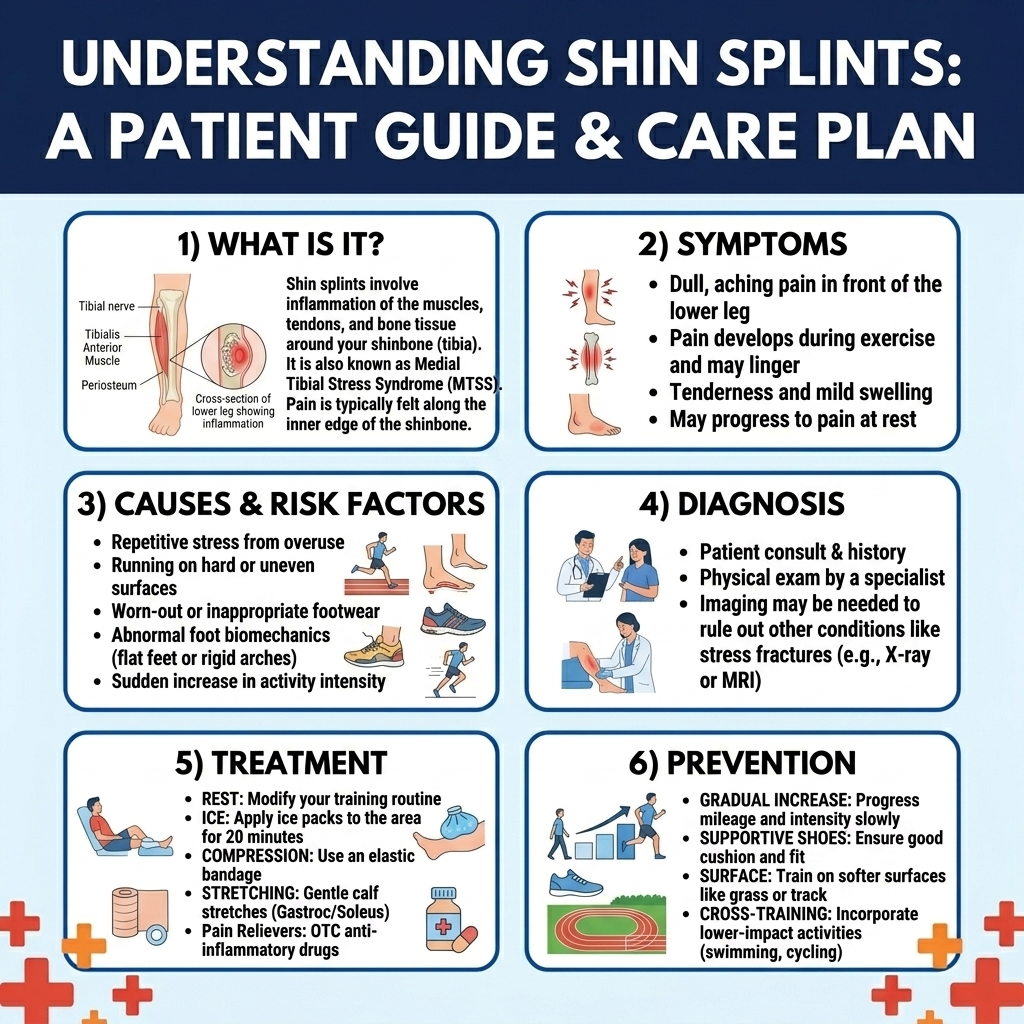
Shin splints, medically known as medial tibial stress syndrome, refer to pain felt along the inner or front edge of your shinbone (tibia). This common condition affects the large bone in the front of your lower leg and the surrounding muscles and connective tissues. It frequently occurs in individuals engaged in high-impact activities like running, dancing, or military training, especially when they intensify their workouts too quickly. The increased stress on these tissues leads to irritation and discomfort.
Understanding the Condition
Shin Splints: Understanding and Managing Lower Leg Pain
Understanding the Condition
Shin splints, medically known as medial tibial stress syndrome, refer to pain felt along the inner or front edge of your shinbone (tibia). This common condition affects the large bone in the front of your lower leg and the surrounding muscles and connective tissues. It frequently occurs in individuals engaged in high-impact activities like running, dancing, or military training, especially when they intensify their workouts too quickly. The increased stress on these tissues leads to irritation and discomfort.
Common Symptoms
Shin Pain: Tenderness, soreness, or pain primarily along the inner side of your shinbone. You might also notice mild swelling in the lower leg area.
Pain Progression: Initially, the pain might improve or disappear when you stop exercising or with stretching. However, if the stress continues, the pain can become constant, even at rest. Persistent or worsening pain could indicate a more serious underlying issue, such as a stress reaction or a small crack in the bone (stress fracture).
Consultation Guide
Which Specialist to Meet
You should first consult with your primary care physician. If needed, they may refer you to a sports medicine doctor, an orthopedic specialist, or a physical therapist, who specialize in musculoskeletal conditions and athletic injuries.
Preparations Before Your Visit
Before your appointment, be prepared to discuss:- A detailed history of your symptoms, including when they started, what activities trigger them, and what makes them better or worse.- Your exercise routine, including type, frequency, intensity, and any recent changes.- What self-care measures you have already tried (e.g., rest, ice, over-the-counter pain relievers) and if they provided any relief.- Any other medical conditions or medications you are currently taking.
Book a doctor visit near me
Consultation Guide
Rest: Stop or significantly reduce the activity that causes pain. This allows the inflamed tissues and stressed bone to heal. (Duration: Typically 1-2 weeks of reduced activity, gradually increasing as pain subsides.)
Ice Application: Apply ice packs to the affected shin area for 15-20 minutes several times a day to reduce pain and swelling. (Duration: Continue for the first few days after injury or as needed for pain relief.)
Compression: Use an elastic bandage or compression sleeve around your shin to help reduce swelling. (Duration: Wear during the day as long as swelling is present or during activity for support.)
Elevation: Elevate your lower leg above heart level whenever possible to help reduce swelling. (Duration: As needed, especially during rest periods.)
Diagnostic Procedures
An X-ray is a quick, non-invasive imaging test that uses a small amount of radiation to create pictures of the inside of your body, focusing primarily on bones. While shin splints themselves are not visible on an X-ray, this test is often performed to rule out other, more serious bone-related issues such as a stress fracture, which is a small crack in the bone.
What to Expect
You will be asked to remove any metal objects or jewelry that could interfere with the image. You'll lie on a table or stand in specific positions, and the technician will carefully position the part of your leg being examined. You will need to hold still for a few moments while the X-ray machine captures the images. The procedure is painless and usually takes only a few minutes.
Treatment Options
Home Remedies and Self-Care
Medications
Over-the-Counter Pain Relievers: Non-prescription pain medications can help manage pain and reduce inflammation. (Duration: Use as directed on the packaging for short-term pain relief.)
Therapies
Physical Therapy: A physical therapist can assess your biomechanics, identify muscle imbalances or weaknesses, and teach you exercises to strengthen leg and core muscles, improve flexibility, and correct gait issues. They may also suggest taping or specific stretches. (Duration: Typically 4-8 weeks, depending on individual progress and severity.)
Prevention & Long-Term Wellbeing
Activity Modification: Modify your exercise routine to low-impact activities (e.g., swimming, cycling) that do not aggravate your shin pain, allowing you to maintain fitness without further injury. (Duration: Throughout recovery, typically several weeks, until high-impact activities can be resumed without pain.)
Prevention and Long-Term Wellbeing
Choose Appropriate Footwear: Wear athletic shoes that provide good cushioning and support, especially designed for your activity (e.g., running shoes for runners). Replace worn-out shoes regularly, typically every 300-500 miles for runners, as cushioning degrades over time. Consider custom orthotics if you have flat feet or rigid arches.
Gradually Increase Activity: Avoid increasing the intensity, duration, or frequency of your workouts too quickly. Follow the '10% rule,' meaning you should not increase your weekly training load by more than 10% to allow your body to adapt.
Vary Your Exercise Surfaces: Whenever possible, train on softer, more forgiving surfaces like dirt trails, grass, or synthetic tracks instead of hard surfaces like concrete or asphalt, which can increase impact stress on your shins.
Strengthen and Stretch Muscles: Incorporate strength training exercises for your calves, shins, hips, and core muscles to improve stability and support. Regularly stretch your calf muscles and Achilles tendon to improve flexibility.
Cross-Train: Alternate high-impact activities with low-impact exercises such as swimming, cycling, or elliptical training. This reduces repetitive stress on your shins while maintaining cardiovascular fitness.
Listen to Your Body: Pay attention to early signs of pain or discomfort. Do not try to 'push through' shin pain, as this can worsen the condition and lead to more serious injuries like stress fractures. Take rest days when needed.
Tags & Topics
Notice an error or need an update?
Help us keep medical information accurate. Report incorrect info or suggest an edit.


