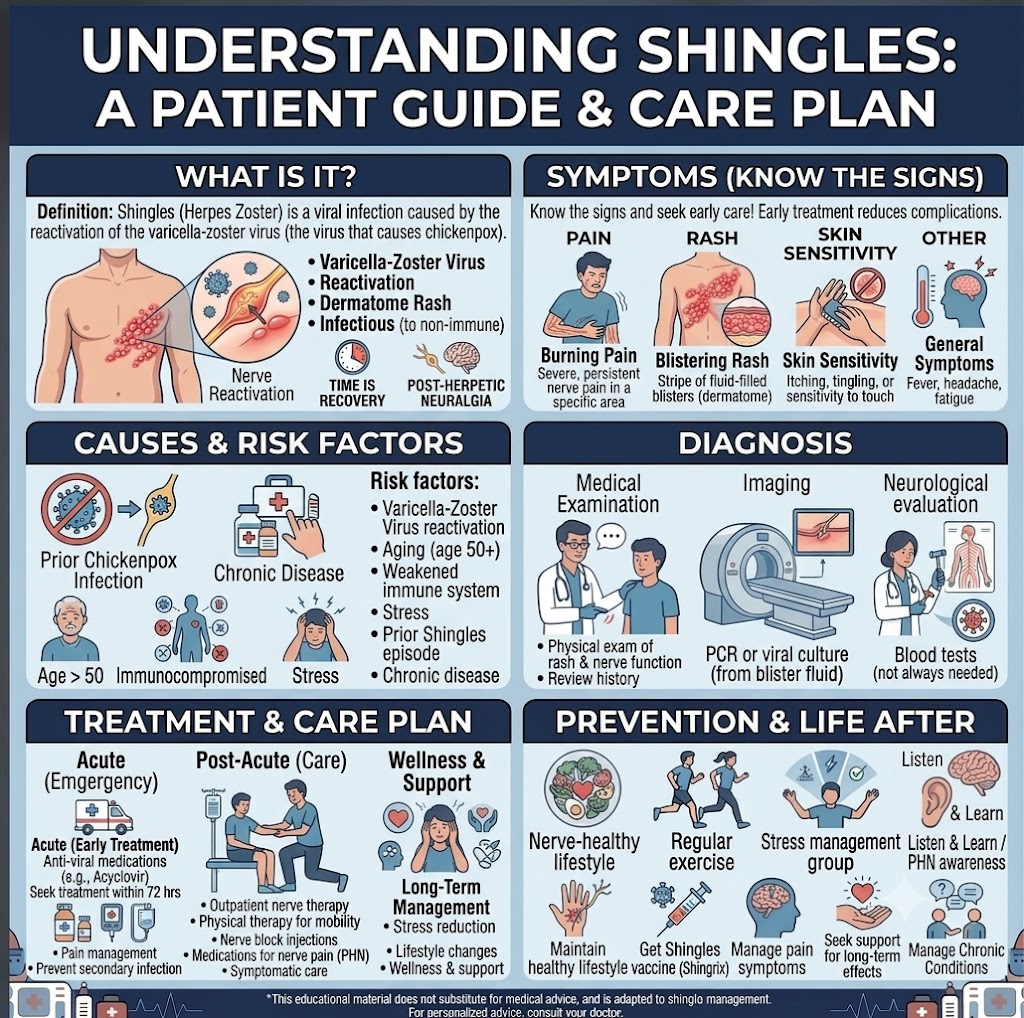
Shingles is a viral infection that causes a painful skin rash. It typically appears as a band of fluid-filled blisters on one side of the body, often on the torso. This condition is caused by the same virus responsible for chickenpox. After a chickenpox infection, the virus remains inactive in your body and can reactivate years later as shingles. While not life-threatening, shingles can be very painful. Fortunately, vaccines can significantly reduce your risk, and early treatment can shorten the infection and prevent complications like long-term nerve pain.
Understanding the Condition
Shingles: Understanding the Painful Rash
Understanding the Condition
Common Symptoms
Pain, Burning, or Tingling: Usually the first symptom, often intense, localized to one side of the body, and can sometimes be mistaken for other conditions affecting the heart, lungs, or kidneys.
Red Rash: Develops a few days after the initial pain, typically appearing as a stripe of small, fluid-filled blisters on one side of the torso, face, or neck. Some people experience pain without ever developing a visible rash.
General Symptoms: May include fever, headache, sensitivity to light, and general fatigue.
Consultation Guide
Which Specialist to Meet
Initially, you should see your primary care physician. If the rash is near your eye, an ophthalmologist (eye specialist) may be needed. For severe or complicated cases, a dermatologist (skin specialist) or an infectious disease specialist might be consulted.
Preparations Before Your Visit
Before your visit, make a list of your symptoms, including when they started and how severe they are. Note any medications you are currently taking, your medical history (especially if you've had chickenpox or the shingles vaccine), and any questions you have for the doctor.
Book a doctor visit near me
A healthcare provider will examine your rash and ask about your symptoms to determine if they are consistent with shingles.
Cool Compresses and Baths: Applying cool, damp compresses to the rash or taking cool baths with colloidal oatmeal can soothe itching and discomfort. (Duration: As needed for symptom relief.)
Loose-Fitting Clothing: Wearing loose, cotton clothing can prevent irritation to the sensitive rash. (Duration: Throughout the rash period.)
Consultation Guide
Shingles is a viral infection that causes a painful skin rash. It typically appears as a band of fluid-filled blisters on one side of the body, often on the torso. This condition is caused by the same virus responsible for chickenpox. After a chickenpox infection, the virus remains inactive in your body and can reactivate years later as shingles. While not life-threatening, shingles can be very painful. Fortunately, vaccines can significantly reduce your risk, and early treatment can shorten the infection and prevent complications like long-term nerve pain.
Blisters: Fluid-filled blisters that eventually break open, crust over, and heal. The rash often causes significant itching.
A healthcare professional will gently swab or scrape the base of a blister to collect a fluid sample. This sample is then sent to a lab for testing, such as a polymerase chain reaction (PCR) test or viral culture, to confirm the presence of the virus that causes shingles. This procedure is generally quick and causes minimal discomfort.
Diagnostic Procedures
What to Expect
The doctor will visually inspect your skin rash, noting its location, appearance, and extent. They will also inquire about your pain level, any tingling or burning sensations, and your medical history, particularly if you have previously had chickenpox.
Laboratory Tests (if necessary)
In some cases, especially if the diagnosis is unclear or the patient has a weakened immune system, a sample from a blister may be sent to a laboratory.
What to Expect
Treatment Options
Medications
Antiviral Medications: Prescription antiviral drugs can reduce pain, speed healing of the rash, and lower the risk of complications, especially if started within 72 hours of the rash appearing. (Duration: Typically 7-10 days)
Pain Relievers: Over-the-counter pain medications can help manage discomfort. For severe pain, your doctor may prescribe stronger pain medication. (Duration: As needed throughout the course of the infection and potentially longer for nerve pain.)
Topical Treatments: Creams or patches containing numbing agents or capsaicin can be applied to the skin to relieve pain. (Duration: As needed, typically after blisters have healed.)
Home Remedies and Self-Care
Monitor for Postherpetic Neuralgia (PHN): Be aware of prolonged pain after the rash has cleared. PHN is a common complication that can last for months or even years. Early recognition and treatment are important.
Pain Management for PHN: If PHN develops, consult your healthcare provider for specific treatments tailored to chronic nerve pain, which may include different types of medications or therapies.
Avoid Alcohol During Treatment: It is generally advisable to avoid alcohol while undergoing treatment with antiviral medications, as alcohol can reduce medication effectiveness and increase side effects like dizziness.
Prevention & Long-Term Wellbeing
Stress Reduction: Managing stress through relaxation techniques may support immune function and overall well-being during recovery. (Duration: Ongoing.)
Nerve Blocks: For persistent or severe pain, particularly with postherpetic neuralgia, injections that block nerve signals can provide relief. (Duration: Temporary relief, may require repeated procedures.)
Prevention
Vaccination: The shingles vaccine is highly effective at preventing shingles and its complications. It is recommended for adults aged 50 and older, and for adults aged 19 and older who have weakened immune systems. Even if you've had shingles or the older vaccine, you should still get the current recommended vaccine. It is given in two doses, 2 to 6 months apart.
Avoid Contact with Vulnerable Individuals (if rash is active): If you have an active shingles rash, avoid contact with people who have not had chickenpox, pregnant individuals, premature babies, and those with weakened immune systems, as the virus can be spread through direct contact with open blisters.
Long-Term Monitoring and Management
Maintain a Healthy Lifestyle: A balanced diet, regular exercise, adequate sleep, and stress management can support your immune system and overall health, potentially reducing the risk of viral reactivation or severity.
Tags & Topics
Notice an error or need an update?
Help us keep medical information accurate. Report incorrect info or suggest an edit.


