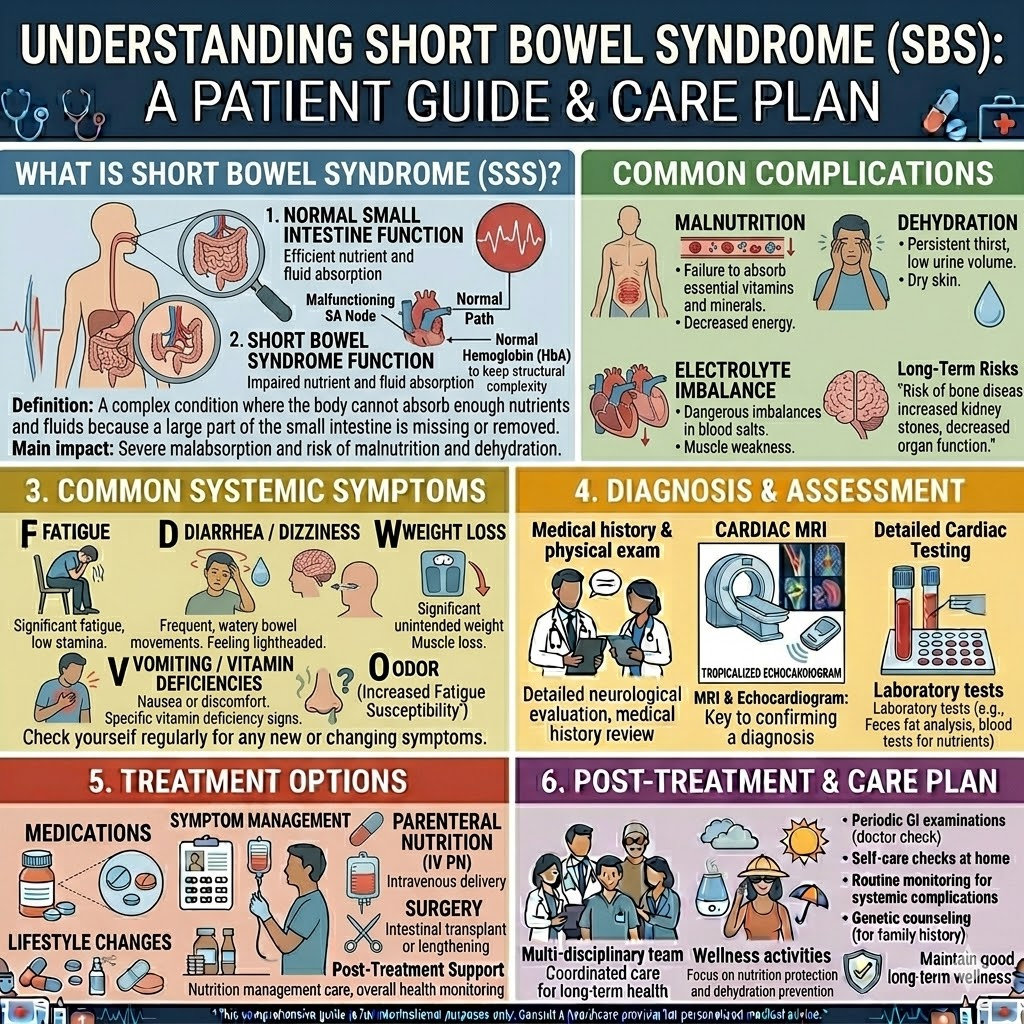
Short Bowel Syndrome (SBS) is a serious condition where your body struggles to absorb enough nutrients from food because a significant part of your small intestine is either missing or damaged. The small intestine is crucial for absorbing most of the vitamins, minerals, fats, proteins, and carbohydrates you eat. SBS typically occurs when large sections of the small intestine have been surgically removed due to conditions like Crohn's disease, cancer, severe injury, or blood clots, or when a baby is born with a naturally short or damaged small intestine. This inability to absorb essential nutrients can lead to significant health problems.
Understanding the Condition
Short Bowel Syndrome: Understanding and Managing the Condition
Understanding the Condition
Common Symptoms
Before your visit, gather all your medical records, including any previous surgeries or diagnoses. Make a detailed list of all current medications, vitamins, and supplements you take. Note down all your symptoms, including when they started, how often they occur, and what seems to make them better or worse. Prepare a list of questions you have for the doctor.
Book a doctor visit near me
Medications to Improve Absorption and Reduce Symptoms: Various medications can slow food transit, reduce stomach acid, control diarrhea, bind excess bile acids, and improve the intestine's nutrient and fluid absorption. (Duration: Ongoing, as prescribed by your doctor)
Monitoring for Complications: Be vigilant for signs of infection (especially with IV lines), dehydration, electrolyte imbalances, and liver problems. Report any new or worsening symptoms to your healthcare provider immediately.
Psychological and Emotional Support: Living with a chronic condition like SBS can be challenging. Seeking support from family, friends, support groups, or mental health professionals can help manage stress, anxiety, and depression associated with the condition.
Physical Activity: Engage in regular, moderate physical activity as tolerated and advised by your doctor. This can help maintain muscle mass, improve bone density (often compromised in SBS), and boost overall well-being.
Consultation Guide
Short Bowel Syndrome (SBS) is a serious condition where your body struggles to absorb enough nutrients from food because a significant part of your small intestine is either missing or damaged. The small intestine is crucial for absorbing most of the vitamins, minerals, fats, proteins, and carbohydrates you eat. SBS typically occurs when large sections of the small intestine have been surgically removed due to conditions like Crohn's disease, cancer, severe injury, or blood clots, or when a baby is born with a naturally short or damaged small intestine. This inability to absorb essential nutrients can lead to significant health problems.
Fatty, Foul-Smelling Stools: Because fats are not properly absorbed, stools can appear greasy, often float, and have a very strong, unpleasant odor.
Unexplained Weight Loss: Despite eating, the body cannot absorb enough calories and nutrients, leading to noticeable and often rapid weight loss.
Nutrient Deficiency (Malnutrition): The lack of absorbed nutrients causes the body to become malnourished, affecting overall health, energy levels, and vital organ function. This can manifest as fatigue, weakness, and poor immunity.
Swelling (Edema) in Legs and Feet: Poor nutrient absorption, especially protein, can lead to fluid retention and swelling, commonly seen in the lower extremities.
Consultation Guide
Which Specialist to Meet
A healthcare professional will draw a small amount of blood, usually from a vein in your arm. This is a quick procedure that may cause a brief pinch.
Diagnostic Procedures
To diagnose and manage Short Bowel Syndrome, you will likely consult with a gastroenterologist (a doctor specializing in digestive diseases), a registered dietitian or nutrition specialist who can create tailored dietary plans, and potentially an intestinal rehabilitation specialist or surgeon depending on the severity and treatment required.
Preparations Before Your Visit
These tests analyze blood samples for levels of vitamins, minerals, electrolytes, protein, and liver/kidney function, identifying deficiencies and assessing overall health.
What to Expect
Stool samples are analyzed to measure fat content, indicating how well fats are absorbed. High fat in stool (steatorrhea) signals malabsorption.
What to Expect
You will collect a stool sample at home using a provided container and instructions, then return it to the lab.
Imaging Studies (e.g., Barium Follow-Through, CT or MRI Enterography)
These use X-rays, CT, or MRI to visualize the small intestine's length, health, and identify abnormalities like blockages. They provide detailed pictures of your remaining bowel.
What to Expect
You'll likely drink a contrast solution (barium or other) and/or receive an intravenous dye. You will lie on a table as images are taken over 30 minutes to a few hours. You may be asked to hold your breath.
Endoscopy or Colonoscopy with Biopsy
A flexible tube with a camera views the upper small intestine (endoscopy) or colon/lower small intestine (colonoscopy). Small tissue samples (biopsies) may be taken to check for inflammation or damage.
What to Expect
Performed under sedation or light anesthesia, requiring fasting. Colonoscopy also needs bowel preparation. You will lie comfortably and usually won't feel pain. Afterward, expect grogginess and possible mild bloating.
Enteral Nutrition (Tube Feeding): If oral intake isn't enough, a feeding tube delivers liquid nutrition directly to the stomach or small intestine, often overnight or throughout the day. (Duration: Variable, from weeks to years, or indefinitely)
Parenteral Nutrition (IV Feeding): For severe malabsorption, essential nutrients, fluids, and calories are delivered directly into the bloodstream via an IV line, bypassing the digestive system. (Duration: Variable, from weeks to years, or indefinitely, sometimes as lifelong support)
Intestinal Lengthening Procedures: Surgical techniques to increase the length of the remaining small intestine, aiming to improve its surface area for nutrient absorption in select patients. (Duration: One-time surgical procedure; long-term benefits aim to reduce dependence on other nutritional support)
Small Bowel Transplantation: A complex and high-risk surgical option for very severe, life-threatening cases where all other treatments have failed, involving transplantation of a donor small intestine. (Duration: One-time surgical procedure with extensive recovery and lifelong anti-rejection medication and management)
Treatment Options
Medications & Nutritional Support
Oral Nutritional Supplements: Liquid or powdered supplements provide extra calories, proteins, vitamins, and minerals when food intake is insufficient, taken by mouth between meals. (Duration: As needed, often long-term)
Regular Medical Follow-ups: Consistent visits with your medical team (gastroenterologist, dietitian) are crucial to monitor your nutritional status, adjust treatments, identify potential complications, and ensure your overall health is managed effectively.
Prevention & Long-Term Wellbeing
Dietary Management
Dietary Management: A personalized dietitian-led meal plan is crucial. This involves small, frequent meals, emphasizing complex carbohydrates and lean proteins, and limiting high-fat foods. Specific nutrient-dense foods will be recommended. (Duration: Ongoing, lifelong)
Long-Term Management & Support
Adherence to Diet and Nutritional Support: Strictly following your personalized dietary plan, taking prescribed supplements, and consistently using enteral or parenteral nutrition as instructed are vital for maintaining nutrient levels and preventing complications.
Hydration Management: Maintaining adequate fluid intake is critical, especially given potential fluid losses from diarrhea. Your doctor or dietitian will provide specific guidance on how much and what types of fluids to consume.
Tags & Topics
Notice an error or need an update?
Help us keep medical information accurate. Report incorrect info or suggest an edit.


