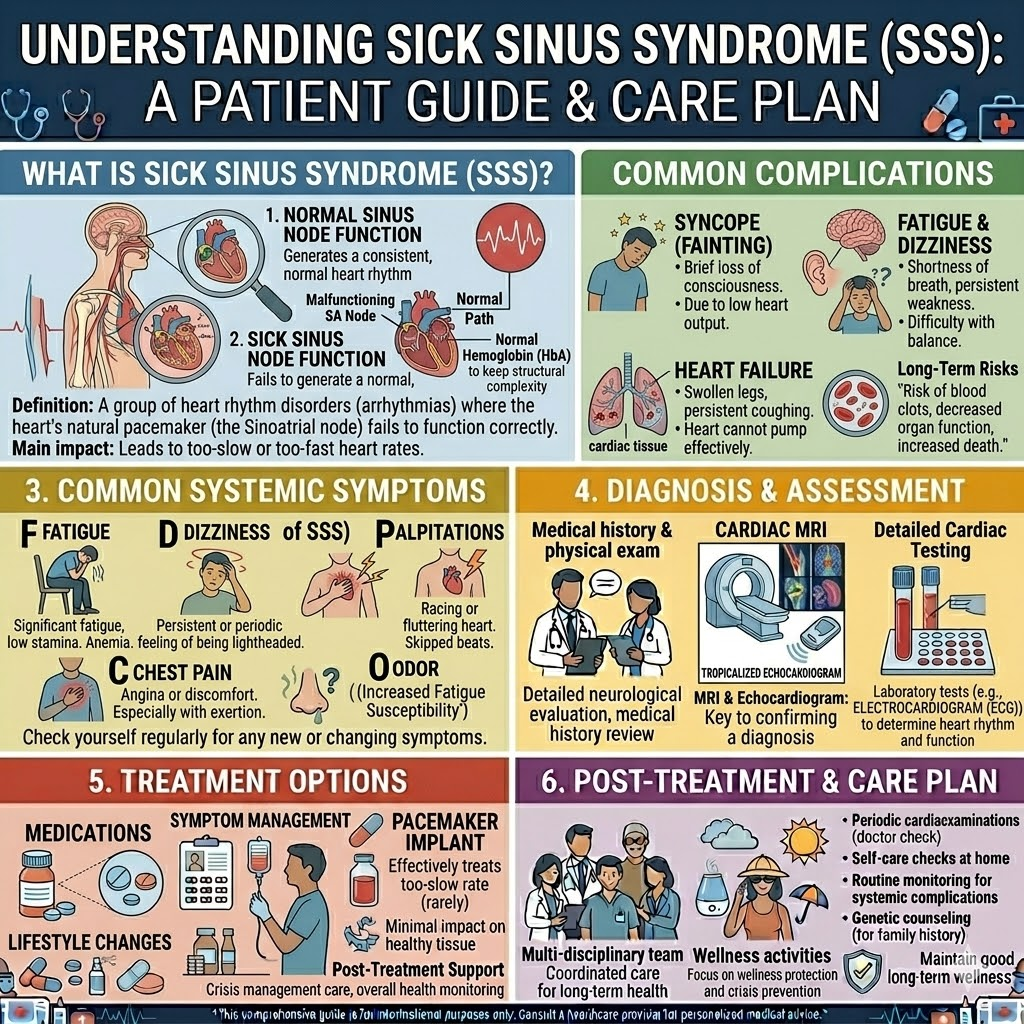
Sick sinus syndrome is a heart condition where the heart's natural pacemaker, called the sinus node, doesn't work correctly. This can lead to a heartbeat that is too slow, has long pauses, or is irregular. While relatively uncommon, the risk increases with age. Many individuals with this condition eventually need a small implanted device called a pacemaker to help their heart maintain a steady rhythm. It's also known as sinus node dysfunction or sinus node disease.
Understanding the Condition
Sick Sinus Syndrome: Understanding Your Heart's Natural Rhythm
Understanding the Condition
Sick sinus syndrome is a heart condition where the heart's natural pacemaker, called the sinus node, doesn't work correctly. This can lead to a heartbeat that is too slow, has long pauses, or is irregular. While relatively uncommon, the risk increases with age. Many individuals with this condition eventually need a small implanted device called a pacemaker to help their heart maintain a steady rhythm. It's also known as sinus node dysfunction or sinus node disease.
Common Symptoms
Dizziness or Lightheadedness: Feeling unsteady or faint.
Fainting (Syncope): Temporary loss of consciousness.
Shortness of Breath: Difficulty breathing, especially with activity.
Chest Pain: Discomfort or pressure in the chest.
Fatigue: Persistent tiredness or lack of energy.
Memory Problems or Confusion: Difficulty concentrating or thinking clearly.
Palpitations: A feeling that your heart is racing, pounding, or skipping beats.
Consultation Guide
Which Specialist to Meet
You should consult with a doctor specializing in heart conditions, known as a cardiologist. For specific heart rhythm issues, an electrophysiologist (a cardiologist specializing in the heart's electrical system) may be recommended.
Preparations Before Your Visit
Before your visit, make a list of all your symptoms, including when they started and how often they occur. Be ready to share your complete medical history, including any other health conditions and medications you are taking. Write down any questions you have.
Book a doctor visit near me
Similar to an ECG, several electrodes are attached to your chest. These electrodes connect to a small recording device that you wear on a belt or strap over your shoulder. You'll carry on with your normal daily activities, but you might be asked to avoid showering or getting the device wet. You may also be asked to keep a diary of your activities and any symptoms you experience while wearing the monitor. After the monitoring period, you'll return the device so the data can be analyzed.
Monitor Symptoms: Be aware of any changes in your symptoms. Report new or worsening dizziness, fainting spells, or unusual heart sensations to your healthcare provider promptly.
Emergency Preparedness: Know the signs of a heart attack or severe arrhythmia (e.g., new, unexplained chest pain, severe shortness of breath) and be prepared to call for emergency medical help immediately if they occur.
Consultation Guide
Cardiac Ablation: This procedure treats irregular heart rhythms by creating tiny scars in the heart using heat or cold energy delivered through thin, flexible tubes (catheters) inserted into a blood vessel. These scars block the faulty electrical signals that cause irregular heartbeats. While primarily used for fast arrhythmias, it might be considered in complex cases where sick sinus syndrome presents with both slow and fast rhythms, or if it contributes to other treatable arrhythmias. (Duration: Typically a one-time procedure, with effects intended to be long-lasting. Sometimes a repeat procedure may be needed.)
Regular Medical Check-ups: Routine visits to your doctor can help monitor your overall heart health and detect any issues early, especially if you have risk factors for heart disease.
Manage Underlying Health Conditions: Effectively managing conditions like high blood pressure, diabetes, and high cholesterol can reduce stress on your heart and potentially slow the progression of heart-related issues.
Diagnostic Procedures
Electrocardiogram (ECG or EKG)
An ECG is a quick, painless test that records the electrical signals of your heart. It helps show how fast or slow your heart is beating and can detect irregular heart rhythms (arrhythmias). It's a fundamental tool for checking heart health.
What to Expect
You will lie down while a healthcare professional attaches several sticky patches, called electrodes, to your chest, and sometimes to your arms or legs. These patches are connected by wires to a machine that records your heart's electrical activity. The test usually takes only a few minutes, and you won't feel any discomfort. Some personal devices, like smartwatches, can also perform simpler ECGs.
A Holter monitor is a small, portable device that continuously records your heart's electrical activity for an extended period, typically 24 to 48 hours, but sometimes longer. It's used when a standard ECG doesn't capture intermittent or less frequent irregular heartbeats.
What to Expect
Treatment Options
Medications
Adjusting or Prescribing Medications: Your doctor may review your current medications, as some can worsen sick sinus syndrome. If other heart conditions are present, specific medications might be prescribed to manage those without negatively impacting your heart rate. No specific medication directly 'cures' sick sinus syndrome itself. (Duration: As prescribed by your doctor, potentially long-term.)
Pacemaker Implantation: A pacemaker is a small, battery-powered device surgically placed under the skin near your collarbone. It monitors your heart rhythm and sends electrical signals when needed to ensure your heart beats at a regular and appropriate rate, preventing it from going too slow. (Duration: Permanent; the device typically needs battery replacement every 5-15 years.)
Adhere to Treatment Plan: If you have a pacemaker, regular follow-up appointments are essential to ensure it's functioning correctly and to monitor your heart rhythm.
Prevention & Long-Term Wellbeing
Lifestyle Adjustments
Heart-Healthy Living: Adopting a heart-healthy lifestyle, including a balanced diet, regular physical activity as advised by your doctor, managing stress, and avoiding smoking, can support overall heart health. This helps manage underlying conditions that might affect heart function. (Duration: Ongoing)
Prevention
Healthy Lifestyle Choices: Eating a nutritious diet rich in fruits, vegetables, and whole grains, maintaining a healthy weight, exercising regularly, and avoiding tobacco and excessive alcohol consumption are crucial for heart health.
Long-Term Management
Tags & Topics
Notice an error or need an update?
Help us keep medical information accurate. Report incorrect info or suggest an edit.


