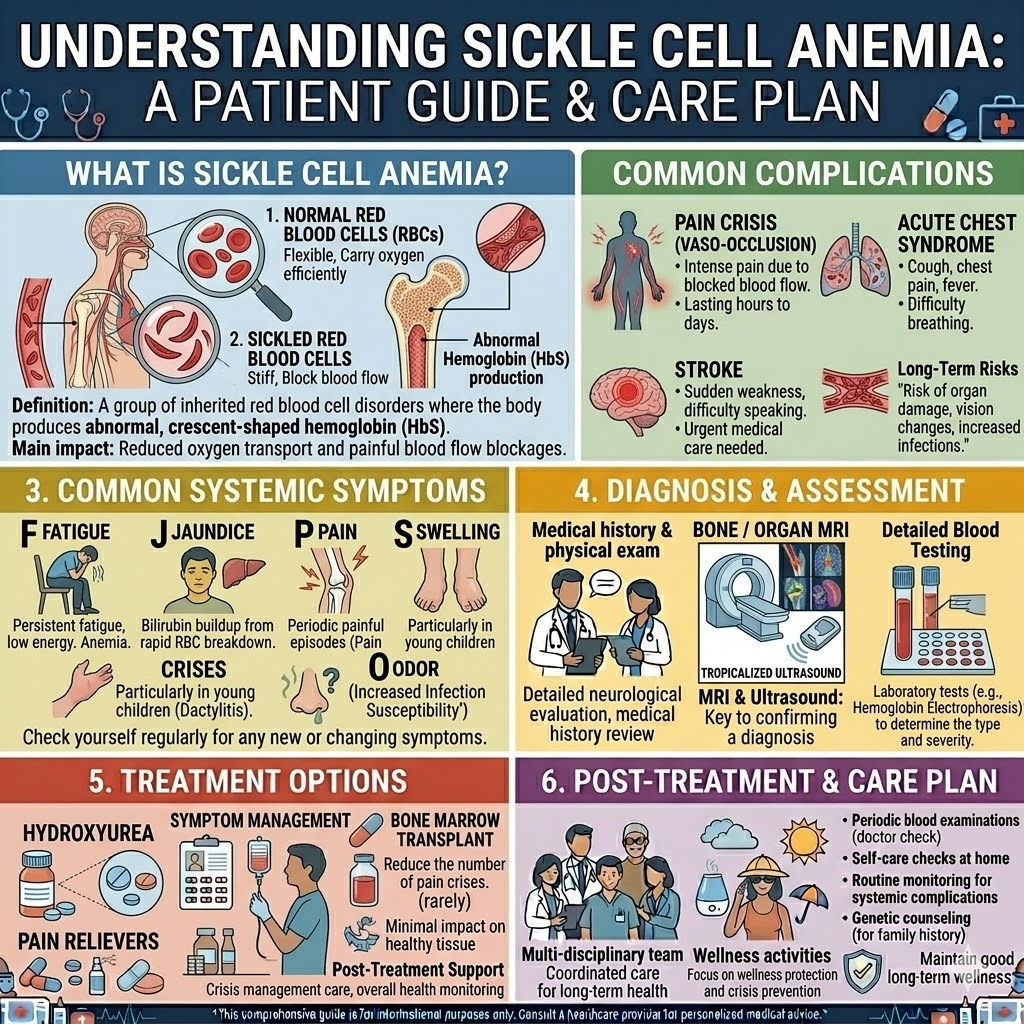
Sickle cell anemia is an inherited blood disorder, part of a group called sickle cell disease. It changes the shape of red blood cells, which are crucial for carrying oxygen throughout the body. Normally, red blood cells are round and flexible, allowing them to flow easily through blood vessels. However, with sickle cell anemia, some red blood cells become crescent-shaped, like a farm tool called a sickle. These "sickle cells" also turn stiff and sticky, which can slow down or completely block blood flow to different parts of the body. This blockage leads to severe pain and serious health problems. Current treatments focus on managing pain and preventing complications, while newer advanced therapies offer the potential for a cure.
Understanding the Condition
Understanding Sickle Cell Anemia: A Guide for Non-Medical Persons
Understanding the Condition
Common Symptoms
Episodes of Pain (Pain Crises): Sudden, severe pain occurring when sickle cells block tiny blood vessels in the chest, abdomen, or joints. Intensity and duration vary (hours to days). Crises can be frequent and may require hospitalization. Chronic pain from damage is also possible.
Anemia and Fatigue: Fragile sickle cells break down quickly, leading to a shortage of healthy red blood cells (anemia), causing extreme tiredness, weakness, and shortness of breath.
Increased Infection Risk: Damage to the spleen weakens the immune system, making individuals prone to serious bacterial infections. Fever is an urgent sign.
Hand-Foot Syndrome: Swelling in the hands and feet, often an early sign in infants, due to blocked blood flow.
Delayed Growth: Continuous red blood cell production and reduced oxygen delivery can hinder growth and development.
Vision Problems: Blocked blood vessels in the eyes can damage the retina, potentially causing vision loss.
Stroke: Blockage of blood flow to the brain is a medical emergency, leading to sudden weakness, numbness, confusion, or speech difficulty.
Consultation Guide
Which Specialist to Meet
Begin by consulting with your primary care doctor, who can provide an initial assessment and referral. The main specialist for sickle cell anemia is a hematologist, a doctor who specializes in blood disorders. Depending on complications, you may also see other specialists such as a pain management specialist, neurologist (for stroke or other brain issues), orthopedic surgeon (for bone and joint problems), or an ophthalmologist (for eye issues).
Preparations Before Your Visit
Before your visit, gather your family medical history, particularly any history of blood disorders. Make a detailed list of all current symptoms, including when they started, how often they occur, and what seems to make them better or worse. Bring a list of all medications, supplements, and vitamins you are currently taking. Prepare any questions you have for the doctor to ensure all your concerns are addressed.
Book a doctor visit near me
Adequate Rest: Sufficient sleep and rest aid recovery during fatigue or pain. (Duration: Ongoing, especially during symptom flare-ups)
Avoiding Triggers: Identify and avoid factors like extreme temperatures, dehydration, high altitudes, or intense activity that can provoke crises. (Duration: Ongoing)
Recognizing Warning Signs: Be aware of urgent symptoms like fever, sudden severe pain, vision changes, or signs of stroke, and seek immediate medical care.
Psychological Support: Support groups, counseling, or therapy can help individuals and families cope with the emotional challenges of chronic illness.
Consultation Guide
A healthcare professional will take a small blood sample. For adults and older children, this is usually done by inserting a needle into a vein, typically in the arm. For infants, a heel prick is commonly used to collect the sample. The procedure is quick, usually lasting only a few minutes, and may cause a brief pinch or sting. The blood sample is then sent to a laboratory for detailed analysis. Generally, no special preparation like fasting is required for this specific test, though your doctor will provide instructions if other concurrent tests are planned.
Diagnostic Procedures
Blood Test for Sickle Cell Anemia
This is the primary diagnostic test for sickle cell anemia. It specifically looks for an abnormal type of hemoglobin (the protein in red blood cells that carries oxygen) called hemoglobin S. The test can confirm a diagnosis of sickle cell anemia or identify if a person carries the sickle cell trait (meaning they have one copy of the gene and are usually healthy, but can pass it on). Newborn screening programs in many regions routinely test for sickle cell anemia at birth.
What to Expect
Early Diagnosis: Routine newborn screening at birth enables prompt treatment and management, significantly improving outcomes.
Treatment Options
Sickle cell anemia is an inherited blood disorder, part of a group called sickle cell disease. It changes the shape of red blood cells, which are crucial for carrying oxygen throughout the body. Normally, red blood cells are round and flexible, allowing them to flow easily through blood vessels. However, with sickle cell anemia, some red blood cells become crescent-shaped, like a farm tool called a sickle. These "sickle cells" also turn stiff and sticky, which can slow down or completely block blood flow to different parts of the body. This blockage leads to severe pain and serious health problems. Current treatments focus on managing pain and preventing complications, while newer advanced therapies offer the potential for a cure.
Home Remedies & Supportive Care
Staying Well-Hydrated: Drinking ample fluids, especially water, helps prevent red blood cells from sickling and clumping. (Duration: Ongoing, daily)
Applying Warm Packs: Using warm compresses or baths can relax muscles and improve blood flow to ease pain during crises. (Duration: As needed during pain episodes)
Medications
Pain Management Medications: Over-the-counter and prescription pain medications, including stronger analgesics, manage acute pain crises. (Duration: As needed for pain, typically hours to days during a crisis)
Prophylactic Antibiotics: Daily antibiotics, particularly for young children, to significantly reduce the risk of serious bacterial infections. (Duration: Typically from 2 months to 5 years of age, sometimes longer)
Folic Acid: A vitamin supplement supporting new red blood cell production. (Duration: Daily, long-term)
Medications to Reduce Sickling: Prescription drugs that help prevent red blood cells from sickling, increase non-sickling hemoglobin, or improve blood flow, reducing crisis frequency and severity. (Duration: Daily, long-term)
Red Blood Cell Transfusion: Intravenous delivery of healthy donated red blood cells to treat anemia, prevent stroke, or manage severe complications. Regular transfusions reduce the proportion of sickle cells in the bloodstream. (Duration: Each transfusion takes a few hours. May be performed as an emergency treatment or regularly (e.g., every 3-4 weeks) for ongoing prevention.)
Consistent Medical Follow-up: Essential specialist appointments for monitoring the condition, adjusting treatments, and screening for complications.
Up-to-Date Immunizations: Crucial for weakened immune systems; includes routine childhood vaccines, annual flu shots, and specific vaccines against pneumonia and meningococcal disease.
Prevention & Long-Term Wellbeing
Stem Cell Transplant (Bone Marrow Transplant): The only known cure: replaces unhealthy, sickle cell-producing bone marrow with healthy blood-forming stem cells from a carefully matched donor. Requires chemotherapy before the transplant to prepare the body. (Duration: Preparation (chemotherapy) lasts weeks; the stem cell infusion itself takes a few hours. Full recovery and engraftment can take several months to over a year, with lifelong follow-up care required.)
Genetic Counseling: Provides information on inheritance risks for carriers or those with family history, aiding family planning.
Balanced Diet and Moderate Activity: A nutritious diet, physician-approved low-impact exercise, avoiding smoking, and limiting alcohol support overall health.
Tags & Topics
Notice an error or need an update?
Help us keep medical information accurate. Report incorrect info or suggest an edit.


