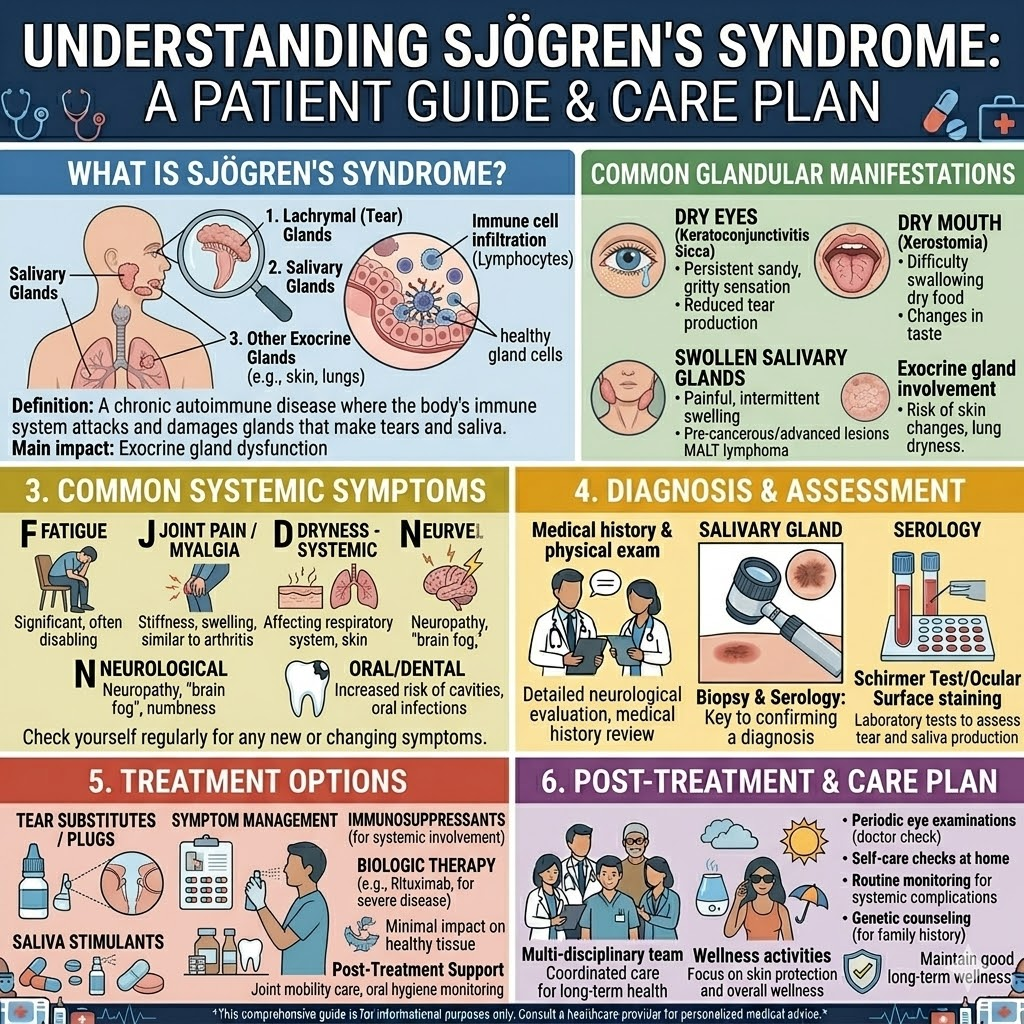
Sjogren's (pronounced SHOW-grins) syndrome is a chronic autoimmune disease where your body's immune system, which normally fights off infections, mistakenly attacks its own healthy tissues. It primarily targets the glands responsible for producing tears and saliva, leading to the two most common symptoms: persistent dry eyes and a dry mouth. This condition often occurs alongside other autoimmune disorders like rheumatoid arthritis or lupus. While it can develop at any age, most people are diagnosed after age 40, and it is significantly more common in women. Treatment focuses on alleviating symptoms to improve comfort and prevent complications. The exact cause isn't fully understood, but a combination of genetic predisposition and an environmental trigger, like an infection, is believed to play a role.
Understanding the Condition
Sjogren's Syndrome: Understanding and Managing Chronic Dryness
Understanding the Condition
Sjogren's (pronounced SHOW-grins) syndrome is a chronic autoimmune disease where your body's immune system, which normally fights off infections, mistakenly attacks its own healthy tissues. It primarily targets the glands responsible for producing tears and saliva, leading to the two most common symptoms: persistent dry eyes and a dry mouth. This condition often occurs alongside other autoimmune disorders like rheumatoid arthritis or lupus. While it can develop at any age, most people are diagnosed after age 40, and it is significantly more common in women. Treatment focuses on alleviating symptoms to improve comfort and prevent complications. The exact cause isn't fully understood, but a combination of genetic predisposition and an environmental trigger, like an infection, is believed to play a role.
Common Symptoms
Dry Eyes: Eyes may feel persistently dry, gritty, itchy, or as if sand is in them, often accompanied by a burning sensation.
Dry Mouth: The mouth can feel uncomfortably dry, like it's filled with cotton, making it difficult to swallow, speak, or taste food properly.
Joint Pain, Swelling, and Stiffness: Similar to arthritis, joints may become painful, swollen, and stiff.
Swollen Salivary Glands: Glands located behind your jaw and in front of your ears may become tender and noticeably swollen.
Skin Issues: Dry skin or unexplained rashes can occur.
Vaginal Dryness: Women may experience dryness in the vaginal area.
Persistent Dry Cough: A chronic, dry cough that doesn't resolve.
Prolonged Fatigue: A profound sense of tiredness that doesn't improve with rest.
Consultation Guide
Which Specialist to Meet
You should initially consult your primary care doctor, who may refer you to a rheumatologist, a specialist in autoimmune and arthritis conditions. An ophthalmologist (eye specialist) and a dentist are also crucial for managing specific symptoms. Depending on other affected organs, referrals to a pulmonologist (lungs), nephrologist (kidneys), or gastroenterologist (liver) might be necessary.
Preparations Before Your Visit
Before your visit, make a list of all your symptoms, including when they started and how severe they are. Note any other medical conditions you have and all medications, supplements, or herbal remedies you are taking. Prepare a list of questions to ask your doctor.
Book a doctor visit near me
Systemic Therapies: Immune-suppressing medications for widespread symptoms affecting other organs. (Duration: Long-term, specialist-guided)
Avoid Triggers: Minimize exposure to environmental factors like smoke, wind, and excessively dry air that worsen symptoms.
Diagnostic Procedures
A common imaging test using low radiation to create pictures of your heart, lungs, blood vessels, and bones of the chest/spine. It helps identify issues like heart problems, lung conditions, or fluid accumulation.
What to Expect
You stand or sit in front of an X-ray machine. A technician positions you, asking you to hold your breath briefly. Jewelry or metal items are removed. The process is quick, painless, and takes only a few minutes.
ENA Test (Extractable Nuclear Antigen Test)
A blood test checking for specific autoantibodies (proteins made by your immune system that mistakenly attack healthy tissues). Used to diagnose certain autoimmune diseases, often as a follow-up after a positive Antinuclear Antibody (ANA) test to identify the specific condition.
What to Expect
A healthcare professional draws a blood sample from a vein in your arm. You might feel a brief pinch. The blood is collected and sent to a lab; the process takes less than five minutes.
A procedure to remove a small tissue sample from a suspicious body area using a thin needle. The sample is analyzed in a lab to diagnose medical conditions, including ruling out cancer. Types include fine-needle aspiration and core needle biopsy.
What to Expect
The area is cleaned and numbed with local anesthetic. A doctor inserts the needle, often guided by ultrasound or CT scan. Once the sample is collected, the needle is removed, and pressure is applied. The procedure takes 15-60 minutes, with possible soreness or bruising afterward.
A simple urine test to detect and manage various conditions like urinary tract infections, kidney disease, or diabetes. It assesses urine's appearance, concentration, and content (e.g., protein, blood, bacteria). Abnormal results usually require further testing.
What to Expect
You'll collect a "midstream" urine sample in a sterile cup after cleaning the genital area. You begin urinating into the toilet, collect the middle portion in the cup, and finish into the toilet. The sample is then submitted for lab analysis.
Treatment Options
Medications
Eye Medications: Prescription anti-inflammatory or moisture-retaining eye drops to reduce discomfort and protect the eye surface. (Duration: Daily, ongoing)
Saliva Stimulants: Medications to increase saliva production for dry mouth relief. (Duration: Daily, as prescribed)
Targeted Treatments: Antifungal agents for oral yeast infections; pain relievers for joint discomfort. (Duration: As needed)
Punctal Plugs: Small devices inserted into tear ducts to block drainage, helping keep tears on the eye surface longer. (Duration: Replaced as needed)
Prevention & Long-Term Wellbeing
Home & Lifestyle Management
Hydration & Oral Care: Frequent sips of water, humidifiers, and sugar-free gum/lozenge to stimulate saliva. Maintain diligent oral hygiene. (Duration: Ongoing)
Eye Care: Regular use of over-the-counter artificial tears or lubricating gels for eye comfort. (Duration: Daily, as needed)
Avoid Irritants: Steer clear of smoke, wind, dry air, and decongestants that can worsen dryness. (Duration: Ongoing)
Vaginal Lubricants: Over-the-counter products to alleviate vaginal dryness. (Duration: As needed)
Long-Term Monitoring
Specialist Follow-ups: Regular visits with rheumatologists, ophthalmologists, and dentists are crucial for monitoring progression and preventing complications.
Complication Screening: Be vigilant for signs of lymphoma (persistent lymph node swelling) and other organ involvement, necessitating periodic medical checks.
Daily Management Strategies
Hydration & Oral Care: Consistent water intake and diligent oral hygiene with fluoride products help protect teeth from cavities.
Skin & Eye Care: Use moisturizers for dry skin and regularly apply artificial tears for eye comfort.
Fatigue Management: Prioritize adequate rest, balanced nutrition, and gentle physical activity to combat prolonged fatigue.
Tags & Topics
Notice an error or need an update?
Help us keep medical information accurate. Report incorrect info or suggest an edit.


