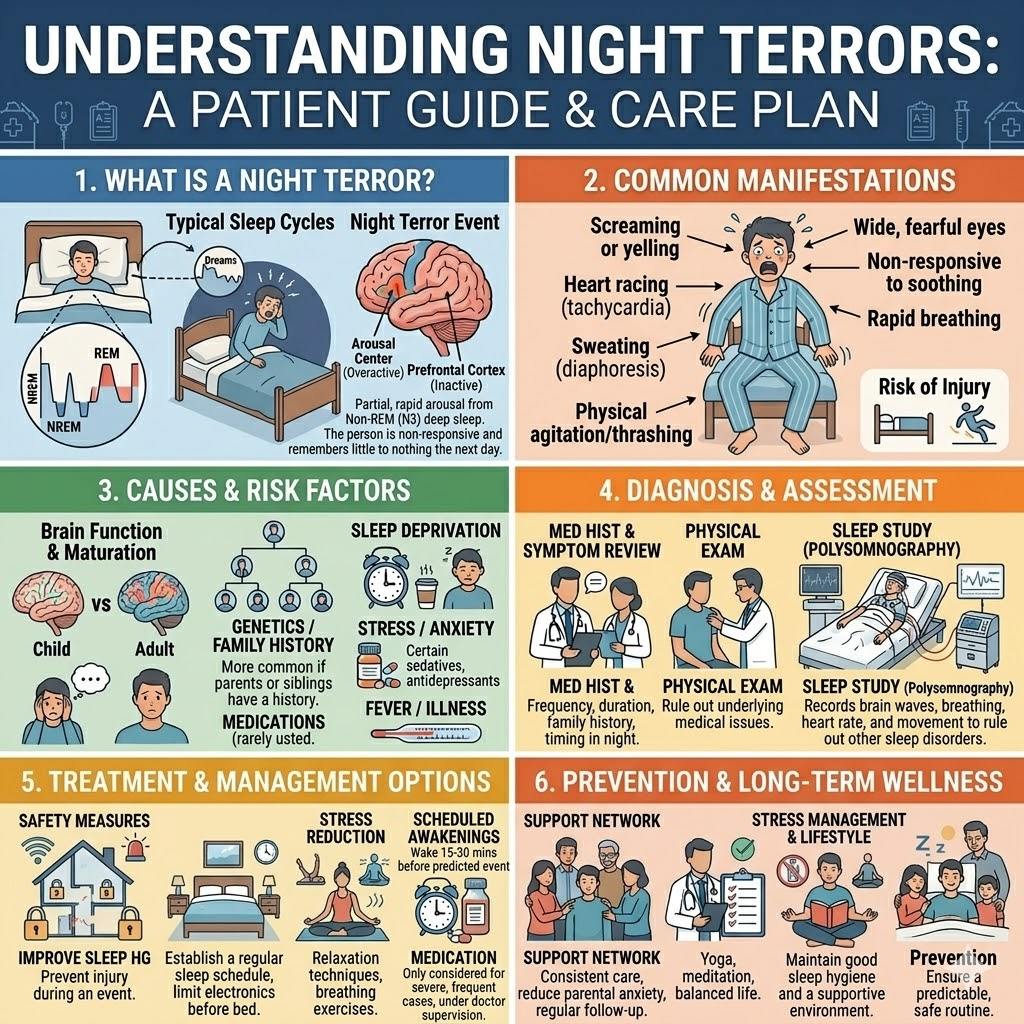
Sleep terrors, also known as night terrors, involve episodes of intense fear, screaming, and sometimes flailing movements while a person is not fully awake. These are a type of parasomnia, meaning unusual behaviors during sleep. Unlike nightmares, the individual remains partially asleep and rarely remembers the event. Most common in children aged 1-12, usually resolving by teenage years, though adults can be affected. Generally not concerning unless they significantly disrupt sleep or pose a safety risk.
Understanding the Condition
Sleep Terrors (Night Terrors)
Understanding the Condition
Sleep terrors, also known as night terrors, involve episodes of intense fear, screaming, and sometimes flailing movements while a person is not fully awake. These are a type of parasomnia, meaning unusual behaviors during sleep. Unlike nightmares, the individual remains partially asleep and rarely remembers the event. Most common in children aged 1-12, usually resolving by teenage years, though adults can be affected. Generally not concerning unless they significantly disrupt sleep or pose a safety risk.
Common Symptoms
Initial Outburst: Begins with sudden screaming, shouting, or intense crying.
Fearful Appearance: Sitting up in bed, looking intensely scared, with wide-open, staring eyes.
Physical Reactions: Sweating, heavy breathing, rapid heartbeat, flushed face, and enlarged pupils.
Agitated Movements: Kicking, thrashing, or waving arms and legs.
Difficulty Waking: Extremely hard to rouse; if awakened, the person may be confused and disoriented.
Unresponsive to Comfort: Cannot be easily comforted or soothed during the episode.
Memory Loss: Little to no memory of the event the next morning, especially in children. Adults might recall fragments.
Potential for Movement: May get out of bed, run around, or exhibit aggressive behavior if physically restrained.
Consultation Guide
Which Specialist to Meet
If sleep terrors are frequent, severely disruptive, or pose a safety risk, consult your primary care doctor. They can provide an initial assessment and may refer you to a sleep specialist (a doctor specializing in sleep disorders), a neurologist, or a mental health professional like a psychiatrist or psychologist, especially if underlying anxiety, depression, or other mood disorders are suspected.
Preparations Before Your Visit
Your doctor reviews your symptoms, medical history, and conducts a physical exam. They'll ask about episode frequency, duration, behaviors, and any potential triggers. Input from family who witnessed episodes is valuable.
Restless Legs Syndrome Treatment: If RLS is identified, specific medications or lifestyle changes can alleviate symptoms and improve sleep. (Duration: Ongoing, as needed)
Monitor Sleep: Observe sleep quality and any recurrence; consult a doctor if episodes worsen or new symptoms appear.
Ensure Safety: For those who move during episodes, secure windows/doors, block stairways, remove sharp objects, or use a ground-floor mattress.
Educate Family: Inform household members not to forcibly wake the person, but to gently guide them back to bed if they move, ensuring safety.
Regular Medical Check-ups: Routine doctor visits help monitor overall health and address any contributing underlying conditions.
Consultation Guide
The doctor will discuss sleep terrors with you (or your child) and witnesses, inquiring about daily routines, stress, and sleep habits to identify potential causes and rule out other conditions.
Polysomnography (Sleep Study)
Diagnostic Procedures
What to Expect
A comprehensive test to diagnose sleep disorders, recording brain waves, blood oxygen, heart rate, breathing, and eye/leg movements during sleep. It identifies underlying conditions like sleep apnea or restless legs syndrome that might trigger terrors.
What to Expect
You'll spend a night at a sleep center. Sensors are painlessly attached to monitor brain activity, heart, breathing, muscles, and oxygen. You sleep in a private room while a technician monitors recordings. At-home options provide portable equipment for similar monitoring. Results help understand sleep disruptions.
Treatment Options
Before your appointment, keep a sleep diary for a week or two, noting when episodes occur, how long they last, and any potential triggers. Be prepared to discuss your sleep patterns, any daytime sleepiness, your full medical history, and a list of all current medications, supplements, and alcohol consumption.
Book a doctor visit near me
Medications
Sedative/Anti-anxiety Medications: Short-term prescription for severe, disruptive cases, promoting relaxation under medical supervision. (Duration: Weeks to a few months)
Targeting Underlying Conditions
Sleep Apnea Treatment: If apnea is a trigger, therapies like continuous positive airway pressure (CPAP) or oral appliances can effectively resolve terrors. (Duration: Ongoing for device use; months for lifestyle changes)
Prevention & Long-Term Wellbeing
Lifestyle and Behavioral Changes
Consistent Sleep Schedule: Maintain regular bedtimes and wake-up times daily to regulate your body's internal clock. (Duration: Ongoing)
Adequate Sleep: Ensure sufficient sleep (e.g., 7-9 hours for adults) as fatigue is a major trigger. (Duration: Ongoing)
Stress Reduction: Practice relaxation techniques like deep breathing or mindfulness to manage stress and anxiety. (Duration: Ongoing)
Cognitive Behavioral Therapy (CBT): Helps identify and modify negative thoughts and behaviors contributing to stress or sleep issues. (Duration: Typically 8-20 sessions over weeks/months)
Biofeedback: Learn to control bodily functions (e.g., heart rate) using sensor feedback to reduce stress and promote relaxation. (Duration: Varies, often 6-10 sessions)
Hypnosis (Hypnotherapy): Therapist-guided focused relaxation to manage anxiety, reduce stress, or modify behaviors linked to terrors. (Duration: Varies, often 4-12 sessions)
Prevention
Consistent Sleep Schedule: Maintain regular bedtimes and wake-up times daily, including weekends, to regulate your internal clock.
Relaxing Bedtime Routine: Engage in calming activities like reading or a warm bath before bed, avoiding screens and strenuous activities.
Optimize Sleep Environment: Ensure your bedroom is dark, quiet, cool, and comfortable for uninterrupted sleep.
Stress and Anxiety Management: Incorporate stress-reducing practices such as meditation or deep breathing into your daily routine.
Identify and Avoid Triggers: Keep a sleep diary to pinpoint and avoid factors (e.g., certain foods, late activities) that precede episodes.
Long-Term Monitoring and Safety
Tags & Topics
Notice an error or need an update?
Help us keep medical information accurate. Report incorrect info or suggest an edit.


