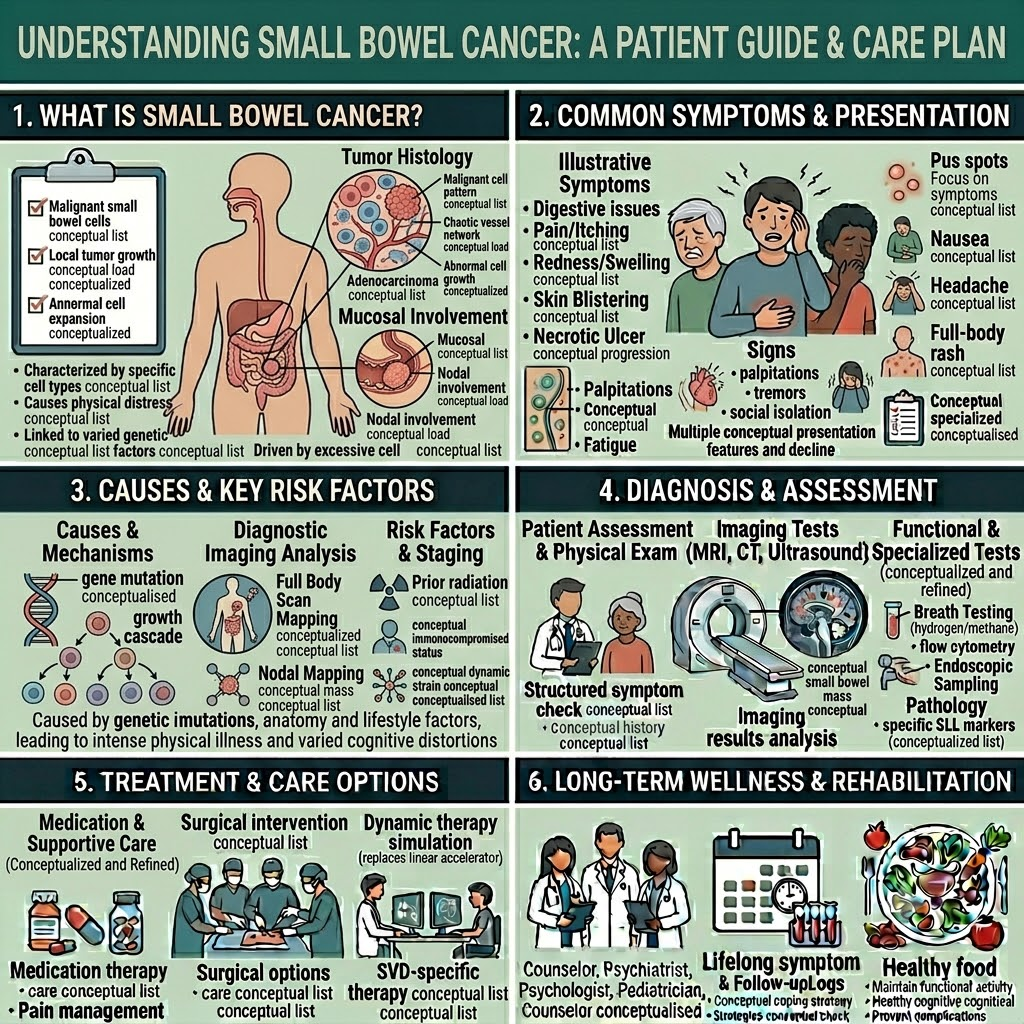
Small bowel cancer is a rare type of cancer that begins as an abnormal growth of cells in the small intestine. The small intestine, also known as the small bowel, is a crucial, long, tube-like organ connecting the stomach to the large intestine. It plays a vital role in digesting food, absorbing nutrients, producing hormones for digestion, and housing immune cells that fight off germs.Cancer develops when cells in the small bowel undergo changes in their DNA, the instruction manual for each cell. These changes cause cells to grow and multiply uncontrollably, forming a mass called a tumor. Unlike healthy cells, cancer cells don't die naturally; instead, they can invade and damage healthy surrounding tissues. Over time, these cells can also break away from the original tumor and spread to other parts of the body, a process called metastasis.Treatment typically involves surgery to remove the tumor, often combined with therapies such as chemotherapy, targeted therapy, or radiation, tailored to the cancer's specific characteristics.
Understanding the Condition
Understanding Small Bowel Cancer
Understanding the Condition
Common Symptoms
Abdominal Pain: Persistent discomfort or pain in the belly area.
Before your appointment, prepare a list of your symptoms, medical history, all medications, and questions for your doctor. Bringing a trusted family member or friend can also be helpful for support and to assist with remembering information.
Book a doctor visit near me
Radiation Therapy: Uses high-energy beams (e.g., X-rays) precisely aimed at the tumor to kill cancer cells or shrink them. May be used before surgery or to relieve symptoms. (Duration: Typically daily sessions over several weeks.)
Consultation Guide
Small bowel cancer is a rare type of cancer that begins as an abnormal growth of cells in the small intestine. The small intestine, also known as the small bowel, is a crucial, long, tube-like organ connecting the stomach to the large intestine. It plays a vital role in digesting food, absorbing nutrients, producing hormones for digestion, and housing immune cells that fight off germs.Cancer develops when cells in the small bowel undergo changes in their DNA, the instruction manual for each cell. These changes cause cells to grow and multiply uncontrollably, forming a mass called a tumor. Unlike healthy cells, cancer cells don't die naturally; instead, they can invade and damage healthy surrounding tissues. Over time, these cells can also break away from the original tumor and spread to other parts of the body, a process called metastasis.Treatment typically involves surgery to remove the tumor, often combined with therapies such as chemotherapy, targeted therapy, or radiation, tailored to the cancer's specific characteristics.
Jaundice: Yellowing of the skin and whites of the eyes (jaundice), caused by bilirubin buildup.
Weakness and Fatigue: Unusual weakness or tiredness, often due to anemia or the cancer.
Unexplained Weight Loss: Unintended weight loss.
Blood in Stool: Blood in bowel movements, appearing bright red or black and tarry.
Watery Diarrhea: Frequent, loose, and watery bowel movements.
Skin Flushing: Sudden episodes of skin redness and warmth.
Consultation Guide
Which Specialist to Meet
Diagnostic Procedures
Checks general health, detects anemia (due to internal bleeding), assesses organ function, and identifies certain tumor markers.
What to Expect
A small blood sample is drawn, usually from a vein in your arm. Expect a brief pinch.
Stool Test for Occult Blood
Checks for hidden blood in stool, indicating possible digestive bleeding.
What to Expect
You collect a stool sample at home with a provided kit and return it to the lab. It's non-invasive.
Swallow a tiny camera pill that takes pictures of the small intestine as it travels, transmitting them to a recording device.
What to Expect
Fast for several hours, swallow the capsule, and wear a recording device. You can resume most activities. The capsule passes naturally.
Enteroscopy (Deep Endoscopy)
Uses a long, flexible scope with a camera to deeply examine the small intestine, allowing visualization of abnormalities and tissue sampling (biopsies).
What to Expect
Sedation or anesthesia is used. The scope is inserted via mouth or rectum, guided through the small bowel. Air inflation aids visibility. The procedure takes a few hours; you'll be groggy afterward.
CT Scan (Computed Tomography)
Uses X-rays and computer processing to create detailed images of the body, identifying tumors, assessing size, and checking for spread.
What to Expect
Lie on a table sliding into a donut-shaped machine. Contrast dye (oral or IV) may be given. Stay still. It's quick, painless, but may involve whirring sounds.
A small tissue sample from a suspicious area is removed and examined under a microscope to definitively confirm cancer presence and type.
What to Expect
Surgical Tumor Removal: Primary treatment: surgical removal of the cancerous small intestine segment and nearby lymph nodes. Healthy sections are reconnected. (Duration: Hospital stay: several days; recovery: weeks to months.)
Follow-Up Medical Appointments: Regular oncology follow-ups (exams, blood tests, imaging) are crucial to monitor for recurrence or new cancers.
Manage Underlying Bowel Conditions: Diligently manage conditions like Crohn's, inflammatory bowel disease, or celiac disease with your doctor, as they increase small bowel cancer risk.
Genetic Counseling for Family History: With a family history of certain cancers or genetic syndromes (e.g., Lynch syndrome), consider genetic counseling for risk assessment and screening guidance.
Treatment Options
Begin by consulting your primary care doctor for referral to specialists such as a gastroenterologist (digestive system expert), a surgical oncologist (cancer surgeon), a medical oncologist (for medication-based therapies), and a radiation oncologist (for radiation treatment), who specialize in digestive health and cancer care.
Preparations Before Your Visit
Often done during endoscopy, enteroscopy, or surgery. Local anesthetic, sedation, or general anesthesia may be used. Expect a pinch or pressure.
Surgical Procedures
Medication and Therapies
Chemotherapy: Uses powerful oral or IV medications to kill fast-growing cancer cells throughout the body. Can shrink tumors before surgery or destroy remaining cells after. (Duration: Given in cycles over weeks to many months, based on cancer type, stage, and response.)
Targeted Therapy: Medications specifically target weaknesses in cancer cells, often with fewer side effects than chemotherapy. (Duration: Ongoing treatment for months or years, if effective and tolerable.)
Nutritional Support: Work with a dietitian for adequate nutrition, especially after surgery or if digestion is affected by treatment or cancer.
Prevention & Long-Term Wellbeing
Prevention
Maintain a Healthy Diet: Eat diverse fruits, vegetables, and whole grains; their vitamins, fiber, and antioxidants may reduce cancer risk.
Moderate Alcohol Consumption: If consuming alcohol, do so moderately (up to one drink/day for women, two for men).
Quit Smoking: Smoking increases cancer risk; seek professional help to quit.
Regular Physical Activity: Exercise moderately for at least 30 minutes most days. Start slowly and consult your doctor before a new program.
Achieve and Maintain a Healthy Weight: Maintain a healthy weight through balanced diet and exercise. Discuss weight loss strategies with your healthcare team if needed.
Long-Term Monitoring and Support
Tags & Topics
Notice an error or need an update?
Help us keep medical information accurate. Report incorrect info or suggest an edit.


