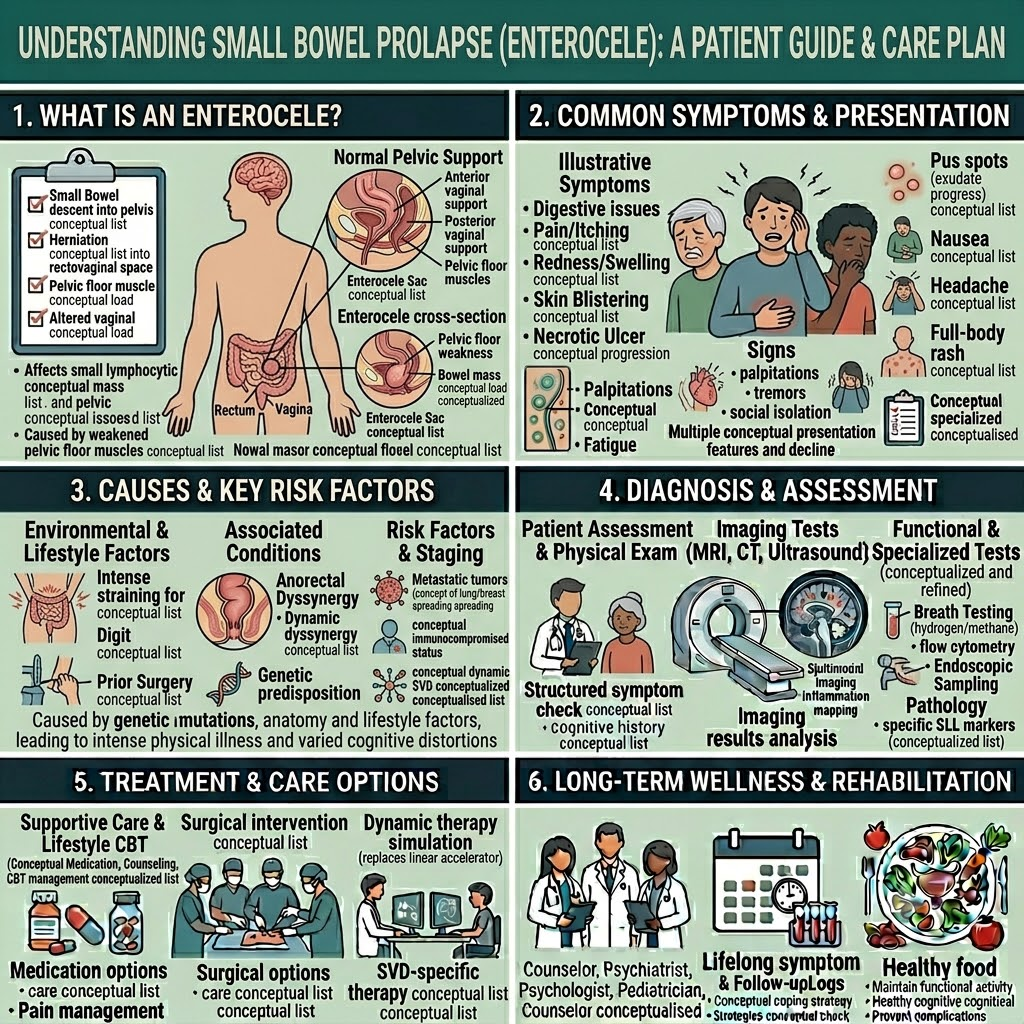
Small bowel prolapse, also known as enterocele (pronounced EN-tur-o-seel), occurs when the small intestine slips down into the lower part of the pelvic cavity and pushes against the top of the vagina, creating a noticeable bulge. The term "prolapse" means an organ has fallen or slipped out of its usual position. This condition often results from weakened muscles and supporting tissues in the pelvic floor, typically due to factors like childbirth, natural aging, or other processes that increase pressure in the pelvic area. While many cases can be managed with lifestyle changes and non-surgical treatments, severe prolapse may require surgery to restore the small intestine to its correct position.
Understanding the Condition
Small Bowel Prolapse (Enterocele)
Understanding the Condition
Common Symptoms
Pelvic Pulling Sensation: A feeling of pulling or heaviness in your pelvis that often improves when you lie down.
Pelvic Fullness or Pressure: A general feeling of fullness, pressure, or discomfort in the pelvic region.
Lower Back Pain: A dull ache in your lower back that typically gets better when you lie down.
Vaginal Bulge: A soft, noticeable bulge of tissue inside your vagina.
Vaginal Discomfort and Painful Intercourse: General discomfort in the vagina, which may include pain during sexual activity.
Associated Prolapses: Many women with small bowel prolapse also experience other pelvic organs falling out of place, such as the bladder, uterus, or rectum.
Consultation Guide
Which Specialist to Meet
You should typically consult a gynecologist, who specializes in women's reproductive health. For more complex cases or if other pelvic organs are also affected, a urogynecologist (a specialist in pelvic floor disorders) or a pelvic floor physical therapist may also be involved in your care.
Preparations Before Your Visit
To make the most of your appointment, consider preparing the following: list all your symptoms (when they started, severity, what makes them better or worse), note all current medications (including over-the-counter drugs and supplements), gather your complete medical history (pregnancies, childbirth, past pelvic surgeries, chronic conditions like constipation or persistent cough), and prepare a list of questions you want to ask your doctor.
Book a doctor visit near me
Vaginal Pessary: A removable silicone device inserted into the vagina to physically support dropped organs and relieve symptoms. (Duration: Long-term use, requires regular cleaning/replacement (e.g., every few months), fitted by a doctor.)
Pelvic Floor Physical Therapy: Specialized exercises, like Kegels, taught by a therapist to strengthen pelvic floor muscles, improving organ support. (Duration: Several weeks to months of therapy, followed by ongoing home exercises.)
Perform Pelvic Floor Exercises (Kegels): Regularly strengthen pelvic floor muscles to improve organ support, potentially preventing or easing prolapse symptoms.
Consultation Guide
Quit Smoking: Smoking often causes chronic cough. Quitting reduces this added pressure on the pelvic floor. (Duration: Ongoing)
Diagnostic Procedures
Small bowel prolapse, also known as enterocele (pronounced EN-tur-o-seel), occurs when the small intestine slips down into the lower part of the pelvic cavity and pushes against the top of the vagina, creating a noticeable bulge. The term "prolapse" means an organ has fallen or slipped out of its usual position. This condition often results from weakened muscles and supporting tissues in the pelvic floor, typically due to factors like childbirth, natural aging, or other processes that increase pressure in the pelvic area. While many cases can be managed with lifestyle changes and non-surgical treatments, severe prolapse may require surgery to restore the small intestine to its correct position.
A pelvic exam is a routine check of your reproductive organs and the overall health of your pelvic area. It allows your doctor to visually and physically assess your vulva, vagina, cervix, uterus, ovaries, and rectum, looking for any signs of prolapse or other unusual changes. This exam helps identify the presence and severity of a small bowel prolapse and rule out other conditions.
What to Expect
During a pelvic exam, you will lie on an examination table with your feet placed in stirrups. Your doctor will first visually inspect the external genital area. Next, they will gently insert a speculum into your vagina. This instrument helps hold the vaginal walls apart so your doctor can clearly see your vagina and cervix; you might feel some pressure. After removing the speculum, your doctor will perform a bimanual exam by inserting two gloved fingers into your vagina while simultaneously pressing on your lower abdomen with the other hand. This allows them to feel the size and position of your uterus and ovaries. They may also ask you to cough or strain to observe any visible prolapse. Sometimes, a rectal exam is also performed to check the strength of your pelvic floor muscles and assess for any rectal prolapse. A Pap test, which screens for cervical cancer, may also be performed during this exam. The entire exam typically lasts only a few minutes.
Prolapse Repair Surgery: Surgery to reposition the small intestine and reinforce weakened vaginal tissues, using stitches or sometimes mesh for support. (Duration: One-time procedure. Recovery typically takes several weeks to months.)
Treatment Options
Manage Chronic Cough: Persistent coughing increases abdominal pressure. Seek medical treatment for ongoing coughs. (Duration: As needed for underlying condition)
Prevention & Long-Term Wellbeing
Lifestyle Adjustments and Home Remedies
Maintain a Healthy Weight: Losing excess weight reduces internal abdominal pressure, easing strain on your pelvic floor. (Duration: Ongoing)
Prevent Constipation: Eat high-fiber foods, drink plenty of fluids, and exercise regularly to avoid straining during bowel movements. (Duration: Ongoing)
Avoid Heavy Lifting: Lifting very heavy objects strains the pelvic floor; use proper techniques or seek help. (Duration: Ongoing)
Prevention and Long-Term Wellbeing
Maintain a Healthy Weight: Keeping a healthy weight reduces constant pressure on your pelvic floor, lowering prolapse risk.
High-Fiber Diet and Hydration: Eating fiber and drinking fluids prevents constipation and straining, protecting pelvic floor integrity.
Regular Exercise: Strengthens overall muscle tone, including core and pelvic floor muscles, aiding organ support.
Quit Smoking: Reduces chronic coughing, which puts repeated, harmful pressure on the pelvic floor.
Practice Safe Lifting Techniques: Bend knees and lift with legs, keeping objects close, to avoid straining the pelvic area.
Treat Chronic Cough: Address persistent coughs medically to prevent excessive and repeated pressure on your pelvic floor.
Tags & Topics
Notice an error or need an update?
Help us keep medical information accurate. Report incorrect info or suggest an edit.


