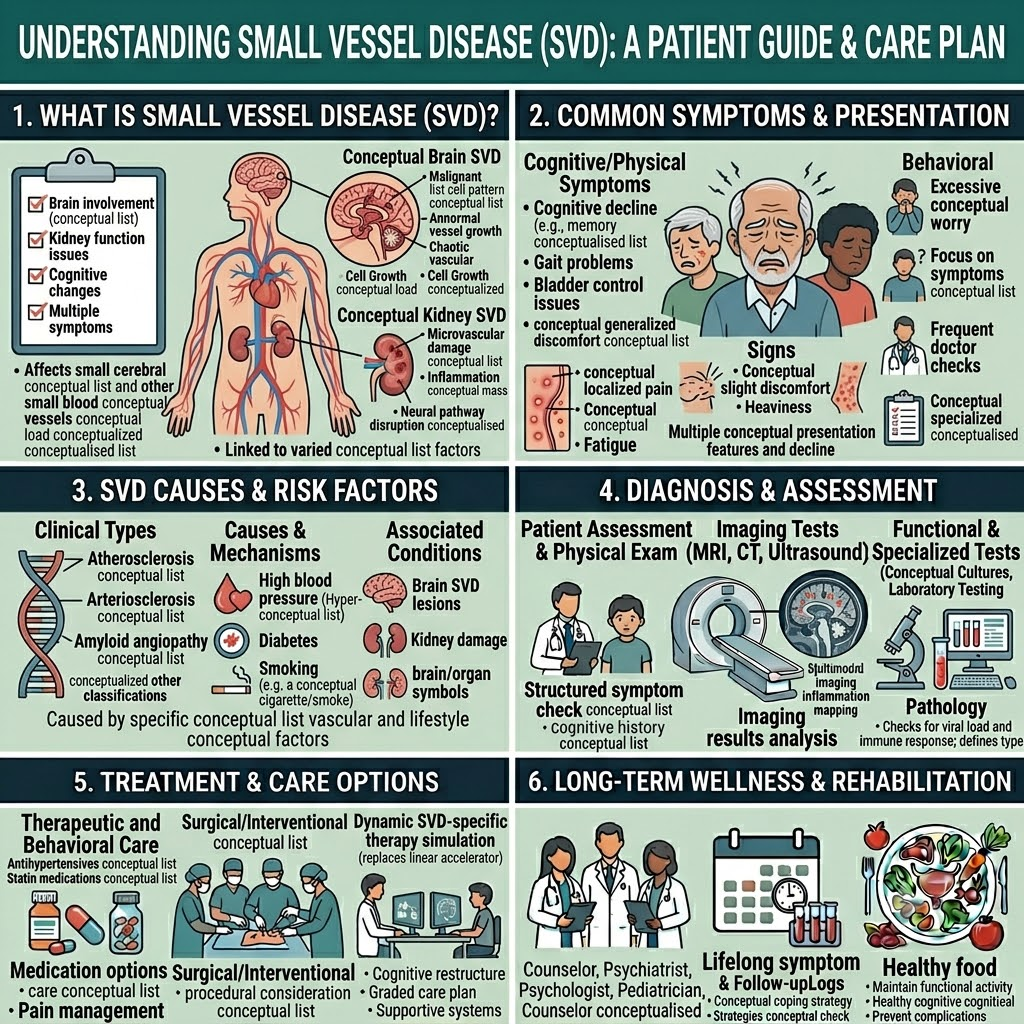
Small vessel disease is a condition where the tiny arteries in your heart don't function correctly, reducing the flow of oxygen-rich blood to the heart muscle. This can lead to symptoms like chest pain (angina) and shortness of breath, similar to blockages in larger heart arteries. Unlike blockages in the main coronary arteries, which are larger, small vessel disease affects the heart's smaller blood vessels. It can be challenging to diagnose because standard tests often show clear main arteries despite the presence of heart disease symptoms. This condition is more common in women, and individuals with diabetes or high blood pressure.
Understanding the Condition
Small Vessel Disease: Understanding and Managing a Heart Condition
Understanding the Condition
Small vessel disease is a condition where the tiny arteries in your heart don't function correctly, reducing the flow of oxygen-rich blood to the heart muscle. This can lead to symptoms like chest pain (angina) and shortness of breath, similar to blockages in larger heart arteries. Unlike blockages in the main coronary arteries, which are larger, small vessel disease affects the heart's smaller blood vessels. It can be challenging to diagnose because standard tests often show clear main arteries despite the presence of heart disease symptoms. This condition is more common in women, and individuals with diabetes or high blood pressure.
Common Symptoms
Chest Pain (Angina): Discomfort or pressure in the chest, occurring during activity, emotional stress, or even at rest.
Shortness of Breath: Difficulty breathing, often alongside chest pain.
Fatigue: Unusual tiredness or lack of energy.
Nausea: Feeling sick to your stomach.
Sweating: Excessive perspiration without exertion.
Dizziness: Feeling lightheaded or unsteady.
Pain in Other Areas: Pain spreading beyond the chest to one or both arms, or to your neck, jaw, back, or stomach. Seek emergency medical care for these severe symptoms.
Consultation Guide
Which Specialist to Meet
If you experience new or unexplained chest pain or other concerning symptoms, you should first consult your primary care physician. They may then refer you to a cardiologist, a doctor specializing in heart conditions. This is particularly important if your symptoms persist even after treatment for blockages in larger heart arteries.
Preparations Before Your Visit
Before your appointment, prepare a detailed list of your symptoms, including when they started, how often they occur, and what makes them better or worse. Provide a comprehensive medical history, including any existing conditions like diabetes or high blood pressure, and a list of all current medications, supplements, and vitamins you are taking. Be ready to discuss your lifestyle habits, such as diet, exercise, and smoking history. If you experience severe chest pain with shortness of breath, sweating, nausea, dizziness, or pain radiating to other body parts, call emergency medical assistance immediately.
Book a doctor visit near me
This X-ray imaging test visualizes the main blood vessels of your heart (coronary arteries) to detect narrowings or blockages. If these larger arteries appear clear despite symptoms suggesting heart disease, it can prompt further investigation for small vessel disease.
Adherence to Treatment Plan: Strictly follow your prescribed medication regimen and lifestyle recommendations to manage symptoms and prevent disease progression.
Symptom Awareness and Reporting: Be vigilant about any changes in your symptoms, especially chest pain or shortness of breath, and report them promptly to your healthcare provider.
Consultation Guide
Diabetes Management Medications: Medications and lifestyle adjustments to control blood sugar levels, as diabetes is a major risk factor. (Duration: Long-term, as prescribed)
Cardiac Rehabilitation: A supervised program that includes exercise training, education about heart-healthy living, and counseling to reduce stress and help you return to an active life. (Duration: Typically several weeks to months, ongoing maintenance recommended)
Diagnostic Procedures
What to Expect
A nuclear stress test is an imaging test that shows how well blood flows to your heart muscle, both at rest and during physical stress. It helps identify areas of poor blood flow or damage, which can indicate heart disease, including issues with small vessels.
What to Expect
Electrodes will be placed on your chest to monitor your heart's electrical activity. A small amount of a radioactive substance (tracer) is injected into a vein, and images are taken of your heart at rest. You will then perform exercise, usually on a treadmill or stationary bike, or receive medication to simulate exercise if you cannot. At the peak of stress, another tracer injection is given, and more images are taken. These images are captured using a specialized scanner (PET or SPECT). You might feel warmth from the tracer, and some mild discomfort from exercise or medication side effects (like flushing or mild chest discomfort). The entire test can take a few hours, including preparation and rest periods.
Positron Emission Tomography (PET) Scan for Cardiac Evaluation
A PET scan is an advanced imaging test that uses a radioactive tracer to highlight metabolic activity in your heart tissues. For small vessel disease, often as part of a nuclear stress test, it can reveal areas where the heart muscle is not receiving enough blood flow or is not metabolizing nutrients properly, aiding in diagnosis.
What to Expect
You will lie on a narrow table that slides into a large, doughnut-shaped scanner. A radioactive tracer is injected into a vein, typically in your arm. The tracer travels through your bloodstream and collects in areas of your heart with higher metabolic activity. The scanner detects this tracer and creates detailed images. The scan itself usually takes about 30 minutes, but the entire process, including tracer preparation and uptake time, can take longer. You must remain still during the scan. PET scans are often combined with CT or MRI scans (PET-CT or PET-MRI) to provide both functional and anatomical information.
Treatment Options
For a standard (catheter-based) coronary angiogram, you will lie on an X-ray table. After numbing a small area, usually in your groin or arm, a flexible, thin tube called a catheter is inserted into an artery and gently guided to your heart. A special dye is then injected through the catheter, making your heart's blood vessels visible on X-ray images. The procedure typically takes 30 to 60 minutes, and you may feel pressure but generally no pain. Afterwards, the catheter is removed, and pressure is applied to the insertion site; you'll need to lie flat for several hours. A non-invasive version, a Coronary CT Angiogram (CCTA), uses a CT scanner to view blood vessels without catheter insertion. For a CCTA, you lie on a table that moves through a doughnut-shaped scanner while a contrast dye is injected into a vein, and images are taken. A CCTA can identify blockages but cannot treat them; a catheter-based angiogram is needed if treatment is required.
Medications
Blood Pressure Lowering Medications: Medications to control high blood pressure, which can damage small blood vessels. (Duration: Long-term, as prescribed)
Cholesterol-Lowering Medications: Medications to reduce high cholesterol levels, which contribute to arterial plaque buildup. (Duration: Long-term, as prescribed)
Blood Thinners: Medications to help prevent blood clots. (Duration: Long-term, as prescribed)
Angina-Relieving Medications: Medications to relax blood vessels and reduce chest pain, such as those that widen blood vessels or slow heart rate. (Duration: As needed or long-term, as prescribed)
Prevention & Long-Term Wellbeing
Lifestyle and Home Remedies
Heart-Healthy Diet: Adopting a diet rich in fruits, vegetables, whole grains, and lean proteins, while limiting saturated and trans fats, cholesterol, sodium, and added sugars. (Duration: Lifelong)
Regular Physical Activity: Engaging in moderate-intensity exercise, such as brisk walking, for at least 30 minutes most days of the week, as advised by your doctor. (Duration: Ongoing)
Weight Management: Achieving and maintaining a healthy body weight to reduce strain on the heart. (Duration: Ongoing)
Stress Reduction: Practicing techniques like meditation, yoga, or deep breathing to manage emotional stress, which can impact heart health. (Duration: Ongoing)
Smoking Cessation: Completely quitting smoking is crucial as it significantly damages blood vessels. (Duration: Lifelong)
Prevention and Long-Term Monitoring
Regular Medical Check-ups: Regular visits with your primary care physician and cardiologist to monitor your heart health, blood pressure, cholesterol, and blood sugar levels.
Healthy Lifestyle Maintenance: Continue practicing a heart-healthy diet, regular exercise, maintaining a healthy weight, managing stress, and avoiding smoking to support overall cardiovascular health.
Diabetes and Blood Pressure Control: Diligent management of underlying conditions such as diabetes and high blood pressure, as these are significant contributors to small vessel disease.
Tags & Topics
Notice an error or need an update?
Help us keep medical information accurate. Report incorrect info or suggest an edit.


