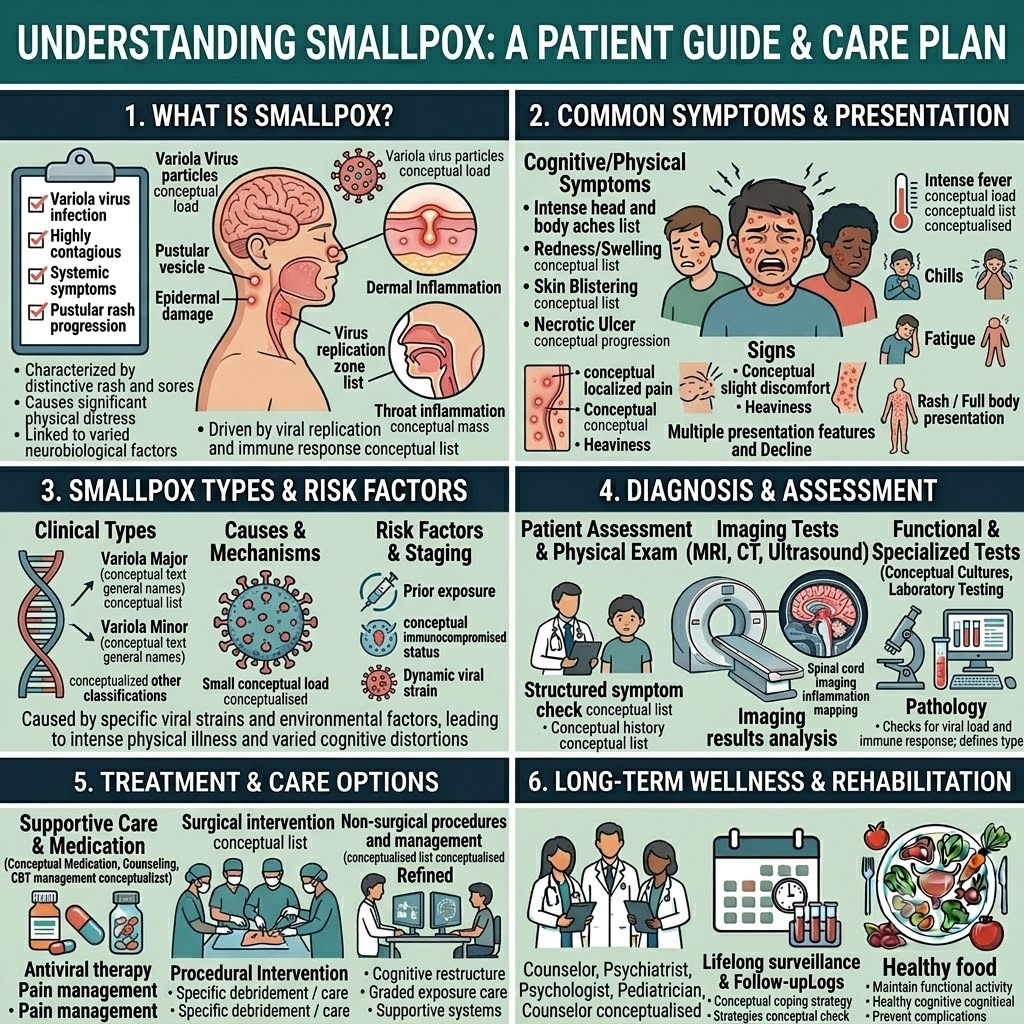
Smallpox is a highly contagious, serious, and potentially life-threatening viral infection caused by the variola virus. While it caused devastating epidemics for thousands of years, global vaccination campaigns successfully eradicated smallpox from nature by 1980. Today, the virus exists only in secure laboratory storage, though emergency planning remains active due to potential bioweapon risks. Understanding its symptoms, transmission, and medical options is vital for public health safety.
Understanding the Condition
Understanding Smallpox: Causes, Symptoms, and Prevention
Understanding the Condition
Smallpox is a highly contagious, serious, and potentially life-threatening viral infection caused by the variola virus. While it caused devastating epidemics for thousands of years, global vaccination campaigns successfully eradicated smallpox from nature by 1980. Today, the virus exists only in secure laboratory storage, though emergency planning remains active due to potential bioweapon risks. Understanding its symptoms, transmission, and medical options is vital for public health safety.
Common Symptoms
Incubation Period: After exposure, the virus remains quiet in the body for 7 to 19 days (typically 12 to 14 days). During this time, you do not feel sick and cannot spread the virus to others.
Flu-Like Prodrome: The sudden onset of severe, flu-like symptoms marking the end of the incubation period. This stage features high fever, muscle aches, extreme fatigue, severe back pain, and occasional vomiting.
Early Rash Development: A few days after the flu-like symptoms start, flat, red spots begin appearing inside the mouth and on the tongue. These spots quickly break open, spreading the virus into the throat. Soon after, a rash of flat red spots spreads to the face, arms, legs, hands, feet, and finally the torso.
Pustules and Scabbing: Within 24 to 48 hours of appearing, the flat red skin spots transform into small, fluid-filled blisters. Over the next several days, these blisters fill with thick pus, forming raised, firm bumps called pustules. About 8 to 9 days later, these pustules crust over to form hard scabs, which eventually fall off and leave deep, pitted scars. A person is highly contagious from the moment the first mouth sores appear until the very last scab falls off.
Consultation Guide
Which Specialist to Meet
If you suspect exposure to smallpox or have symptoms, you must be evaluated by infectious disease specialists, emergency medicine physicians, and public health officials.
Preparations Before Your Visit
Because smallpox is highly contagious, do not walk directly into a clinic or hospital without warning. Call the healthcare facility or local emergency services immediately before arriving. They will provide instructions on how to arrive safely and place you directly in a secure isolation room. Wear a face mask and cover all skin rashes with clothing or bandages before transport. Write down a timeline of your symptoms and any known exposures to help the medical team.
Book a doctor visit near me
Antiviral Medications: Specialized prescription antiviral drugs designed to halt the replication of the poxvirus, helping to prevent the disease from worsening and reducing the overall severity of symptoms. (Duration: Typically administered orally or intravenously daily for 14 days.)
Intravenous Fluid Therapy: Administration of sterile fluids and essential electrolytes directly into the bloodstream to treat and prevent severe dehydration, especially in patients with severe mouth sores or persistent vomiting. (Duration: Provided continuously throughout the active illness phase, usually lasting 1 to 2 weeks.)
Fever and Pain Management: Use of non-aspirin fever-reducing agents and pain medications to alleviate high fevers, intense backaches, and generalized muscle pain. (Duration: Administered as needed during the first 10 to 14 days of active symptoms.)
Secondary Infection Control: Prescription of targeted antibiotics if open skin lesions or pustules become infected by secondary bacteria. (Duration: Standard course typically ranges from 7 to 10 days.)
Consultation Guide
The doctor will collect fluid or scab material from your skin sores using a small swab or sterile instrument. While the collection might cause slight physical pinching, the process is very quick. The sample is then processed and examined under a powerful electron microscope by specialized lab technicians.
Psychological and Coping Support: Engaging in mental health counseling or support groups to manage the emotional and psychological distress caused by severe physical illness, isolation, and facial scarring.
Diagnostic Procedures
Polymerase Chain Reaction (PCR) Test
The primary diagnostic test used to detect the genetic material (DNA) of the variola virus from active skin lesions.
What to Expect
A healthcare provider wearing protective gear will use a sterile swab to gently scrape fluid or cells from your open skin blisters, or collect a scab. You may feel a brief scratching sensation or mild discomfort during collection. The sample is immediately sealed and sent to a highly secure public health laboratory for rapid molecular analysis.
An advanced laboratory imaging technique used to visually identify poxvirus particles under an ultra-high-magnification microscope.
What to Expect
Treatment Options
Medical and Supportive Therapies
Dermatological Scar Management: Consulting a dermatologist after complete recovery for therapies such as laser treatment, specialized moisturizers, and microdermabrasion to help minimize deep, pitted scars.
Prevention & Long-Term Wellbeing
Prevention and Long-Term Recovery
Post-Exposure Vaccination: Receiving a smallpox vaccine within 3 to 7 days of exposure can completely prevent the disease or significantly lessen the severity of the illness.
Strict Quarantine and Isolation: Remaining in a specialized negative-pressure isolation room until all scabs have completely fallen off to protect family members and the wider community from viral transmission.
Tags & Topics
Notice an error or need an update?
Help us keep medical information accurate. Report incorrect info or suggest an edit.


