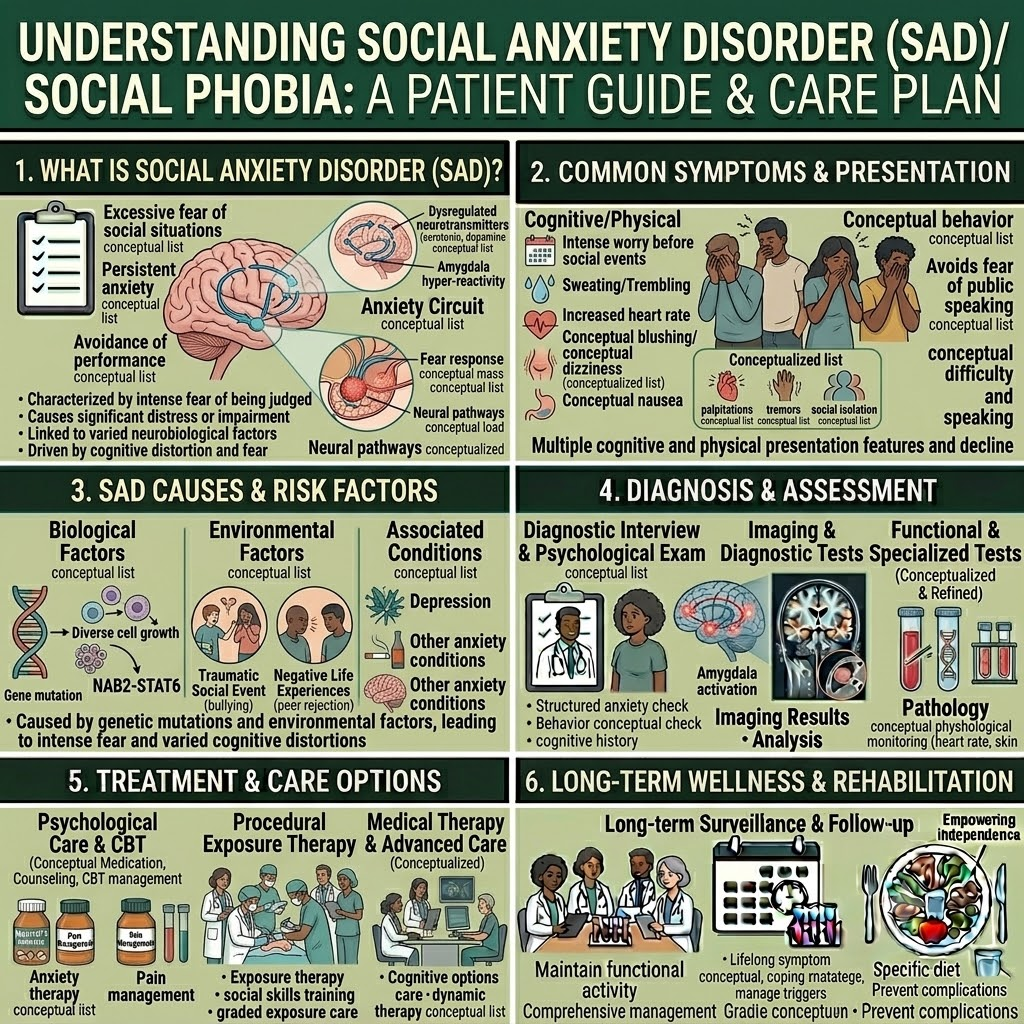
Social Anxiety Disorder, also known as social phobia, is more than just shyness or occasional nervousness. It involves intense fear, anxiety, and self-consciousness in everyday social situations because of a strong worry about being judged, embarrassed, or humiliated by others. This overwhelming fear can lead to avoiding social interactions, significantly disrupting daily life, relationships, work, or school. While it can be a chronic condition, effective treatments like therapy and medication can help individuals gain confidence and improve their ability to engage with others.
Understanding the Condition
Social Anxiety Disorder (Social Phobia): Understanding and Managing Intense Social Fear
Understanding the Condition
Common Symptoms
Intense Fear of Judgment: Constant worry about being negatively evaluated, scrutinized, or criticized by others in social settings.
Before your visit, it can be helpful to write down your symptoms, when they started, and how they affect your daily life. Make a list of any questions you have. Also, be prepared to discuss your medical history, any current medications, and any recent stressors or life changes.
Book a doctor visit near me
Clinical Evaluation and Symptom Assessment
Diagnosing social anxiety disorder involves a thorough evaluation by a mental health professional or doctor. This typically includes discussing your symptoms, medical history, and how these symptoms impact your daily life, relationships, and work or school. There are no lab tests or imaging scans to diagnose social anxiety disorder. Instead, the diagnosis is based on specific criteria outlined in diagnostic manuals, focusing on the intensity, duration, and impact of your social fears. The doctor will also rule out other conditions that might cause similar symptoms.
Antidepressants: Certain types of antidepressants, often used at lower doses than for depression, can help reduce social anxiety symptoms by affecting brain chemicals. They are not habit-forming. (Duration: May be taken long-term, often for several months to a year or more, or as directed by a doctor. Effects may take several weeks to become noticeable.)
Early Intervention: Seeking professional help as soon as anxiety symptoms emerge can prevent the condition from worsening and make treatment more effective.
Mindful Journaling: Regularly writing down your thoughts, feelings, and experiences can help you identify triggers for your anxiety, recognize patterns, and understand what helps you feel better.
Life Balance and Priorities: Consciously managing your time and energy, setting realistic goals, and dedicating time to enjoyable activities can reduce overall stress and anxiety.
Avoidance of Unhealthy Substances: Limiting or avoiding alcohol, recreational drugs, excessive caffeine, and nicotine can significantly improve anxiety symptoms, as these substances can trigger or worsen anxiety. If struggling with addiction, seek professional help.
Consultation Guide
Social Anxiety Disorder, also known as social phobia, is more than just shyness or occasional nervousness. It involves intense fear, anxiety, and self-consciousness in everyday social situations because of a strong worry about being judged, embarrassed, or humiliated by others. This overwhelming fear can lead to avoiding social interactions, significantly disrupting daily life, relationships, work, or school. While it can be a chronic condition, effective treatments like therapy and medication can help individuals gain confidence and improve their ability to engage with others.
Worry About Embarrassment: Strong anxiety about saying or doing something that might cause humiliation or embarrassment.
Fear of Interaction: Significant discomfort or intense fear when interacting with strangers or even familiar people.
Visible Anxiety: Worry that others will notice outward signs of anxiety, such as blushing, sweating, trembling, or a shaky voice, which can then cause more embarrassment.
Social Avoidance: Actively avoiding social situations, events, or speaking to people out of fear of embarrassment or negative judgment. This includes avoiding being the center of attention.
Anticipatory Anxiety: Feeling extreme worry and anxiety for days or weeks leading up to a feared social activity or event.
Severe Discomfort During Social Situations: Experiencing intense fear or panic attacks while in social settings.
Post-Social Analysis: After a social interaction, spending a lot of time overthinking and analyzing your performance, focusing on perceived flaws or mistakes.
Expecting the Worst: Anticipating negative outcomes or consequences from any social interaction or perceived mistake.
Consultation Guide
Which Specialist to Meet
Start by talking to your primary care doctor, who can refer you to a mental health professional. Specialists include psychologists, psychiatrists, or other licensed therapists who have experience in treating anxiety disorders.
Preparations Before Your Visit
Diagnostic Procedures
What to Expect
During the evaluation, you will have a confidential conversation with your healthcare provider. They will ask detailed questions about your social fears, how often they occur, what situations trigger them, and how you typically react. You may be asked to complete questionnaires or rating scales that help assess the severity of your anxiety. It's a safe space to openly share your experiences and feelings without judgment. The goal is to understand your specific challenges to arrive at an accurate diagnosis and recommend the most suitable treatment plan.
Treatment Options
Therapies
Cognitive Behavioral Therapy (CBT): A widely effective talk therapy that helps you identify and change negative thinking patterns and behaviors that contribute to social anxiety. You learn practical skills to manage anxiety, challenge fearful thoughts, and gradually face feared social situations. (Duration: Typically involves structured weekly sessions over 12-20 weeks, but can vary.)
Other Forms of Psychotherapy (Talk Therapy): Involves talking with a mental health professional to explore the roots of your anxiety, understand how your thoughts and emotions affect your behavior, and develop healthy coping mechanisms. Various approaches exist, tailored to individual needs. (Duration: Can range from several months to a year or more, depending on the individual and severity.)
Exposure Therapy: Often a component of CBT, this therapy gradually exposes you to feared social situations in a safe and controlled manner, helping you become less sensitive to them over time. (Duration: Integrated into CBT, typically several weeks to months.)
Medications
Anti-Anxiety Medications: These medications can provide quick relief for severe anxiety in specific situations. They are typically prescribed for short-term use due to potential for dependency. (Duration: Used on an as-needed basis or for short periods, usually weeks, under strict medical supervision.)
Prevention & Long-Term Wellbeing
Lifestyle Adjustments and Self-Help
Stress Management Techniques: Practices like deep breathing, mindfulness, and meditation can help calm your nervous system and reduce overall anxiety levels. (Duration: Ongoing daily practice.)
Regular Physical Activity: Engaging in exercise can release tension, improve mood, and act as a natural stress reducer. (Duration: Regular, consistent activity, such as 30 minutes most days of the week.)
Prevention / Long-Term Monitoring
Healthy Lifestyle: Ensuring adequate sleep, maintaining a balanced diet, and engaging in regular physical activity are fundamental for both physical and mental well-being, helping to manage stress and anxiety.
Build a Support System: Connecting with trusted friends, family, or support groups can provide emotional support and reduce feelings of isolation.
Tags & Topics
Notice an error or need an update?
Help us keep medical information accurate. Report incorrect info or suggest an edit.


