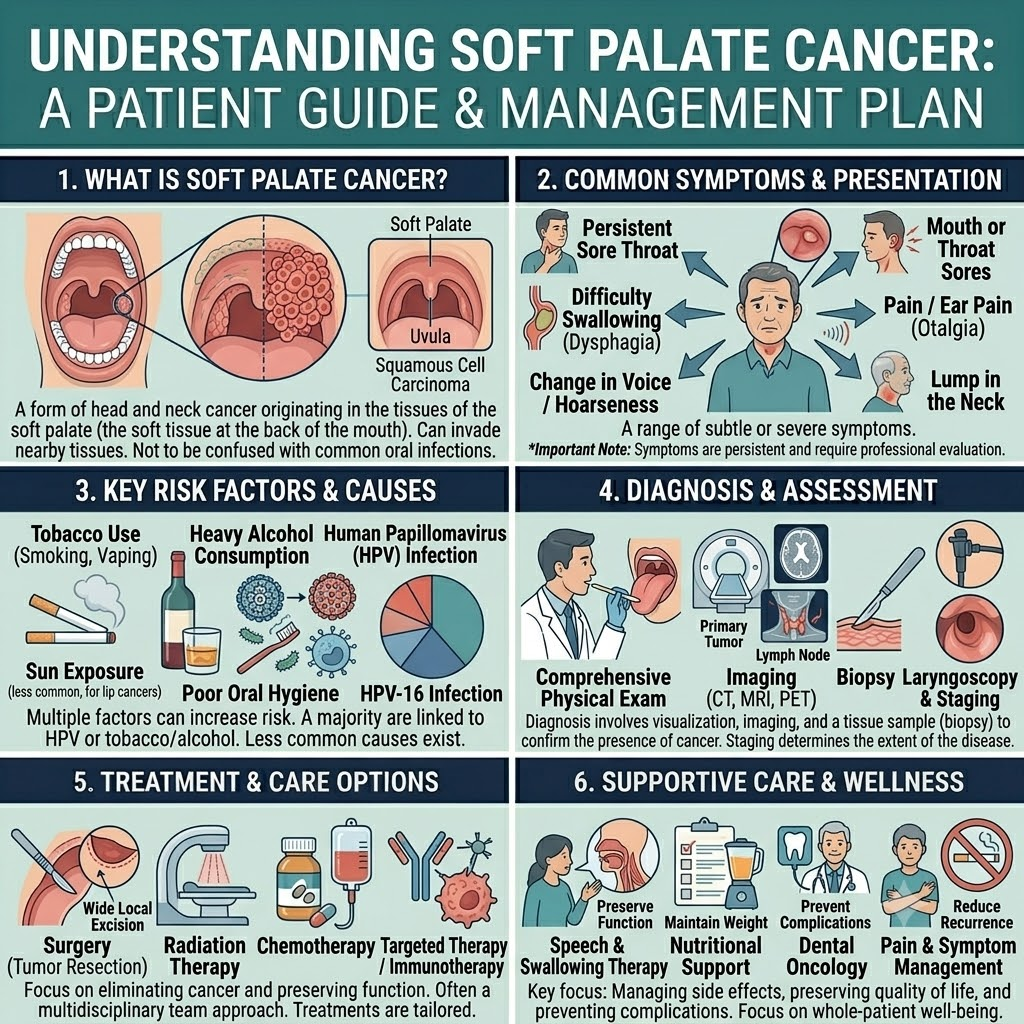
Soft palate cancer is a type of cancer that begins as a growth of cells on the soft palate. The soft palate is the flexible, muscular part at the upper back of your mouth, behind your teeth. Most commonly, this cancer starts in the thin, flat cells lining the inside of the mouth and throat, known as squamous cells, leading to a diagnosis of squamous cell carcinoma. Soft palate cancer can cause noticeable changes in the tissue and is considered a form of throat cancer, treated with methods such as surgery, radiation, and chemotherapy.
Understanding the Condition
Common Symptoms
Bleeding in the mouth: Unexplained or frequent bleeding from the mouth.
Difficulty swallowing: Experiencing pain or a sensation of food getting stuck when trying to swallow.
Difficulty speaking: Changes in speech, such as hoarseness or slurred words, that are new or worsening.
Bad breath: Persistent bad breath that doesn't improve with oral hygiene.
Mouth pain: Ongoing pain or discomfort in the mouth area.
Sores that won't heal: Open sores or ulcers in the mouth that persist for an extended period.
Loose teeth: Teeth becoming loose without a clear dental reason.
You should initially consult your primary care doctor or dentist if you notice persistent symptoms. They may refer you to an Ear, Nose, and Throat (ENT) specialist, also called an otolaryngologist, for a thorough examination. If cancer is suspected or confirmed, an oncologist (cancer specialist) will be involved in managing your care.
Preparations Before Your Visit
Before your appointment, make a list of all your symptoms, including when they started and how they have changed. Note any medications you are taking, your medical history, and be prepared to discuss your lifestyle, including tobacco and alcohol use. Also, write down any questions you have for the doctor.
Book a doctor visit near me
Consultation Guide
Soft palate cancer is a type of cancer that begins as a growth of cells on the soft palate. The soft palate is the flexible, muscular part at the upper back of your mouth, behind your teeth. Most commonly, this cancer starts in the thin, flat cells lining the inside of the mouth and throat, known as squamous cells, leading to a diagnosis of squamous cell carcinoma. Soft palate cancer can cause noticeable changes in the tissue and is considered a form of throat cancer, treated with methods such as surgery, radiation, and chemotherapy.
You may receive a local anesthetic spray to numb your nose or throat to make the procedure more comfortable. The doctor will gently guide the endoscope through your nose or mouth. You might feel some pressure or a gag reflex, but it typically doesn't cause pain. The procedure usually takes only a few minutes.
Diagnostic Procedures
Soft Palate Cancer: Understanding the Condition, Diagnosis, and Treatment
Understanding the Condition
Physical Exam and History
Your doctor will carefully examine your mouth and throat, looking for any abnormalities like lumps, sores, or unusual patches. They will also feel your neck for swollen lymph nodes.
What to Expect
The doctor will use a light to visually inspect your mouth, tongue, gums, and the back of your throat. They will also use their gloved hands to gently feel for any masses or tender areas in your mouth and neck. This part of the examination is usually quick and painless.
A procedure where a thin, flexible tube with a camera (endoscope) is used to get a clear view of your soft palate and throat, identifying any suspicious areas.
What to Expect
This is the most crucial diagnostic test, involving the removal of a small tissue sample from any suspicious area. The sample is then examined under a microscope by a pathologist to confirm the presence of cancer.
What to Expect
Depending on the location and size of the suspicious area, a biopsy can be performed in the doctor's office with local anesthesia to numb the area, or under general anesthesia (where you are asleep) in an operating room. A small piece of tissue is carefully removed. You might experience some mild soreness or discomfort at the biopsy site for a few days afterward.
Imaging Scans (CT, MRI, PET)
Advanced imaging tests such as Computed Tomography (CT), Magnetic Resonance Imaging (MRI), or Positron Emission Tomography (PET) scans are used to determine the exact size and location of the tumor and check if the cancer has spread to other parts of the body.
What to Expect
You will lie still on a table that slides into a large, tunnel-like machine. For some scans, a special dye (contrast material) may be injected into a vein to help certain structures show up more clearly. These scans are generally painless but can be noisy (MRI) or require you to remain still for an extended period, typically 30 to 60 minutes.
Nutritional Support (Tube Feeding): If swallowing becomes difficult due to the tumor or treatment side effects, temporary tube feeding (enteral nutrition) can deliver essential nutrients directly to the stomach or small intestine to prevent malnutrition. (Duration: Used as needed, from weeks to months, until a person can safely and adequately eat and drink by mouth again.)
Treatment Options
Surgical Procedures
Tumor Removal (Resection): The surgeon removes the cancerous tumor along with a margin of healthy tissue surrounding it to ensure all cancer cells are taken out. If there's a risk of spread, nearby lymph nodes in the neck may also be removed (neck dissection). (Duration: Recovery from surgery can range from several weeks to a few months, depending on the extent of the procedure and individual healing.)
External Beam Radiation: High-energy beams, similar to X-rays, are precisely directed at the tumor area to kill cancer cells and shrink the tumor. This can be used alone or after surgery. (Duration: Typically administered daily, five days a week, for a period of 5 to 7 weeks.)
Medication-Based Therapies
Chemotherapy: Powerful medications are used to kill fast-growing cancer cells throughout the body. These can be given intravenously (through a vein) or as pills. Chemotherapy is often combined with radiation therapy to enhance its effectiveness. (Duration: Administered in cycles (e.g., a few weeks of treatment followed by a break) over several months, depending on the specific regimen.)
Maintain Immune System Health: If your immune system is weakened due to medications (e.g., after an organ transplant) or conditions like HIV, you may have a higher risk. Discuss strategies with your healthcare provider to manage your immune health.
Regular Oral Health Check-ups: Schedule routine dental and medical appointments. Your dentist or doctor can check your mouth for early signs of cancer or precancerous changes, which can lead to earlier detection and better outcomes.
Prevention & Long-Term Wellbeing
Weight loss: Unexplained loss of body weight without intentional dieting.
Neck swelling: A new lump or swelling in the neck, which may or may not be painful.
White patches: White or reddish patches in the mouth that cannot be scraped away and do not disappear.
- Consultation Guide
Which Specialist to Meet
Prevention and Long-Term Monitoring
Avoid Tobacco Products: Refrain from using any form of tobacco, including cigarettes, cigars, pipes, chewing tobacco, and snuff. If you currently use tobacco, seek professional help to quit.
Limit Alcohol Consumption: If you choose to drink alcohol, do so in moderation. For healthy adults, this means up to one drink per day for women and up to two drinks per day for men. Combining alcohol and tobacco significantly increases risk.
Consider HPV Vaccination: Receiving a vaccination to prevent Human Papillomavirus (HPV) infection may reduce your risk of HPV-related cancers, including some soft palate cancers. Discuss with your doctor if the HPV vaccine is appropriate for you.
Tags & Topics
Notice an error or need an update?
Help us keep medical information accurate. Report incorrect info or suggest an edit.


