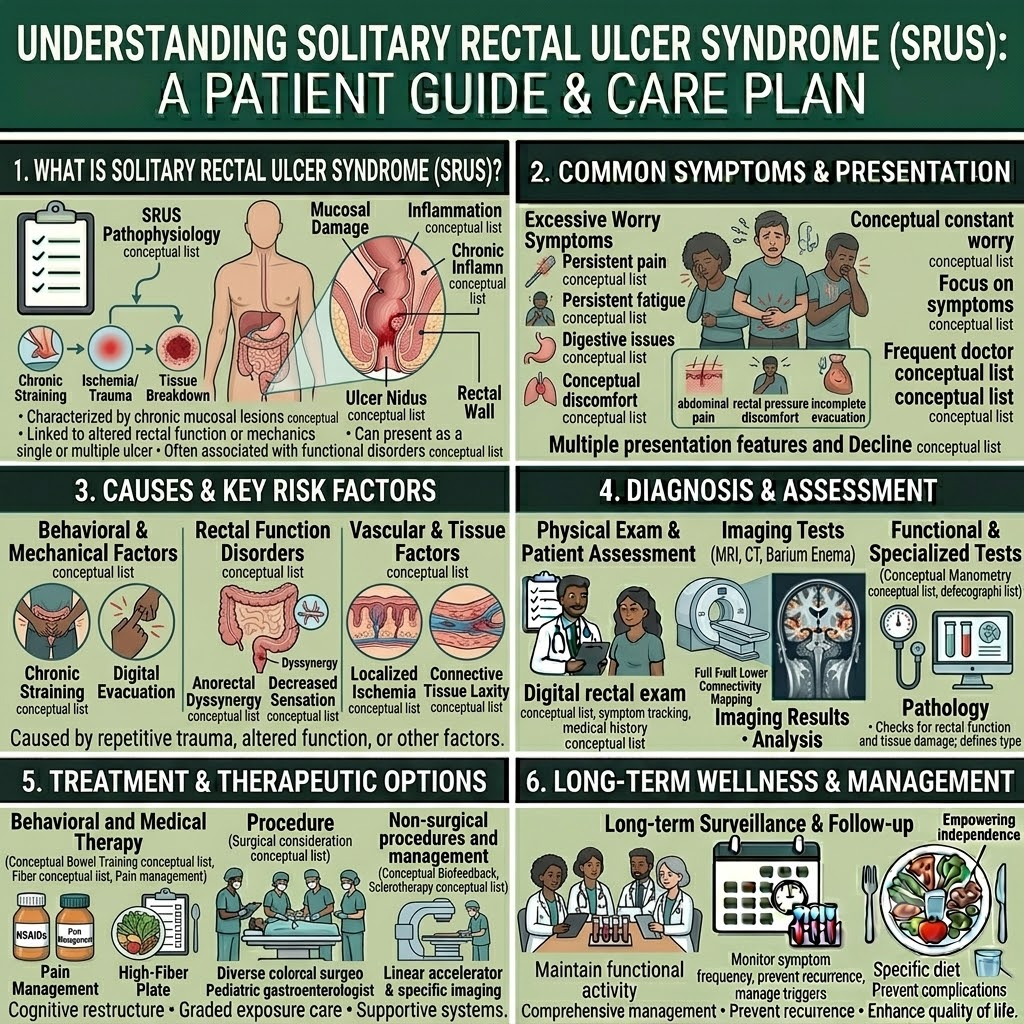
Solitary Rectal Ulcer Syndrome (SRUS) is a rare condition where one or more open sores, called ulcers, develop inside the rectum. The rectum is the final section of the large intestine, a tube through which stool passes before leaving the body. Despite its name, more than one ulcer can form. This poorly understood disorder often occurs in individuals with long-term constipation, leading to symptoms like rectal bleeding, pain, and straining during bowel movements. While lifestyle changes can help, severe cases may require medical procedures or surgery.
Understanding the Condition
Understanding Solitary Rectal Ulcer Syndrome
Understanding the Condition
Solitary Rectal Ulcer Syndrome (SRUS) is a rare condition where one or more open sores, called ulcers, develop inside the rectum. The rectum is the final section of the large intestine, a tube through which stool passes before leaving the body. Despite its name, more than one ulcer can form. This poorly understood disorder often occurs in individuals with long-term constipation, leading to symptoms like rectal bleeding, pain, and straining during bowel movements. While lifestyle changes can help, severe cases may require medical procedures or surgery.
Common Symptoms
Rectal Bleeding: Blood mixed with stool or on toilet paper.
Rectal Pain: Discomfort in the rectal area.
Straining during Bowel Movements: Difficulty or excessive effort to pass stool.
Feeling of Incomplete Emptying: Sensation that not all stool has been passed.
Pelvic Pain: Aching or discomfort in the lower abdomen or pelvis.
Mucus Discharge: Passing clear or yellowish sticky fluid from the rectum.
Rectal Lump Sensation: Feeling of something present in the rectum.
Constipation: Infrequent or difficult bowel movements.
Diarrhea: Loose, watery stools.
Consultation Guide
Which Specialist to Meet
You should first consult with a general practitioner. Depending on your symptoms and initial findings, they may refer you to a gastroenterologist (a doctor specializing in digestive system disorders) or a colorectal surgeon (a surgeon specializing in diseases of the colon and rectum).
Preparations Before Your Visit
To make the most of your appointment, be prepared to discuss your symptoms, including when they started, how severe they are, and anything that makes them better or worse. Keep a diary of your bowel habits, noting frequency, stool consistency, and any associated pain or bleeding. Bring a list of all your current medications, vitamins, and supplements. Prepare a list of questions for your doctor.
Book a doctor visit near me
Diagnostic Procedures
Flexible Sigmoidoscopy
This is an examination to look inside your rectum and the lower part of your large intestine (colon), specifically the sigmoid and descending colon. A thin, flexible tube called a sigmoidoscope is used. It has a light, a camera, and tools to check for ulcers, abnormal growths (polyps), and take tissue samples for analysis.
What to Expect
Before the procedure, you will likely need to prepare your bowel by using an enema or laxatives as directed by your doctor to ensure a clear view. During the exam, you'll lie on your side, and the doctor will gently insert the lubricated sigmoidoscope into your anus and guide it through your rectum and lower colon. You might feel some pressure, cramping, or the urge to have a bowel movement as the tube moves and air is gently introduced to expand the colon for better viewing. The procedure typically takes about 10-20 minutes. If any polyps or unusual tissues are found, small samples may be removed for further testing. You can typically go home shortly after the procedure.
Ultrasound (Diagnostic Sonography)
An ultrasound uses high-frequency sound waves to create live images of the structures inside your body. It helps doctors visualize organs and tissues to aid in diagnosing various conditions. Most use an external device, though some may use an internal one. It's a safe procedure that uses low-power sound waves and has no known risks. However, sound waves don't travel well through air or bone, so it's less effective for imaging areas with air or hidden by bone.
What to Expect
For most general ultrasounds, no special preparation is needed. However, depending on the area being examined, you might be asked to drink several glasses of water beforehand to ensure a full bladder, or to fast for a certain period. You will typically lie on an examination table. A gel will be applied to your skin over the area to be examined, and a small handheld device (transducer) will be pressed against your skin, sending sound waves into your body and collecting the echoes. You may feel slight pressure from the transducer. If an internal ultrasound is required, a specially designed transducer will be gently inserted into the rectum. The images are displayed on a monitor; the procedure is usually painless and lasts about 30-60 minutes.
Regular Medical Follow-ups: If you have been diagnosed with SRUS, regular check-ups with your healthcare provider are important to monitor the condition, adjust treatments, and ensure long-term well-being.
Treatment Options
Corrective Surgery: Surgery is considered for severe cases of SRUS, particularly when other treatments haven't been effective, or if there's an underlying anatomical issue like rectal prolapse. Surgical options may include procedures to remove the ulcer, repair a rectal prolapse (where the rectum sags out of the anus), or perform other corrective surgeries to restore normal rectal anatomy and function. The specific procedure depends on the individual's condition. (Duration: A single procedure, followed by a recovery period that varies based on the type of surgery, typically weeks to months for full recovery.)
Manage Underlying Conditions: If you have chronic constipation, work with your doctor to manage it effectively through diet, lifestyle, or appropriate medications.
Stress Management: Practice stress-reducing techniques such as meditation, deep breathing exercises, yoga, or engaging in hobbies you enjoy. Stress can impact digestive health.
Prevention & Long-Term Wellbeing
Lifestyle and Home Remedies
Dietary Fiber and Fluids: Initial management focuses on promoting healthy bowel function and reducing straining. This includes increasing dietary fiber (found in fruits, vegetables, and whole grains) and drinking plenty of fluids to soften stools and prevent constipation. Avoiding straining during bowel movements is crucial. (Duration: Ongoing, as part of a daily routine.)
Biofeedback: Biofeedback is a mind-body technique that helps you learn to control certain involuntary body functions. For SRUS, sensors monitor muscle activity in your rectum and pelvic floor, providing real-time feedback (visual or auditory). This helps you learn to relax or strengthen specific muscles, improving coordination and reducing straining during bowel movements. (Duration: Typically involves several sessions (e.g., 5-10 or more) over several weeks to months, with practice at home.)
Cognitive Behavioral Therapy (CBT): CBT is a type of talk therapy that helps you identify and change unhelpful thinking patterns and behaviors. For SRUS, it can be used to manage chronic pain, reduce stress, cope with the emotional impact of a chronic condition, and address behaviors like excessive straining. CBT teaches practical coping skills. (Duration: Often involves a structured series of sessions, typically 5-20, over weeks to several months, with 'homework' assignments between sessions.)
Prevention
Prevent Constipation: Maintain a diet rich in fiber (fruits, vegetables, whole grains) and drink adequate water daily. Regular physical activity also helps promote healthy bowel function.
Avoid Straining: Listen to your body and go to the bathroom when you feel the urge. Avoid forcing bowel movements, as straining can injure the rectal lining. Use a squatting position or a footstool if it helps.
Long-Term Monitoring and Management
Tags & Topics
Notice an error or need an update?
Help us keep medical information accurate. Report incorrect info or suggest an edit.


