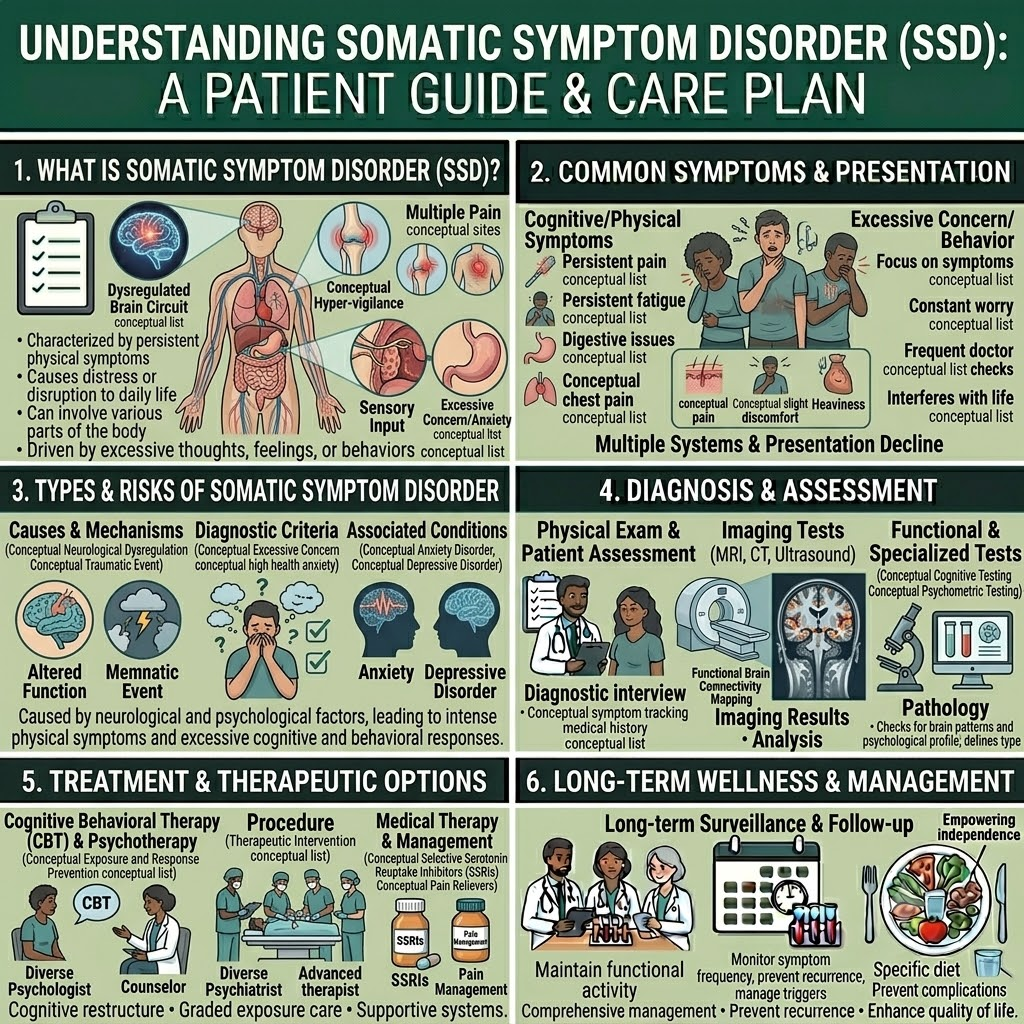
Somatic Symptom Disorder (SSD) is a condition where a person experiences significant physical symptoms, such as pain, fatigue, or shortness of breath, and then reacts to these symptoms with excessive thoughts, feelings, or behaviors. This intense focus and worry cause considerable emotional distress and make it difficult to function in daily life. The physical symptoms may or may not be linked to another diagnosed medical condition. However, with SSD, the way you think about and react to these symptoms becomes extreme, leading to a cycle of worry, frequent medical visits (even after serious conditions are ruled out), and impaired functioning. Effective treatment can help ease this distress, improve coping skills, and enhance your overall quality of life.
Understanding the Condition
Understanding Somatic Symptom Disorder: When Physical Symptoms Cause Emotional Distress
Understanding the Condition
Somatic Symptom Disorder (SSD) is a condition where a person experiences significant physical symptoms, such as pain, fatigue, or shortness of breath, and then reacts to these symptoms with excessive thoughts, feelings, or behaviors. This intense focus and worry cause considerable emotional distress and make it difficult to function in daily life. The physical symptoms may or may not be linked to another diagnosed medical condition. However, with SSD, the way you think about and react to these symptoms becomes extreme, leading to a cycle of worry, frequent medical visits (even after serious conditions are ruled out), and impaired functioning. Effective treatment can help ease this distress, improve coping skills, and enhance your overall quality of life.
Common Symptoms
Persistent Physical Symptoms: Describes various physical sensations, such as specific pains (e.g., headache, back pain), general discomfort (e.g., feeling very tired, weak), or issues like shortness of breath. These symptoms can be real and cause distress.
Symptoms Without Clear Medical Cause: Physical symptoms that cannot be fully explained by a known medical condition after thorough investigation.
Exaggerated Reaction to Symptoms: Physical symptoms that are linked to an existing medical condition, but the emotional and behavioral reaction to them is much more severe or persistent than typically expected.
Varying Symptoms: The number, type, and severity of symptoms can change over time. You might have one main symptom, or many different ones that come and go.
Intense Worry and Distress: Regardless of the specific physical symptoms, a core feature is the constant, stressful thoughts, feelings, and behaviors related to them. This overwhelming focus makes it hard to live your daily life and can sometimes be disabling.
Consultation Guide
Which Specialist to Meet
You should first consult your primary care doctor for an initial evaluation. If Somatic Symptom Disorder is suspected, they may refer you to a mental health specialist, such as a psychiatrist, psychologist, or a licensed therapist or counselor. A psychiatrist can evaluate both physical and mental health aspects and prescribe medication if needed, while psychologists and therapists provide talk therapy.
Preparations Before Your Visit
Before your visit, prepare a detailed list of all your physical symptoms, including when they started, how often they occur, how severe they are, and what makes them better or worse. Also, note any emotional symptoms you're experiencing (like anxiety or sadness) and how your symptoms impact your daily activities, work, and relationships. Bring a list of all current medications, supplements, and any past medical conditions or diagnoses. It's also helpful to write down any questions you have for your doctor.
Book a doctor visit near me
Diagnosing Somatic Symptom Disorder primarily involves a thorough clinical assessment by your doctor. This process aims to understand the nature of your physical symptoms, the level of emotional distress they cause, and how they affect your daily functioning. A critical part of this diagnostic approach is to carefully rule out any other underlying medical conditions that could be causing or fully explaining your physical symptoms.
Your doctor will conduct a comprehensive physical examination and ask many detailed questions about your health history, current symptoms, lifestyle, and how your symptoms make you feel emotionally. They may order various medical tests, such as blood tests, urine tests, or imaging scans (like X-rays or MRI), to investigate potential physical causes for your symptoms. Be prepared to discuss not just your physical discomfort but also your thoughts and feelings about your symptoms, your worries, and how they interfere with your life. Open communication about both your physical and emotional experiences is vital for an accurate diagnosis.
Psychotherapy (Talk Therapy): This is the primary and most effective treatment. It involves working with a mental health professional to understand the link between your thoughts, emotions, and physical symptoms. Cognitive Behavioral Therapy (CBT) is often used to help you identify and change negative thought patterns and behaviors related to your symptoms, develop healthier coping skills, and reduce excessive worry. Therapy can help you manage distress, improve daily functioning, and enhance your quality of life. (Duration: Typically ranges from several weeks to many months, or sometimes longer, with regular sessions usually held once a week.)
Medications for Associated Conditions: While there's no specific medication solely for Somatic Symptom Disorder, doctors may prescribe medications, often alongside psychotherapy, to address co-occurring mental health conditions. For example, antidepressant medications can help reduce symptoms of depression or anxiety, which are frequently experienced by individuals with SSD. These medications can improve overall mood and reduce emotional distress, indirectly helping to manage the impact of physical symptoms. (Duration: Varies depending on the individual's needs, often several months to a year or more, with ongoing monitoring by your doctor.)
Stress Management and Healthy Routines: Implementing stress-reducing techniques such as mindfulness, meditation, deep breathing exercises, or yoga can help calm your nervous system and potentially lessen the intensity of physical symptoms. Maintaining healthy daily routines, including a balanced diet, regular physical activity tailored to your abilities, consistent sleep habits, and engaging in social activities, plays a crucial role in overall well-being and coping with symptoms. (Duration: Ongoing, as a part of daily life for sustained benefits.)
Early Identification and Professional Help: Seeking professional help promptly if you notice persistent physical symptoms accompanied by excessive worry or distress, especially if you also experience anxiety or depression. Early intervention can prevent symptoms from escalating and becoming more disruptive.
Consistent Treatment Adherence: Diligently following your prescribed treatment plan, whether it involves psychotherapy, medication, or both. Regular engagement with therapy and taking medications as directed are crucial for managing symptoms, preventing relapses, and maintaining improvements in your quality of life.
Stress Awareness and Management: Learning to recognize the early signs of stress and understanding how it affects your body. Practicing various stress management and relaxation techniques (e.g., deep breathing, meditation, spending time in nature) can help reduce emotional distress and its potential impact on physical symptoms.
Healthy Lifestyle Choices: Adopting and maintaining healthy routines, including establishing consistent and adequate sleep habits, engaging in regular physical activity suitable for your health, and actively participating in social activities. These choices support overall physical and mental health, making it easier to cope with symptoms.
Building a Support System: Connecting with trusted family, friends, or support groups can provide emotional encouragement and practical help, reducing feelings of isolation and improving your ability to manage daily challenges and relationships effectively.
Diagnostic Procedures
Clinical Evaluation and Medical Rule-Out
What to Expect
Treatment Options
Therapies
Medications
Prevention & Long-Term Wellbeing
Lifestyle and Self-Care
Prevention and Long-Term Management
Tags & Topics
Notice an error or need an update?
Help us keep medical information accurate. Report incorrect info or suggest an edit.


