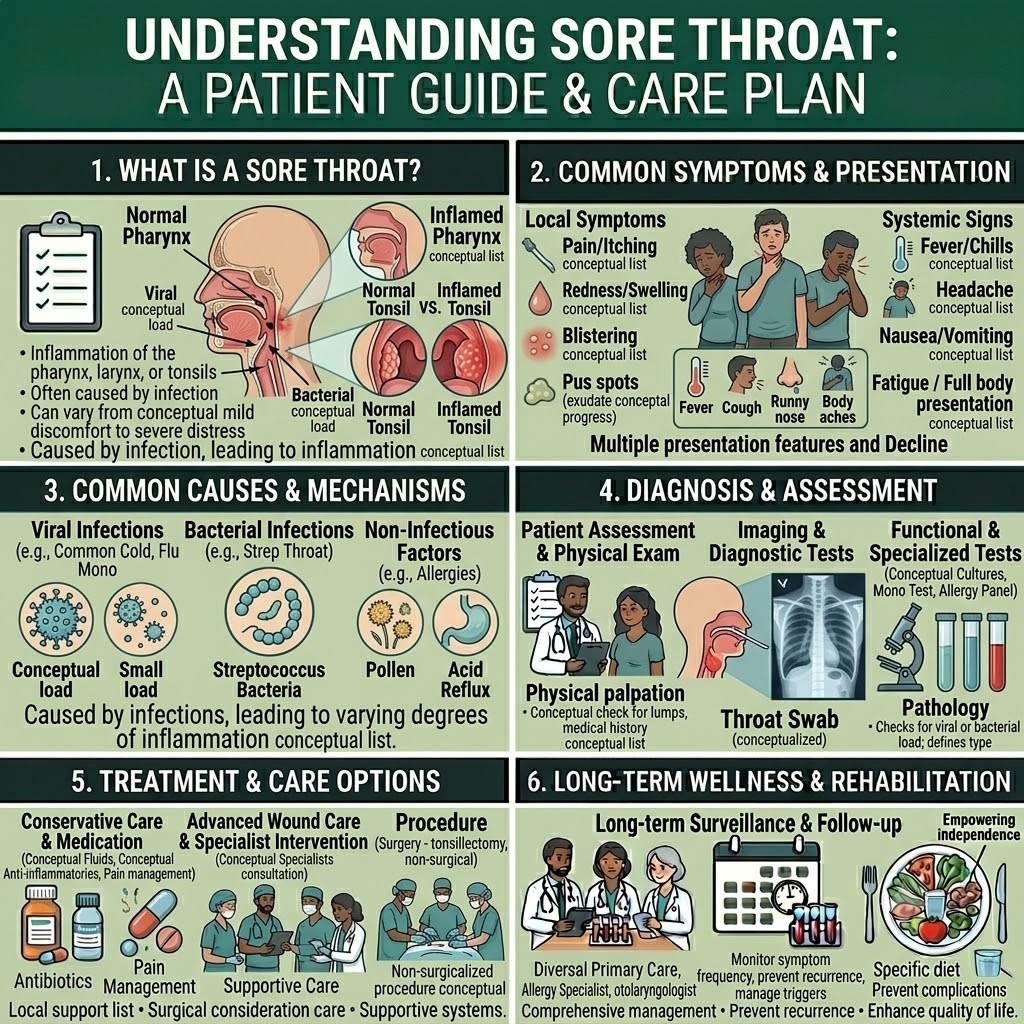
A sore throat, also known as pharyngitis, is a common condition causing pain or irritation in the throat, often made worse by swallowing. Most sore throats are caused by viral infections like the common cold or flu and typically clear up on their own. Less commonly, a sore throat can be due to a bacterial infection, such as strep throat (streptococcal infection), which requires treatment with specific medications. Other, rarer causes might necessitate different treatments.
Understanding the Condition
Sore Throat: Understanding and Managing Throat Pain
Understanding the Condition
Common Symptoms
Throat Pain: Pain or a scratchy feeling in the throat.
Painful Swallowing: Discomfort or difficulty when swallowing food or liquids.
Hoarse Voice: Changes in voice, making it sound rough or raspy.
Red and Swollen Tonsils: The soft pads at the back of the throat appearing red and enlarged.
White Patches: Tiny white spots or streaks of pus on the tonsils.
Swollen Glands: Swelling in the glands (lymph nodes) in the neck and jaw.
Body Aches: Generalized muscle pain throughout the body.
Headache: Pain in the head.
Rash: Skin discoloration or eruption.
Nausea or Vomiting: Feeling sick to your stomach or throwing up.
Runny Nose: Excess mucus discharge from the nose.
Cough: A sudden, forceful expulsion of air from the lungs.
Sneezing: A sudden, involuntary expulsion of air from the nose and mouth.
Consultation Guide
Which Specialist to Meet
For persistent or severe sore throats, you should consult a primary care physician (family doctor or internist). For children, a pediatrician is the appropriate specialist. If the condition is severe or recurrent, or if the primary care doctor suspects a more complex issue, they might refer you to an otolaryngologist (an Ear, Nose, and Throat or ENT specialist).
Preparations Before Your Visit
Before your visit, it's helpful to: * Note your symptoms, including when they started, how severe they are, and anything that makes them better or worse.* List any other medical conditions you have and all medications, vitamins, or supplements you are taking.* Prepare questions to ask your doctor.* For children, monitor their symptoms closely and note if they improve after drinking in the morning. Seek immediate care for a child with severe symptoms like difficulty breathing or swallowing, unusual drooling, or a stiff neck.* For adults, seek professional care if a sore throat is severe, lasts longer than a week, is accompanied by difficulty breathing, difficulty swallowing, difficulty opening your mouth, joint pain, earache, rash, fever over 101 F (38.3 C), blood in saliva or phlegm, or a lump in your neck.
Book a doctor visit near me
Rest: Allow your body to recover by getting plenty of sleep. (Duration: Until symptoms subside, typically 3-7 days.)
Hydration: Drink plenty of clear fluids, warm liquids (like tea with honey), or cool liquids to soothe your throat. (Duration: Throughout the duration of symptoms.)
Gargling: Gargle with warm salt water (1/4 teaspoon salt in 8 ounces of warm water) several times a day to relieve throat discomfort. (Duration: As needed, until symptoms improve.)
Humidifier: Use a cool-mist humidifier in your room to add moisture to the air and help soothe a dry, scratchy throat. (Duration: While sleeping or in dry environments.)
Throat Lozenges or Sprays: Sucking on lozenges or using anesthetic throat sprays can temporarily relieve pain and irritation. (Duration: As directed, usually every few hours for temporary relief.)
Avoid Irritants: Stay away from cigarette smoke and other airborne irritants that can worsen throat pain. (Duration: Throughout symptoms and for long-term throat health.)
Seek Early Treatment: Address sore throats promptly, especially if accompanied by concerning symptoms, to prevent complications and ensure proper healing.
Consultation Guide
A sore throat, also known as pharyngitis, is a common condition causing pain or irritation in the throat, often made worse by swallowing. Most sore throats are caused by viral infections like the common cold or flu and typically clear up on their own. Less commonly, a sore throat can be due to a bacterial infection, such as strep throat (streptococcal infection), which requires treatment with specific medications. Other, rarer causes might necessitate different treatments.
This test quickly checks for the presence of Group A Streptococcus bacteria, the most common cause of bacterial sore throat (strep throat).
A healthcare professional will use a sterile swab to gently rub the back of your throat and tonsils to collect a sample. This might cause a brief gag reflex. The swab is then tested in the clinic, and results are typically available within minutes.
Antibiotics: If your sore throat is caused by a bacterial infection (like strep throat), your doctor will prescribe antibiotics to eliminate the bacteria. It's crucial to complete the entire course of medication. (Duration: Typically 5-10 days, depending on the specific antibiotic and infection.)
Surgical Procedures (for chronic conditions)
Tonsillectomy: In rare cases of recurrent, severe bacterial tonsillitis that cause frequent sore throats, surgical removal of the tonsils may be recommended. (Duration: A single procedure with a recovery period of approximately 1-2 weeks.)
Diagnostic Procedures
A healthcare professional will visually inspect your throat and mouth, looking for redness, swelling, or white patches. They will also feel your neck to check for swollen glands.
What to Expect
The doctor will use a small light to look inside your mouth and throat. They may gently press on the sides of your neck to check your lymph nodes. This is a quick and usually painless part of the examination.
What to Expect
If the rapid strep test is negative but your doctor still suspects strep throat, a throat culture may be performed. This test takes longer but can detect bacteria that the rapid test might miss.
What to Expect
Similar to the rapid strep test, a sterile swab will be used to collect a throat sample. Instead of being tested immediately, the swab is sent to a lab to see if bacteria grow over 24-48 hours. This process helps confirm the presence of bacterial infection.
Treatment Options
Home Remedies and Self-Care
Medications
Pain Relievers: Over-the-counter pain relievers can help reduce throat pain and fever. (Duration: As needed, typically for 3-5 days.)
Prevention & Long-Term Wellbeing
Prevention
Hand Hygiene: Wash your hands thoroughly and frequently, especially after coughing, sneezing, using the restroom, and before eating. Use alcohol-based hand sanitizer when soap and water are unavailable.
Avoid Sharing: Do not share food, drinks, or eating utensils with others to prevent the spread of germs.
Cover Coughs and Sneezes: Cough or sneeze into a tissue, or into your elbow if a tissue isn't available, then wash your hands immediately.
Avoid Irritants: Limit exposure to cigarette smoke, air pollution, and allergens that can irritate your throat.
Stay Home When Sick: If you have a sore throat or other signs of illness, stay home from work or school to prevent spreading germs to others.
Long-Term Wellbeing
Maintain Hydration: Drink sufficient water throughout the day, even when not sick, to keep your throat moist and healthy.
Healthy Lifestyle: Eat a balanced diet, get regular exercise, and manage stress to support a strong immune system.
Avoid Voice Strain: If your job or hobbies involve extensive speaking or singing, ensure proper vocal techniques and rest to prevent throat irritation.
Tags & Topics
Notice an error or need an update?
Help us keep medical information accurate. Report incorrect info or suggest an edit.


