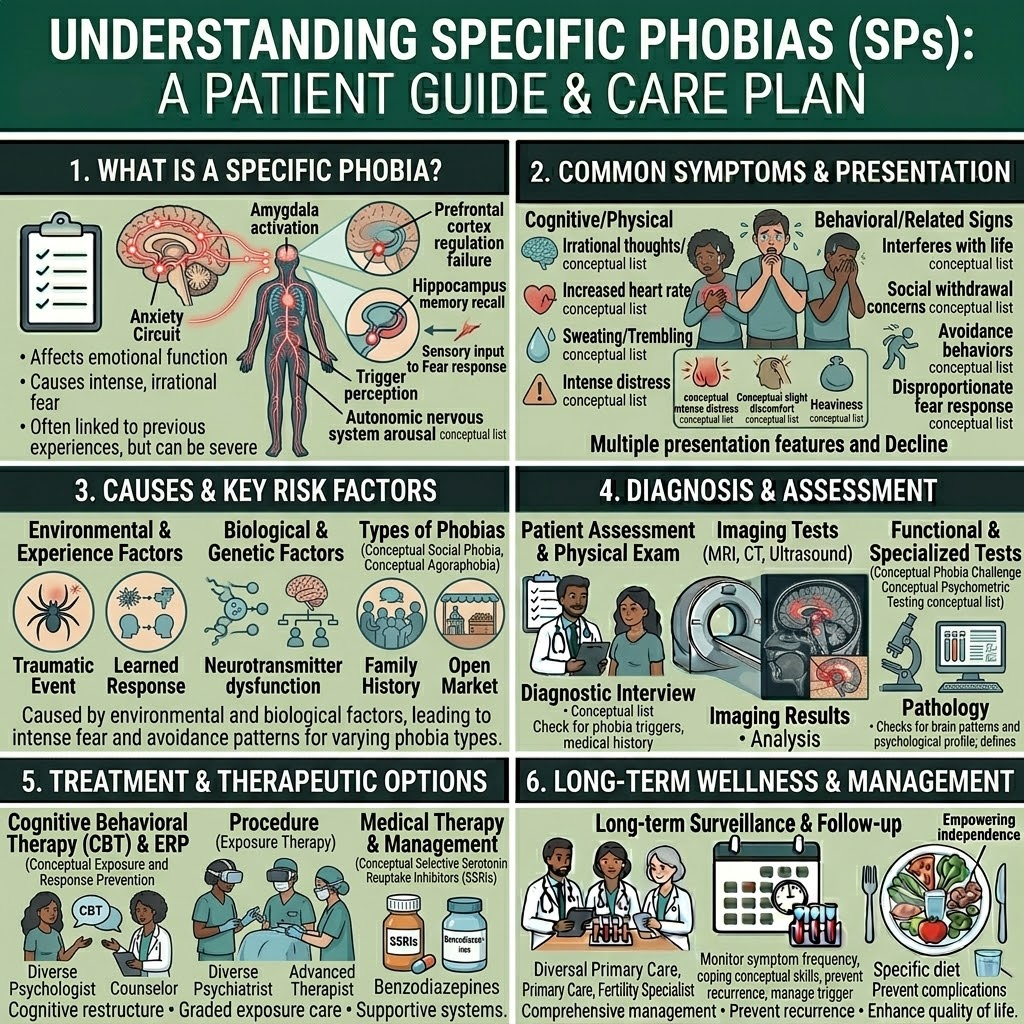
Specific phobias involve an overwhelming, lasting fear of a particular object or situation that, in reality, poses little or no danger. This intense fear often leads people to actively avoid these triggers, which can significantly impact their daily life, work, school, and social interactions. Unlike the brief nervousness felt before a presentation, specific phobias are long-term and can persist for a lifetime without proper care. These phobias are common anxiety conditions and tend to affect more women than men. While not all phobias require treatment, effective therapies are available that can help individuals conquer their fears, often permanently, especially when the phobia interferes with everyday living. These fears can stem from traumatic experiences, learned behaviors from family, or differences in brain function.
Understanding the Condition
Understanding Specific Phobias: Intense Fears That Can Be Overcome
Understanding the Condition
Common Symptoms
Intense Fear and Panic: Feeling extreme fear, anxiety, or panic immediately when exposed to, or even just thinking about, the object or situation you fear.
Unreasonable Fear: Knowing that your fear is much greater than the actual danger, but feeling unable to control it.
Worsening Anxiety: Your anxiety increases as the feared object or situation gets physically or temporally closer.
Avoidance or Extreme Distress: Doing everything possible to stay away from the feared object or situation, or facing it with overwhelming anxiety and dread.
Disruption to Daily Life: Having trouble with everyday activities, responsibilities, or relationships due to your fear.
Physical Reactions: Experiencing physical signs of anxiety such as sweating, a rapid heartbeat, chest tightness, or difficulty breathing.
Dizziness or Nausea: Feeling nauseous, dizzy, or lightheaded, especially around blood or injuries, which can sometimes lead to fainting.
Common Types of Phobias: Specific phobias often involve fears related to: situations (e.g., flying, driving, small spaces), nature (e.g., storms, heights, darkness), animals/insects (e.g., dogs, snakes, spiders), medical situations (e.g., needles, injuries, procedures), or other specific triggers (e.g., choking, vomiting, loud noises).
Consultation Guide
Which Specialist to Meet
Diagnosing a specific phobia doesn't involve lab tests or brain scans. Instead, it's a process where a mental health professional thoroughly evaluates your symptoms, medical history, and how your fears impact your life. This assessment helps determine if your experiences match the established criteria for a specific phobia and rule out other conditions.
Relaxation Techniques: Learning and practicing relaxation methods like deep breathing, progressive muscle relaxation, and mindfulness can help manage the intense physical symptoms of anxiety associated with phobias. These techniques teach you to calm your body's 'fight or flight' response. (Duration: Taught in a few sessions, with ongoing daily practice for long-term benefit.)
Anti-anxiety Medications: These medications can provide short-term relief for severe anxiety symptoms in specific, unavoidable situations (e.g., flying). They are generally not a long-term solution for phobias but can be used as needed. (Duration: Taken as needed, typically for short periods or specific events.)
Antidepressants: Certain types of antidepressants can be prescribed, especially if you also experience other anxiety disorders or depression alongside your specific phobia. They work by affecting brain chemicals to improve mood and reduce anxiety. (Duration: Often several months to a year or more, depending on symptom control and physician guidance.)
Avoid Self-Medication: If anxiety or fear becomes overwhelming, seek professional help rather than attempting to cope with substances like alcohol or recreational drugs, which can worsen symptoms over time.
Monitor for Related Conditions: Be attentive to any signs of developing depression, other anxiety disorders, or substance misuse, and seek immediate professional help if these concerns arise.
Diagnostic Procedures
You can start by discussing your concerns with your primary care doctor, who may then refer you to a mental health professional. Specialists who treat specific phobias include psychiatrists, psychologists, licensed clinical social workers, and therapists specializing in anxiety disorders. They have expertise in diagnosing and managing these conditions.
Preparations Before Your Visit
Clinical Evaluation and Assessment
What to Expect
During your visit, you will have an in-depth conversation with your doctor or therapist. They will ask specific questions about your fears, including what triggers them, how you react, how long you've experienced them, and how much they disrupt your routine. They might use questionnaires or assessment tools to gather more details about your anxiety levels and particular fears. They will also inquire about your general health and any family history of anxiety or phobias to form a complete picture.
Treatment Options
Specific phobias involve an overwhelming, lasting fear of a particular object or situation that, in reality, poses little or no danger. This intense fear often leads people to actively avoid these triggers, which can significantly impact their daily life, work, school, and social interactions. Unlike the brief nervousness felt before a presentation, specific phobias are long-term and can persist for a lifetime without proper care. These phobias are common anxiety conditions and tend to affect more women than men. While not all phobias require treatment, effective therapies are available that can help individuals conquer their fears, often permanently, especially when the phobia interferes with everyday living. These fears can stem from traumatic experiences, learned behaviors from family, or differences in brain function.
Before your appointment, make a list of your fears, when they started, and how they affect your daily life. Note any other health conditions, medications, vitamins, or supplements you are taking. Prepare questions you want to ask, and consider bringing a trusted friend or family member for support and to help remember important information.
Book a doctor visit near me
Therapies
Cognitive Behavioral Therapy (CBT): CBT helps you identify and change unhelpful thinking patterns and behaviors that maintain your phobia. You'll learn coping strategies and ways to challenge irrational fears. This therapy aims to reshape how you perceive and react to your feared object or situation. (Duration: Typically involves 8 to 20 weekly sessions, but can vary based on individual needs.)
Exposure Therapy: A core component of CBT, exposure therapy gradually introduces you to the feared object or situation in a safe and controlled environment. This helps you confront your fear, learn that it's often not as dangerous as you imagine, and reduce your anxiety over time. It can be done in real-life, through imagination, or using virtual reality. (Duration: Often several sessions, potentially 8-12, with consistent practice outside of sessions.)
Medications
Consistent Practice of Strategies: Regularly applying relaxation techniques, practicing positive self-talk, and engaging in mindfulness exercises helps maintain the benefits achieved through treatment.
Maintain a Strong Support System: Staying connected with friends, family, or support groups provides an outlet to discuss challenges and successes, offering emotional resilience.
Prevention & Long-Term Wellbeing
Lifestyle Adjustments: Maintaining a healthy lifestyle through regular physical activity, a balanced diet, and sufficient sleep can significantly improve your ability to manage stress and anxiety. (Duration: As advised)
Gradual Self-Exposure: For less severe phobias, slowly and repeatedly exposing yourself to the feared situation or object in very small, manageable steps can help reduce fear over time. This should be done carefully and can be enhanced with professional guidance. (Duration: As advised)
Mindfulness and Stress Reduction: Engaging in practices like yoga, meditation, or simple deep breathing exercises can help you stay present, reduce overall stress, and better cope with anxious feelings. (Duration: As advised)
Prevention and Long-Term Management
Early Intervention: Addressing intense fears or anxieties in children as soon as they emerge can prevent them from developing into entrenched specific phobias.
Develop Healthy Coping Skills: Learning constructive ways to handle stress and fear, rather than resorting to avoidance, is crucial for preventing phobias from worsening.
Mindful Media Consumption: Being aware of and limiting exposure to graphic or sensational news stories, especially if you are prone to anxiety, can help prevent the development of new fears.
Tags & Topics
Notice an error or need an update?
Help us keep medical information accurate. Report incorrect info or suggest an edit.


