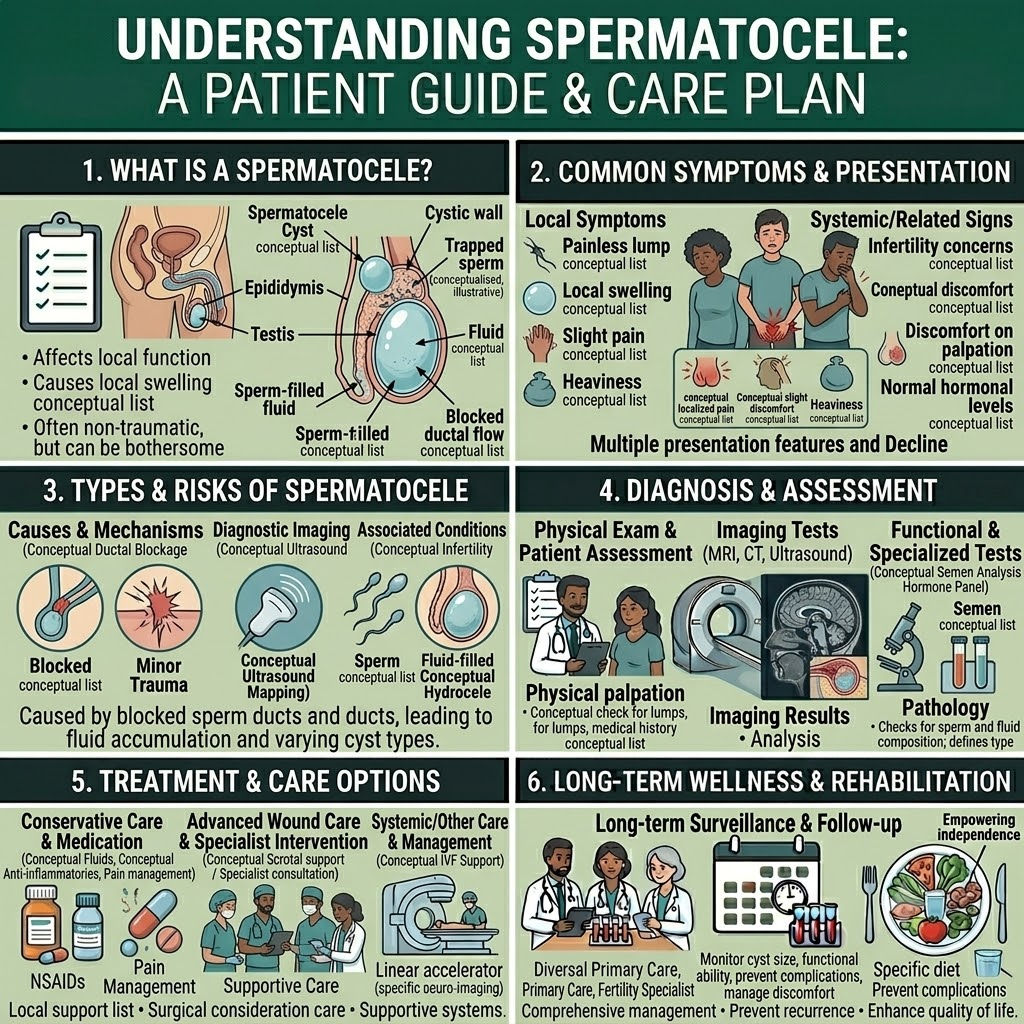
A spermatocele is a common, non-cancerous, fluid-filled sac that forms in the epididymis, a small coiled tube located on the upper part of the testicle that collects and transports sperm. Also known as a spermatic cyst, it usually contains milky or clear fluid and may include sperm. Spermatoceles are generally painless and typically do not affect fertility or require treatment. They often remain stable in size, but if one grows large enough to cause discomfort, a doctor may suggest removal.
Understanding the Condition
Common Symptoms
No Symptoms (Often): Most spermatoceles cause no noticeable signs or symptoms and are discovered during a self-exam or routine physical check-up.
Before your visit, be prepared to discuss any symptoms you are experiencing, including when they started and how they affect you. It's helpful to note any changes in the lump's size or any associated pain. Bring a list of any medications you are taking and be ready to share your medical history. Performing a testicular self-exam before your appointment can help you describe your findings accurately to the doctor.
Book a doctor visit near me
Over-the-Counter Pain Relievers: For mild discomfort or pain, medications available without a prescription, such as ibuprofen or acetaminophen, can help manage symptoms. (Duration: As needed for symptom relief.)
Routine Doctor Visits: If a spermatocele is diagnosed but not treated, follow your doctor's recommendations for routine check-ups. These visits allow your doctor to monitor the size of the cyst and check for any new symptoms or complications.
Continued Self-Awareness: Maintain awareness of your body and continue performing self-exams even after diagnosis or treatment. Report any recurrence of symptoms or new changes to your doctor.
Consultation Guide
A spermatocele is a common, non-cancerous, fluid-filled sac that forms in the epididymis, a small coiled tube located on the upper part of the testicle that collects and transports sperm. Also known as a spermatic cyst, it usually contains milky or clear fluid and may include sperm. Spermatoceles are generally painless and typically do not affect fertility or require treatment. They often remain stable in size, but if one grows large enough to cause discomfort, a doctor may suggest removal.
Pain: While usually painless, a very large or inflamed spermatocele can cause mild to moderate pain.
Consultation Guide
Which Specialist to Meet
Aspiration and Sclerotherapy: This procedure involves draining the fluid from the spermatocele using a needle (aspiration) and then injecting a special solution into the empty sac. The solution causes the walls of the cyst to scar and stick together, which helps prevent it from refilling. This option is less common for spermatoceles due to potential risks. (Duration: May require one or more sessions; recovery typically takes a few weeks with potential for recurrence.)
Spermatocelectomy: This is a surgical procedure to remove the spermatocele. It is typically performed as an outpatient procedure under local or general anesthesia. The surgeon makes a small incision in the scrotum, carefully separates the spermatocele from the epididymis, and removes it. This is usually recommended when the spermatocele causes significant discomfort, pain, or grows very large. (Duration: The procedure itself takes about an hour. Recovery typically involves a few days of rest and limited activity, with full recovery taking a few weeks. Strenuous activities should be avoided for several weeks.)
Diagnostic Procedures
Spermatocele: Understanding a Common Testicular Cyst
Understanding the Condition
Lump or Mass: If a spermatocele grows larger, you might feel a smooth, firm lump on top of or behind the testicle, separate from the testicle itself.
Discomfort or Heaviness: A feeling of discomfort, heaviness, or fullness in the affected testicle or scrotum may occur if the cyst becomes significantly large.
If you notice any lump, swelling, or pain in your scrotum, it is important to see a doctor. A Urologist, a specialist in male reproductive and urinary health, is the appropriate doctor to diagnose and treat a spermatocele or rule out other conditions like testicular cancer.
Preparations Before Your Visit
During a physical exam, your doctor will carefully examine your scrotum and testicles to feel for any lumps or abnormalities. They will assess the size, location, and texture of any mass.
What to Expect
You will be asked to lie down. The doctor will gently feel your scrotum and testicles with their hands. This part of the examination is usually brief and not painful, though you might feel some light pressure. The doctor may shine a light through your scrotum (transillumination) to see if the mass is fluid-filled, which is characteristic of a spermatocele.
An ultrasound is a non-invasive imaging test that uses sound waves to create detailed pictures of the structures inside your scrotum. This helps to confirm the presence of a spermatocele, differentiate it from other conditions like testicular tumors or hydroceles, and assess its size.
What to Expect
You will lie on an examination table, typically on your back. A clear, warm gel will be applied to your scrotum to help the sound waves travel. A small, handheld device called a transducer will then be gently moved over the gel-covered area. You will feel slight pressure from the transducer, but the procedure is generally painless. Images will appear on a monitor, allowing the doctor to visualize the testicles and surrounding structures in real-time. The entire procedure usually takes about 15-30 minutes. You can typically resume normal activities immediately afterward. No special preparation is usually needed, but it's always best to confirm with your doctor's office.
Long-Term Monitoring & Follow-up
Treatment Options
Medications
Prevention & Long-Term Wellbeing
Home Remedies & Lifestyle
Supportive Underwear: Wearing supportive underwear can help alleviate discomfort or a feeling of heaviness by providing gentle lift and support to the scrotum. (Duration: Ongoing, as needed for comfort.)
Prevention & Early Detection
Tags & Topics
Notice an error or need an update?
Help us keep medical information accurate. Report incorrect info or suggest an edit.


