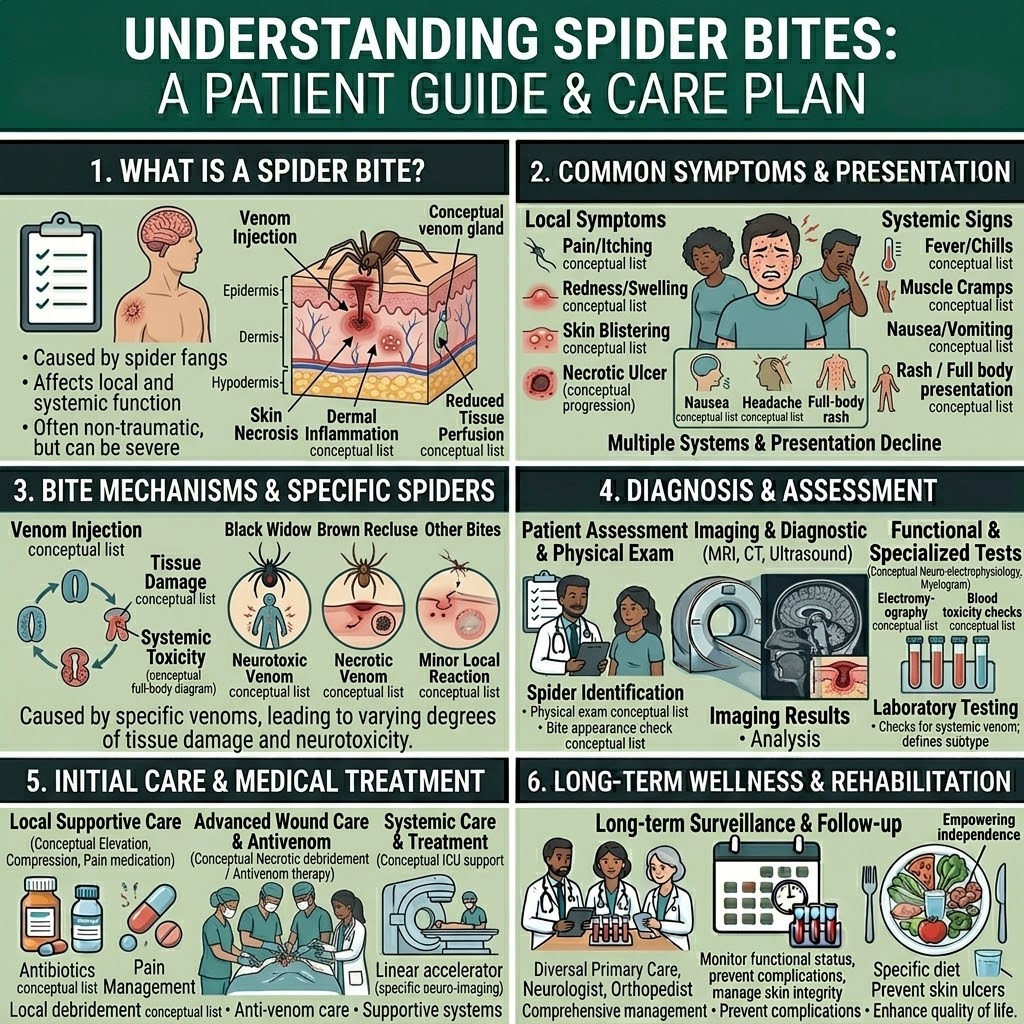
Spider bites are generally harmless, and most spiders only bite when they feel threatened. Often, a spider bite might go unnoticed or cause minor symptoms like redness, pain, and swelling, similar to other insect bites or skin irritations. It's often difficult to confirm a spider bite unless you actually saw the spider. Globally, only a few spider species possess fangs long enough to puncture human skin and venom potent enough to cause significant harm. The most well-known dangerous spiders include widow spiders (identifiable by a red hourglass mark on their belly) and recluse spiders (often recognized by a violin-shaped mark on their back). Bites from these specific spiders can lead to severe health issues and require immediate medical attention.
Understanding the Condition
Understanding Spider Bites
Understanding the Condition
Spider bites are generally harmless, and most spiders only bite when they feel threatened. Often, a spider bite might go unnoticed or cause minor symptoms like redness, pain, and swelling, similar to other insect bites or skin irritations. It's often difficult to confirm a spider bite unless you actually saw the spider. Globally, only a few spider species possess fangs long enough to puncture human skin and venom potent enough to cause significant harm. The most well-known dangerous spiders include widow spiders (identifiable by a red hourglass mark on their belly) and recluse spiders (often recognized by a violin-shaped mark on their back). Bites from these specific spiders can lead to severe health issues and require immediate medical attention.
Common Symptoms
Common Spider Bite Symptoms: Most harmless spider bites appear as a red, inflamed, itchy, or painful bump on the skin, often similar to other insect bites, and usually cause no other widespread symptoms.
Widow Spider Bite Symptoms: Bites from widow spiders, like the black widow, cause intense pain that may spread to your abdomen, back, or chest. Other symptoms include severe abdominal cramping, nausea, vomiting, muscle tremors, and sweating.
Recluse Spider Bite Symptoms: Bites from recluse spiders, such as the brown recluse, cause increasing pain within eight hours. A blister forms, often surrounded by a blue or purple 'bull's-eye.' An open sore (ulcer) can develop within weeks, taking months to heal.
When to Seek Immediate Medical Care: Seek urgent medical attention for suspected bites from dangerous spiders (widow, recluse) or if you experience severe pain, abdominal cramping, a rapidly growing sore or ulcer, difficulty breathing or swallowing, or signs of a spreading skin infection (cellulitis).
Consultation Guide
Which Specialist to Meet
Start with your primary care doctor or family physician. For severe bites, spreading infection, or systemic reactions (e.g., breathing issues), an emergency physician or dermatologist may be necessary.
Preparations Before Your Visit
Before your visit, note when/where the bite occurred, the spider's appearance (if seen), all symptoms and their onset, and any treatments tried. Be ready to discuss your medical history.
Book a doctor visit near me
Diagnosis relies on a physical exam and detailed symptom history. It's difficult to confirm a spider bite without seeing the spider, as many conditions mimic symptoms.
The doctor will inspect the bite, ask about its onset, your activities, if you saw the spider, and current symptoms to distinguish it from other conditions.
In rare cases, if severe or widespread symptoms (e.g., fever, body aches) suggest a serious reaction or infection, blood tests can check for inflammation or other complications.
Diagnostic Procedures
Clinical Examination and History
What to Expect
What to Expect
A sterile swab will gently rub the wound surface or fluid. This quick process has minimal discomfort, and the sample goes to a lab for bacterial identification.
What to Expect
A small blood sample is drawn from your arm. You'll feel a brief sting. The lab analyzes it for overall health and systemic issues.
Treatment Options
If a bacterial infection is suspected (redness, pus, fever), a sample may be taken to identify bacteria and guide antibiotic treatment.
Home Remedies and Self-Care
Clean the Bite: Wash bite with soap and water. (Duration: Immediate, ongoing until healed)
Apply a Cold Compress: Apply cloth-covered ice pack for 10-20 mins hourly to reduce pain and swelling. (Duration: As needed for the first 24-48 hours)
Elevate the Affected Area: Elevate affected limb to reduce swelling. (Duration: As needed for the first 24-48 hours)
Pain Relief: Use over-the-counter pain relievers for discomfort. (Duration: As needed for a few days)
Medications
Pain Relievers: Stronger pain relief may be prescribed. (Duration: As needed, typically for several days to weeks)
Antihistamines: For itching, oral antihistamines or topical creams are recommended. (Duration: As needed for a few days)
Antibiotics: If bacterial infection develops, topical or oral antibiotics are prescribed. (Duration: Typically 7-14 days)
Antivenom: Rarely, for severe widow spider bites, antivenom may be administered. Not common for recluse bites. (Duration: Single dose, monitored closely)
Procedures and Wound Care
Wound Management: For recluse sores, meticulous wound care (cleaning, dressing changes, monitoring) is vital to prevent infection and promote healing. (Duration: Weeks to months, depending on wound severity)
Debridement: If dead tissue forms, surgical removal (debridement) may be needed to aid healing. (Duration: Single procedure, followed by extensive wound care for weeks to months)
Surgical Procedures
Prevention & Long-Term Wellbeing
Skin Grafting: Very rarely, for large, non-healing recluse bite wounds, a skin graft may be needed for coverage and healing. (Duration: Single procedure, followed by long-term recovery and physical therapy for months)
Prevention
Shake Out Items: Shake out clothes, shoes, gloves before use to dislodge spiders.
Use Insect Repellent: Apply repellent to clothing/skin when outdoors in spider-prone areas.
Wear Protective Clothing: Wear long sleeves, gloves, hat when gardening or in sheds/basements.
Seal Entry Points: Seal cracks in foundation, windows, and doors to prevent spider entry.
Keep Areas Tidy: Reduce clutter in basements, attics, garages. Regularly clean and vacuum these undisturbed areas.
Inspect Boxes and Containers: Inspect boxes/containers before opening or reaching inside for spiders.
Long-Term Monitoring and Care
Monitor Bite for Changes: Closely watch any bite for worsening pain, spreading redness, swelling, pus, fever, or a growing ulcer.
Follow-Up Appointments: Attend follow-up appointments for severe bites, especially recluse, to ensure proper healing and manage complications.
Educate Yourself: Learn to identify dangerous spiders in your region to assess risks and know when to seek help.
Tags & Topics
Notice an error or need an update?
Help us keep medical information accurate. Report incorrect info or suggest an edit.


