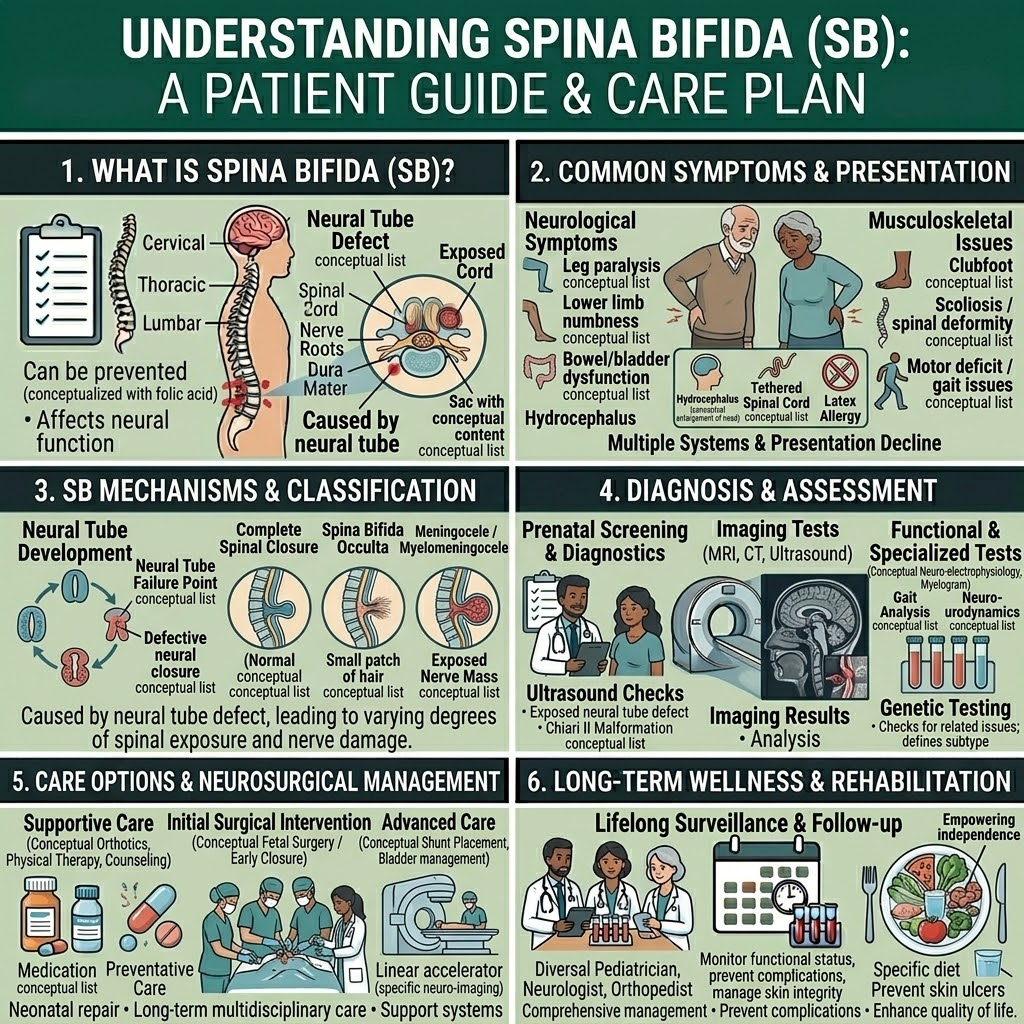
Spina bifida is a birth condition where a baby's spine and spinal cord do not form properly during early pregnancy. It's a type of neural tube defect, meaning the protective tube around the brain and spinal cord doesn't close completely. This can range from mild, often unnoticed, to severe, causing significant physical challenges. Symptoms and severity depend on the specific type and location of the opening.
Understanding the Condition
Spina Bifida: Understanding a Birth Condition
Understanding the Condition
Spina bifida is a birth condition where a baby's spine and spinal cord do not form properly during early pregnancy. It's a type of neural tube defect, meaning the protective tube around the brain and spinal cord doesn't close completely. This can range from mild, often unnoticed, to severe, causing significant physical challenges. Symptoms and severity depend on the specific type and location of the opening.
Common Symptoms
Spina Bifida Occulta (Hidden Spina Bifida): This mildest form often causes no symptoms as spinal nerves are usually unaffected. Sometimes, a small tuft of hair, a dimple, or a birthmark on the skin above the spinal gap can be the only visible sign.
Meningocele: This rare type involves a fluid-filled sac pushing through an opening in the spine, but the spinal cord and nerves are typically not inside the sac. Children may experience minor bladder and bowel control issues.
Myelomeningocele (Open Spina Bifida): The most serious type, where the spinal canal remains open, allowing part of the spinal cord, its protective covering, and nerves to protrude, forming a sac on the baby's back. Tissues and nerves are often exposed, leading to a high risk of infection. Symptoms can include weakness or paralysis in the legs, bladder and bowel control problems, and a buildup of fluid in the brain (hydrocephalus). A related brain condition called Chiari malformation type 2, affecting brainstem position, is also common.
Consultation Guide
Which Specialist to Meet
Before your visit, gather your family's medical history, especially any history of birth defects. Compile a list of all medications taken during pregnancy. Note down any observed symptoms or concerns regarding your baby's development or physical signs.
Book a doctor visit near me
Tethered Cord Release Surgery: If the spinal cord becomes 'tethered' (stuck) to surrounding tissue, restricting its movement, this surgery frees the cord to prevent further loss of function. (Duration: A single procedure, often needed if symptoms worsen over time.)
Monitoring for Shunt Malfunction: Be vigilant for symptoms like headaches, vomiting, irritability, or changes in eye gaze, which can indicate a shunt is not working properly and requires immediate attention.
Diagnostic Procedures
You will likely consult a team of specialists, including obstetricians, pediatricians, neurologists, neurosurgeons, urologists, orthopedic surgeons, physical therapists, and occupational therapists. For prenatal diagnosis, a maternal-fetal medicine specialist or genetic counselor may be involved.
Preparations Before Your Visit
This imaging test uses sound waves to create pictures of the baby in the womb. It can detect signs of spina bifida, such as an open spine, a sac on the back, or fluid buildup in the brain.
What to Expect
You will lie on an exam table. A gel is applied to your abdomen, and a handheld device (transducer) is moved across the skin to capture images on a monitor. The procedure is generally painless and takes 30-60 minutes.
A procedure where a small sample of amniotic fluid (the fluid surrounding the baby) is withdrawn from the uterus. This fluid can be tested for markers that indicate spina bifida or other genetic conditions.
What to Expect
Usually performed between 14-20 weeks of pregnancy. An ultrasound guides a thin needle through your abdomen into the uterus to collect fluid. You may feel pressure or mild cramping. The procedure takes about 10-15 minutes, with results available in days to weeks.
Postnatal Physical Examination
After birth, a doctor examines the baby for visible signs of spina bifida, such as a sac on the back, a skin dimple, a tuft of hair, or a birthmark. They also assess the baby's movement and reflexes.
What to Expect
This is a routine part of a newborn's check-up. The doctor will gently examine the baby's entire body, focusing on the back, legs, and neurological responses. It is non-invasive and typically takes a few minutes.
Uses low-dose radiation to create images of bones. In spina bifida, X-rays can show gaps or malformations in the vertebrae (spinal bones).
What to Expect
The baby will be positioned on an X-ray table, and a technologist will take images. The procedure is quick and painless, often completed in a few minutes. Safety measures are taken to minimize radiation exposure.
MRI (Magnetic Resonance Imaging)
Utilizes strong magnets and radio waves to generate detailed images of the spinal cord, nerves, and surrounding tissues, helping to identify the exact location and severity of the defect.
What to Expect
The baby will lie still on a table that slides into a large, tunnel-like machine. Sedation may be used for infants to ensure stillness. The machine makes loud noises, so hearing protection is provided. The scan can take 30-60 minutes.
Spinal Ultrasound (Postnatal)
Uses sound waves to image the baby's spinal cord and surrounding structures, particularly useful in newborns before the spinal bones fully harden, to detect subtle abnormalities.
What to Expect
Similar to prenatal ultrasound, a gel is applied to the baby's back, and a transducer is moved over the spine. The procedure is painless and non-invasive, taking about 15-30 minutes.
Sleep Apnea Monitoring: Test for and treat sleep apnea or other sleep-disordered breathing issues, as these can affect both children and adults with spina bifida and impact overall health.
Treatment Options
Surgical Procedures
Fetal Surgery: Surgery performed on the baby while still in the mother's womb to close the spinal opening. This can sometimes improve outcomes for myelomeningocele by protecting the spinal cord earlier. (Duration: A single procedure during pregnancy; typically followed by specialized care post-birth.)
Post-birth Spinal Repair Surgery: Performed shortly after birth to close the opening in the baby's back, protecting the exposed spinal cord and nerves from infection and further damage. (Duration: A single surgery, usually within 24-72 hours after birth.)
Shunt Placement: For hydrocephalus (fluid in the brain), a thin tube (shunt) is surgically placed to drain excess fluid from the brain to another part of the body, usually the abdomen, where it can be absorbed. (Duration: A single procedure, but shunts may need revisions or replacements throughout life if they malfunction or become infected.)
Orthopedic Surgeries: Procedures to correct bone and joint issues like scoliosis (curved spine), clubfoot, or hip dislocation, aiming to improve mobility and reduce pain. (Duration: Varies; often multiple surgeries may be needed throughout childhood and adolescence.)
Medications
Bladder and Bowel Management Medications: Oral or topical medications to help manage bladder control, reduce urinary tract infections, or regulate bowel movements. (Duration: Ongoing, as needed, potentially lifelong.)
Antibiotics: Used to treat infections, particularly urinary tract infections or shunt infections, which are common complications. (Duration: Short courses for acute infections.)
Therapies
Physical Therapy: Exercises and activities designed to strengthen muscles, improve flexibility, enhance mobility, and aid in the use of walking devices. (Duration: Lifelong, adapting to growth and developmental needs.)
Occupational Therapy: Helps individuals develop fine motor skills and adaptive strategies for daily activities like dressing, eating, and school tasks. (Duration: Lifelong, as needed to promote independence.)
Speech Therapy: Addresses potential speech, swallowing, or feeding difficulties, especially if Chiari malformation is present. (Duration: As needed, can be ongoing to support communication and safety.)
Medication Review Before Pregnancy: Discuss all medications, especially anti-seizure drugs, with a healthcare professional before pregnancy, as some can interfere with folate absorption and may need adjustment.
Diabetes Management: Ensure good blood sugar control before and during pregnancy if you have diabetes, as uncontrolled diabetes increases the risk of spina bifida.
Maintain Healthy Weight: Achieving and maintaining a healthy weight before pregnancy is associated with a reduced risk of spina bifida.
Avoid High Body Temperature: In early pregnancy, avoid saunas, hot tubs, and manage fevers promptly, as increased core body temperature may increase risk.
Long-Term Monitoring and Support
Regular Medical Follow-up: Lifelong care from a specialized team, including pediatricians, neurologists, urologists, and orthopedic specialists, is crucial for managing complications and optimizing health.
Comprehensive Bladder and Bowel Management: Implement consistent routines, use medications, or other techniques as recommended by your doctor to prevent infections and manage incontinence, improving quality of life.
Addressing Mobility Needs: Provide appropriate mobility aids, therapy, and support for walking and daily activities as needed, adapting to the child's growth and development.
Diligent Skin Care: Regularly check skin for wounds or pressure sores, especially in areas with reduced sensation, to prevent serious infections and promote healing.
Latex Allergy Awareness: Be aware of a higher risk for latex allergy; ensure healthcare providers use latex-free products to prevent allergic reactions.
Support for Learning and Mental Health: Provide support for potential learning difficulties, attention issues, and address mental health concerns like depression through appropriate interventions and counseling.
Prevention & Long-Term Wellbeing
Prevention
Folic Acid Supplementation: Take a daily supplement of 400-800 micrograms of folic acid at least one month before becoming pregnant and continue through the first trimester. This is the most effective prevention strategy.
Diet Rich in Folate/Folic Acid: Eat foods naturally rich in folate (e.g., dark green vegetables, citrus fruits, beans) and fortified foods (e.g., enriched breads, cereals) to support healthy development.
Tags & Topics
Notice an error or need an update?
Help us keep medical information accurate. Report incorrect info or suggest an edit.


