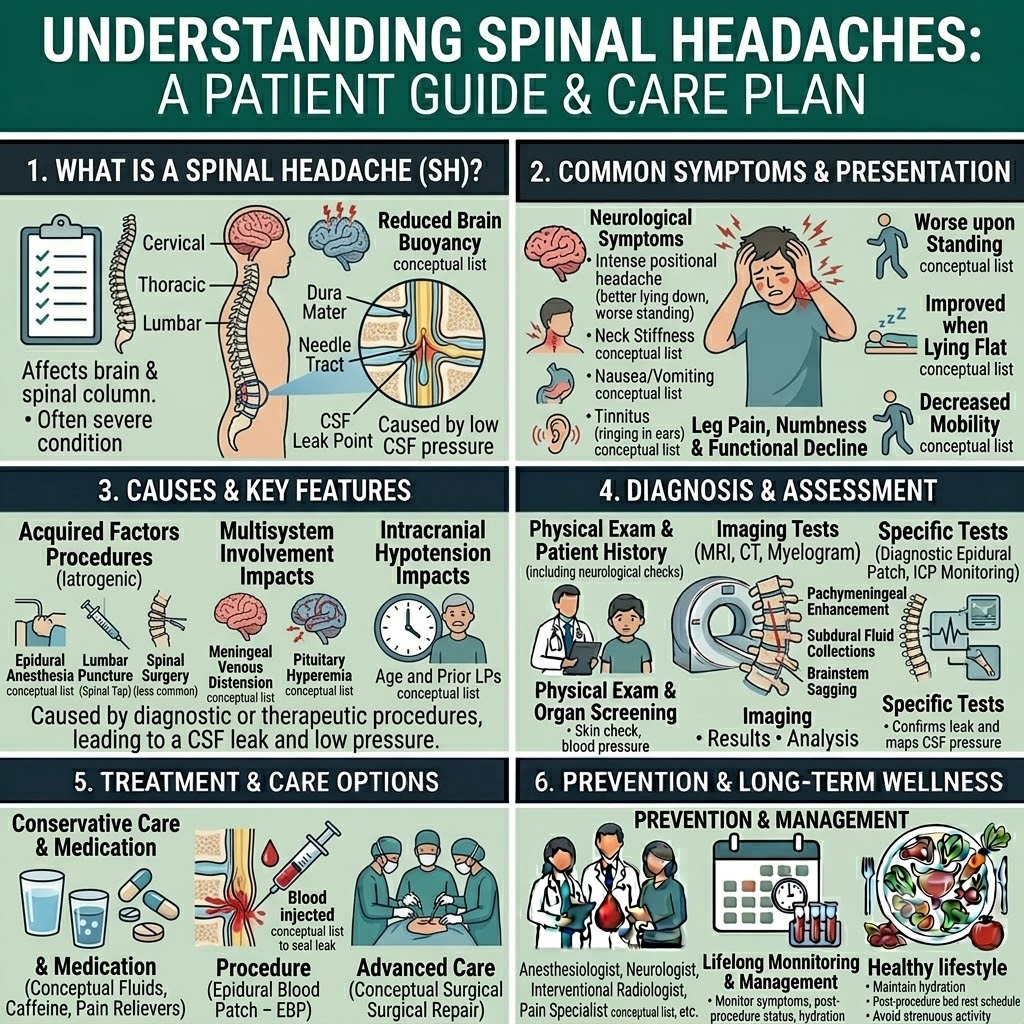
Spinal headaches are a specific type of head pain that can occur after certain medical procedures involving the spine, such as a 'spinal tap' (lumbar puncture) or spinal/epidural anesthesia. These procedures require a tiny needle to pass through a protective membrane surrounding the spinal cord. If a small amount of the fluid that bathes the brain and spinal cord (cerebrospinal fluid) leaks through this tiny puncture site, the pressure around the brain can drop, leading to a headache. This condition is also known as a 'post-dural puncture headache.' While most spinal headaches improve on their own, severe or long-lasting cases may require medical treatment. Certain factors, such as being younger (18-30), female, pregnant, having a history of frequent headaches, having a small body mass, or undergoing procedures with larger needles, can increase the likelihood of developing a spinal headache.
Understanding the Condition
Spinal Headaches: Understanding the Causes, Symptoms, and Care
Understanding the Condition
Common Symptoms
Headache Pain: A dull, throbbing pain in the head that can range from mild to very severe. A key characteristic is that the pain typically worsens significantly when you sit up or stand, and it often decreases or goes away completely when you lie flat.
Auditory Changes: You might experience ringing in the ears (tinnitus) or a noticeable decrease in your hearing ability.
Visual Disturbances: Symptoms can include blurry vision or seeing double.
Light Sensitivity: Increased sensitivity to light (photophobia) can make bright environments uncomfortable.
Nausea and Vomiting: Feelings of sickness in the stomach, often accompanied by vomiting.
Neck Pain or Stiffness: Discomfort or rigidity in the neck muscles.
Consultation Guide
Which Specialist to Meet
Before your visit, make a list of all your symptoms, including when they started and how severe they are. Note any recent medical procedures, especially those involving your spine. Bring a list of all medications you are currently taking, including over-the-counter drugs and supplements. Prepare any questions you have for the doctor regarding your headache and potential treatments.
Book a doctor visit near me
Diagnosing a spinal headache primarily involves a thorough review of your medical history, focusing on any recent spinal procedures like a spinal tap or spinal/epidural anesthesia. The doctor will ask detailed questions about your headache symptoms, such as when they started, their intensity, and how your body position affects the pain.
Bed Rest: Lying flat for an extended period can help reduce spinal fluid leakage and allow the body to replenish the fluid, often leading to natural resolution of the headache. Aim for complete bed rest. (Duration: Typically for 24-48 hours, or until symptoms improve.)
Hydration: Drinking plenty of fluids can help your body produce more spinal fluid, which may alleviate the low-pressure headache. (Duration: Ongoing, as long as symptoms persist.)
Caffeine: Consuming caffeine (e.g., in coffee or caffeinated beverages) can sometimes help by constricting blood vessels in the brain, which may reduce headache pain. (Duration: Short-term relief, as needed.)
Anti-Nausea Medications: If you experience significant nausea and vomiting, your doctor may prescribe anti-nausea drugs to help manage these symptoms. (Duration: As needed for symptom relief.)
Epidural Blood Patch: This is a highly effective procedure often used for severe or persistent spinal headaches. A small amount of your own blood is drawn and then injected into the epidural space (just outside the membrane surrounding the spinal cord) at or near the original puncture site. The blood clots and seals the leak, restoring normal spinal fluid pressure. (Duration: Often provides immediate and long-lasting relief, but may occasionally need to be repeated.)
Symptom Monitoring and Follow-Up: Even after symptoms resolve, it's important to monitor for any recurrence of headache or associated symptoms. If symptoms return or do not improve as expected, follow up with your doctor promptly.
Consultation Guide
In some cases, if the headache is unusually severe, doesn't fit the typical pattern, or doesn't improve with initial treatments, your doctor might recommend an MRI or CT scan of your brain or spine. These tests help rule out other potential causes for your headache or, in rare instances, identify the exact location of a persistent spinal fluid leak.
Diagnostic Procedures
If you suspect you have a spinal headache, especially after a recent spinal procedure, you should consult with your primary care physician, a neurologist (a doctor specializing in brain and nerve conditions), or the anesthesiologist who performed your procedure. They can accurately diagnose your condition and recommend appropriate treatment.
Preparations Before Your Visit
What to Expect
During your visit, the doctor will conduct a physical examination, including a neurological check to assess your reflexes, sensation, and coordination. They will pay close attention to the characteristic positional nature of the headache – worsening when upright and improving when lying down – which is a key indicator of a spinal headache.
Imaging Tests (if needed)
What to Expect
For an MRI, you will lie on a movable table that slides into a large, tunnel-shaped machine. The machine uses powerful magnets and radio waves to create detailed images of your internal structures. It can be noisy, so you might be offered headphones. A CT scan involves lying on a table that passes through a doughnut-shaped machine, which uses X-rays to create cross-sectional images. You might receive a contrast dye injected into a vein to make certain structures more visible. Both procedures are generally painless but require you to lie still for a period.
Treatment Options
Spinal headaches are a specific type of head pain that can occur after certain medical procedures involving the spine, such as a 'spinal tap' (lumbar puncture) or spinal/epidural anesthesia. These procedures require a tiny needle to pass through a protective membrane surrounding the spinal cord. If a small amount of the fluid that bathes the brain and spinal cord (cerebrospinal fluid) leaks through this tiny puncture site, the pressure around the brain can drop, leading to a headache. This condition is also known as a 'post-dural puncture headache.' While most spinal headaches improve on their own, severe or long-lasting cases may require medical treatment. Certain factors, such as being younger (18-30), female, pregnant, having a history of frequent headaches, having a small body mass, or undergoing procedures with larger needles, can increase the likelihood of developing a spinal headache.
Medications
Pain Relievers: Over-the-counter pain medications can help manage the headache pain. Stronger prescription pain relievers may be prescribed for more severe cases. (Duration: As needed for pain relief, typically for days to weeks until the leak resolves.)
Prevention & Long-Term Wellbeing
Prevention
Use of Smaller Needles: Medical professionals often use the smallest possible needle size when performing spinal taps or administering spinal/epidural anesthesia to minimize the risk of creating a larger puncture hole.
Experienced Practitioners: Procedures are ideally performed by experienced healthcare providers who are skilled in these techniques, reducing the chance of complications like unintended punctures or multiple attempts.
Maintaining Hydration Post-Procedure: Staying well-hydrated after a spinal procedure can support the body's natural production of spinal fluid, potentially aiding in the rapid sealing of any small leaks.
Long-Term Monitoring
Rest and Activity Modification: During recovery, gradually return to normal activities. Avoid strenuous activities or heavy lifting that might increase pressure and potentially worsen or reactivate a spinal fluid leak until fully recovered.
Tags & Topics
Notice an error or need an update?
Help us keep medical information accurate. Report incorrect info or suggest an edit.


