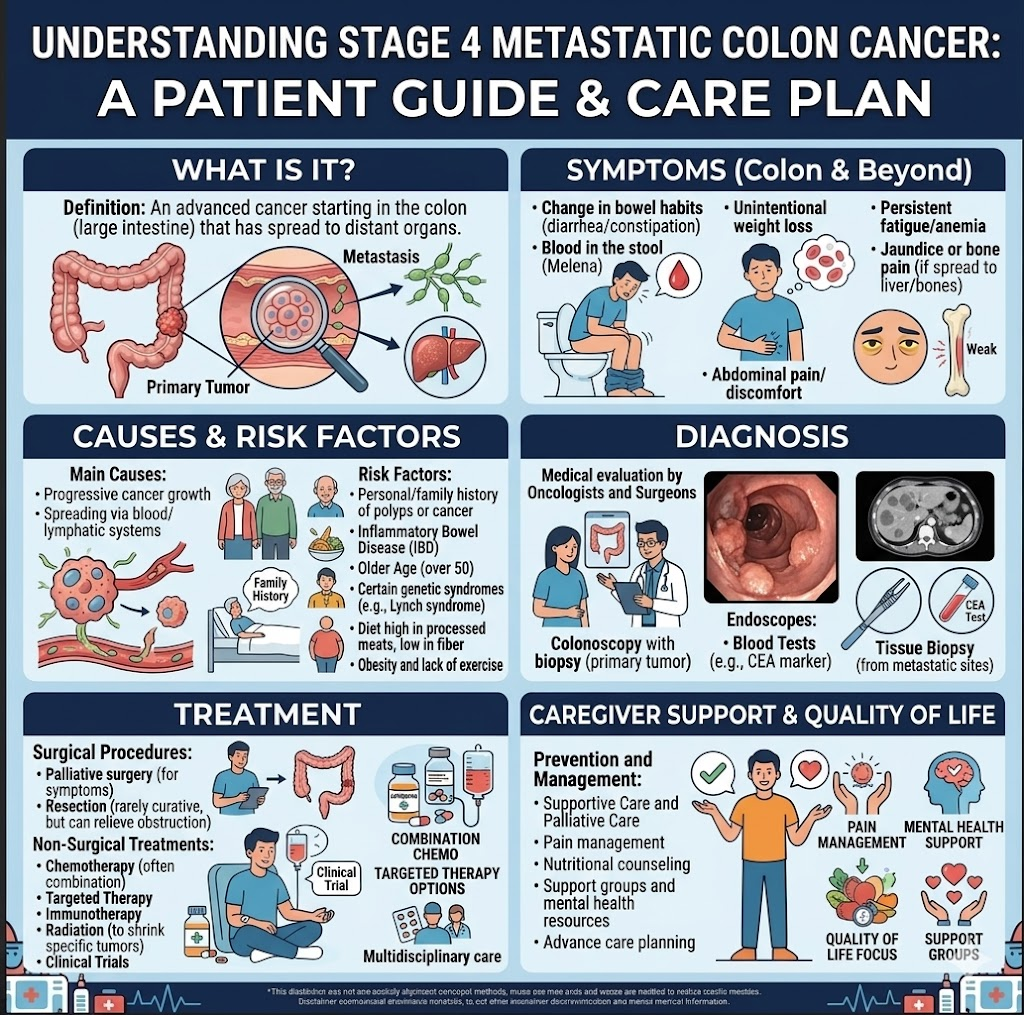
Stage 4 colon cancer means the cancer started in the colon but has spread to other parts of the body. This advanced stage is also called metastatic or late-stage colon cancer. It often spreads to organs like the liver, lungs, or the lining of the abdominal cavity, and sometimes to distant lymph nodes. Managing Stage 4 colon cancer typically involves a comprehensive approach to control symptoms and improve quality of life, using various treatments like chemotherapy, surgery, targeted therapies, immunotherapy, or radiation.
Understanding the Condition
Understanding Stage 4 Colon Cancer
Understanding the Condition
Stage 4 colon cancer means the cancer started in the colon but has spread to other parts of the body. This advanced stage is also called metastatic or late-stage colon cancer. It often spreads to organs like the liver, lungs, or the lining of the abdominal cavity, and sometimes to distant lymph nodes. Managing Stage 4 colon cancer typically involves a comprehensive approach to control symptoms and improve quality of life, using various treatments like chemotherapy, surgery, targeted therapies, immunotherapy, or radiation.
Common Symptoms
Feeling Full Quickly: Feeling full soon after eating, even with small amounts.
Abdominal Lump: A noticeable lump around the belly button area.
Changes in Bowel Habits: New or more frequent diarrhea or constipation, or changes in stool shape.
Rectal Bleeding: Bleeding from the rectum or blood visible in the stool.
Iron Deficiency Anemia: Low iron in the blood, causing extreme tiredness, weakness, and sometimes a pale or yellowish change in skin color.
Persistent Abdominal Discomfort: Ongoing discomfort in the belly area, including cramps, gas, bloating, or pain.
Incomplete Bowel Emptying: A sensation that the bowel hasn't completely emptied after a bowel movement.
Referred Pain: Pain in the lower back, buttocks, or legs.
Location-Specific Symptoms: Other symptoms may occur depending on where the cancer has spread, such as yellowing of the skin and eyes (jaundice) if it's in the liver, or coughing and shortness of breath if in the lungs.
Consultation Guide
Which Specialist to Meet
You should meet with a team of specialists, including an oncologist (a doctor specializing in cancer treatment), a surgeon, and potentially a gastroenterologist (a doctor specializing in digestive system disorders). A palliative care specialist can also help manage symptoms and support your well-being throughout treatment.
Preparations Before Your Visit
Before your visit, gather all your medical records, a list of your current symptoms, any medications you are taking, and a list of questions you want to ask. Having a family member or friend with you can also be helpful.
Book a doctor visit near me
Chemotherapy: Powerful drugs, usually injected into a vein or taken as pills, to kill fast-growing cancer cells throughout the body, shrinking tumors, slowing growth, or managing symptoms. (Duration: Typically given in cycles over several months, with breaks between treatments.)
Palliative Care: Specialized medical care focused on providing relief from pain and other symptoms of serious illness, aiming to improve quality of life for the patient and their family alongside active treatments. (Duration: Ongoing, throughout the course of illness and treatment.)
Regular Follow-ups: Adhere to scheduled doctor's appointments, follow-up scans (like CT scans), and blood tests to monitor for any signs of recurrence or new symptoms.
Symptom Management: Work closely with your medical team, including palliative care specialists, to effectively manage any ongoing symptoms or side effects from treatments.
Consultation Guide
Regular Screening: Get recommended colon cancer screenings, such as colonoscopies, especially after age 45 or earlier if you have risk factors. Early detection can prevent progression to advanced stages.
Diagnostic Procedures
CT Scan (Computed Tomography)
Uses X-rays and computer processing to create detailed cross-sectional images of internal organs, bones, and soft tissues, helping identify where cancer has spread.
What to Expect
You will lie on a motorized table that slides into a large, donut-shaped machine. You might receive a contrast dye, either by injection or orally, to highlight certain areas. You'll need to stay very still during the scan, which typically takes a few minutes. The machine may make some whirring noises.
What to Expect
A procedure using a long, flexible tube with a tiny camera (colonoscope) to examine the entire inside of your colon and rectum, allowing for polyp removal or tissue sampling. It's crucial for initial diagnosis and preventing early-stage cancer.
What to Expect
What to Expect
The procedure depends on the location of the biopsy. For internal organs, it might involve a needle biopsy guided by imaging like a CT scan or ultrasound. You'll receive a local anesthetic to numb the area. You might feel some pressure or mild discomfort. After the biopsy, you may have some soreness, and you'll receive instructions on wound care and activity restrictions.
Treatment Options
Examines your DNA for specific changes (mutations) in your genes that might be linked to cancer, helping to guide treatment decisions.
A healthcare professional will take a small sample of your blood or saliva. This sample is then sent to a lab for analysis. Results can take several weeks, and you will usually discuss them with your doctor or a genetic counselor who can explain what they mean for your health and treatment.
Medications
Targeted Therapy: Medications designed to specifically attack certain vulnerabilities or changes in cancer cells, minimizing harm to healthy cells. (Duration: Varies, often taken continuously for months or years as long as it's effective.)
Immunotherapy: Treatments that help your body's own immune system recognize and fight cancer cells. (Duration: Varies, often given over several months or longer.)
Surgical Procedures
Ablation Therapy: A minimally invasive procedure that uses heat (radiofrequency), extreme cold (cryoablation), or lasers to destroy abnormal tissue, often used for tumors in organs like the liver or lungs. (Duration: Procedure typically takes 1-2 hours; recovery is generally faster than open surgery, often allowing discharge within a day or two.)
Hyperthermic Intraperitoneal Chemotherapy (HIPEC) with Cytoreductive Surgery (CRS): First, surgeons remove all visible cancer from the lining of the abdominal cavity (peritoneum). Then, a heated chemotherapy solution is circulated inside the abdominal cavity to kill any remaining microscopic cancer cells. (Duration: A long surgery (many hours) followed by a hospital stay of 1-3 weeks and a significant recovery period lasting several months.)
Intraoperative Radiation Therapy (IORT): A high dose of radiation delivered directly to the tumor area during surgery, after visible cancer has been removed, to target any remaining microscopic cancer cells while protecting nearby healthy tissues. (Duration: Integrated into the surgical procedure, adding extra time to the operation.)
Liver Transplant: In rare, highly selected cases of isolated liver metastases from colon cancer, a diseased liver is replaced with a healthy donor liver. (Duration: A complex, lengthy surgery followed by several weeks in the hospital and lifelong anti-rejection medication.)
Hepatic Artery Infusion Pump (HAIP) Chemotherapy: A small pump surgically implanted under the skin to deliver high-dose chemotherapy directly into the artery supplying the liver, targeting liver metastases while limiting systemic side effects. (Duration: Requires a surgical procedure for pump placement, and then ongoing chemotherapy infusions through the pump, typically over several months.)
External Beam Radiation Therapy: Uses high-energy beams from a machine outside the body to precisely target and kill cancer cells, damaging their genetic material. (Duration: Typically given in daily sessions over several weeks.)
Stereotactic Body Radiotherapy (SBRT): A highly precise type of radiation that delivers very high doses of radiation to a tumor in a small number of sessions, minimizing exposure to surrounding healthy tissue. (Duration: Usually completed in 1 to 5 sessions.)
Nutritional Support: Consult with a dietitian to ensure adequate nutrition, which is crucial for strength and recovery, especially during and after treatment.
Emotional and Psychological Support: Seek support groups, counseling, or therapy to cope with the emotional challenges of living with cancer. Connecting with others who share similar experiences can be very beneficial.
Physical Activity: Engage in light to moderate physical activity as tolerated to help improve energy levels, reduce fatigue, and support overall well-being.
Advocacy: Actively participate in treatment decisions, ask questions, and ensure you understand your care plan.
Prevention & Long-Term Wellbeing
Before the procedure, you'll follow a special diet and take a laxative preparation to clear your bowels. During the procedure, you'll receive sedation to keep you comfortable. The doctor will insert the colonoscope into your rectum and guide it through your colon. They can take tissue samples (biopsies) or remove polyps using small tools passed through the scope. The procedure typically takes 30-60 minutes, and you'll need someone to drive you home afterward.
A procedure where a small tissue sample is taken from a suspicious area (in the colon or from an area where cancer is suspected to have spread) and examined under a microscope by a pathologist to confirm the presence of cancer cells and determine its type.
Colectomy (Colon Resection): Surgical removal of the cancerous part of the colon and nearby lymph nodes. The remaining healthy ends of the colon are usually reconnected. (Duration: Requires several days in the hospital for recovery, with full recovery taking several weeks to months.)
Prevention
Healthy Lifestyle: Maintain a balanced diet rich in fruits, vegetables, and whole grains. Limit red and processed meats. Engage in regular physical activity, maintain a healthy weight, and avoid smoking and excessive alcohol consumption.
Long-Term Monitoring and Support
Tags & Topics
Notice an error or need an update?
Help us keep medical information accurate. Report incorrect info or suggest an edit.


