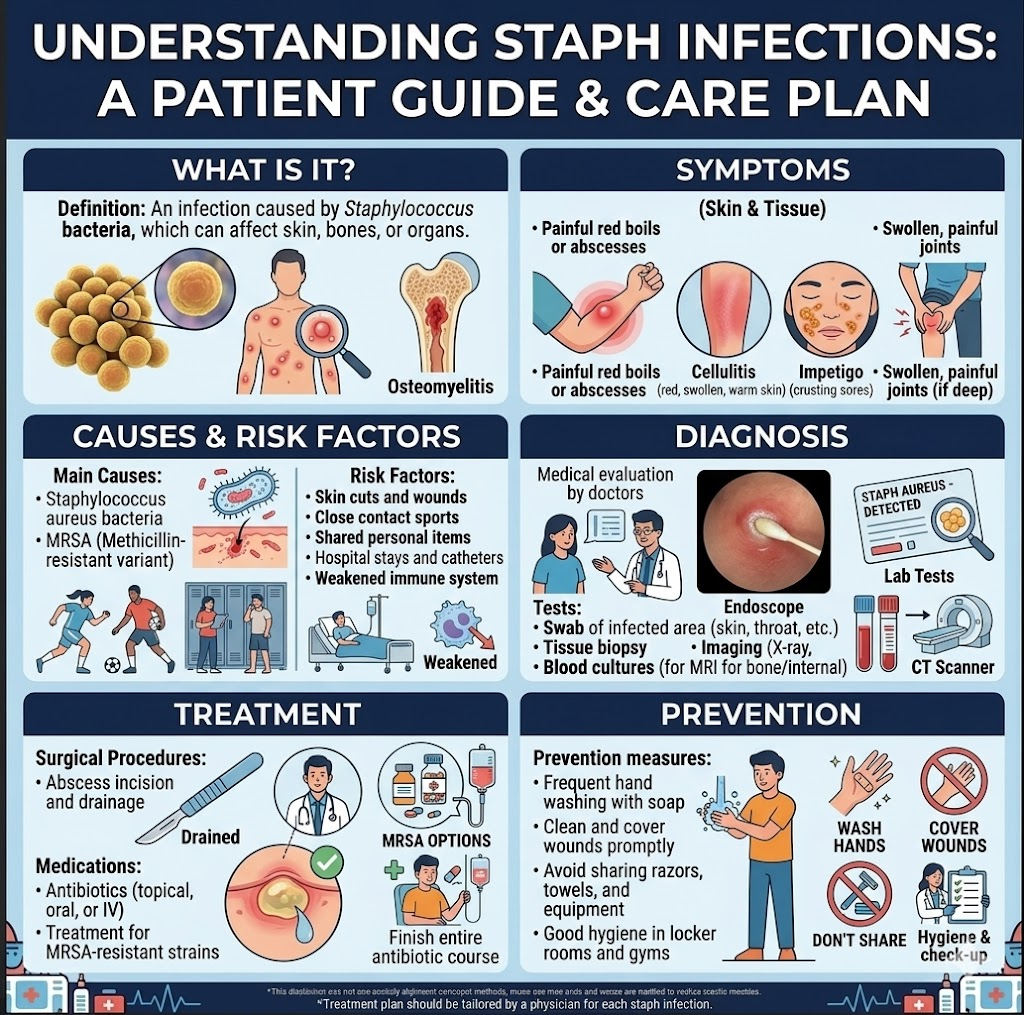
Staph infections are caused by a common type of germ called Staphylococcus bacteria. These bacteria often live harmlessly on the skin or inside the nose of many healthy people. However, if these bacteria enter the body, they can cause a range of problems, from mild skin infections or food poisoning that usually resolve quickly, to serious and life-threatening conditions. Severe staph infections can occur if the bacteria get into the bloodstream, joints, bones, lungs, or heart. If a medical device like a catheter becomes infected, surgery might be necessary to remove it. Staph infections are typically treated with medications that kill bacteria, but food poisoning caused by staph bacteria usually doesn't require these specific medications. Sometimes, infected tissue also needs to be removed.
Understanding the Condition
Common Symptoms
Boils (Furuncles): Painful, red, pus-filled lumps that form under the skin, often around a hair follicle. They can grow large and deep.
Impetigo: A highly contagious skin infection appearing as red sores that quickly burst, ooze clear fluid, and then form a honey-colored crust. It commonly affects children.
Cellulitis: An infection affecting deeper skin layers and underlying tissue, causing rapidly spreading red, swollen, warm, and tender skin. May be accompanied by fever and chills.
Staphylococcal Scalded Skin Syndrome (SSSS): A severe condition, primarily affecting infants and young children, where staph bacteria release toxins causing widespread blistering and peeling of the skin, resembling a burn.
Before your appointment, gather information about your symptoms, including when they started and any factors that seem to make them better or worse. List all medications you are currently taking, including over-the-counter drugs, supplements, and vitamins. Be prepared to discuss your medical history, any recent injuries, or contact with others who are sick. Write down any questions you have for your doctor.
Book a doctor visit near me
The doctor will ask about your symptoms and medical history, then gently examine your skin. This is usually quick and painless.
Complete All Prescribed Medications: Always finish the entire course of antibiotics as prescribed by your doctor, even if your symptoms improve. Stopping early can lead to the infection returning and potentially becoming harder to treat (antibiotic resistance).
Monitor for Recurrence: Be aware of the symptoms of staph infection and promptly contact your doctor if you notice any new or returning signs of infection. Early detection can prevent serious complications.
Follow Up with Your Doctor: Attend all scheduled follow-up appointments to ensure the infection has fully cleared and to address any ongoing concerns or complications.
Consultation Guide
Staph infections are caused by a common type of germ called Staphylococcus bacteria. These bacteria often live harmlessly on the skin or inside the nose of many healthy people. However, if these bacteria enter the body, they can cause a range of problems, from mild skin infections or food poisoning that usually resolve quickly, to serious and life-threatening conditions. Severe staph infections can occur if the bacteria get into the bloodstream, joints, bones, lungs, or heart. If a medical device like a catheter becomes infected, surgery might be necessary to remove it. Staph infections are typically treated with medications that kill bacteria, but food poisoning caused by staph bacteria usually doesn't require these specific medications. Sometimes, infected tissue also needs to be removed.
MRSA Skin Infections: Infections caused by methicillin-resistant Staphylococcus aureus (MRSA) often begin as small, red, pimple-like bumps that can quickly develop into deep, painful, pus-filled sores (abscesses), sometimes resembling spider bites.
Consultation Guide
Which Specialist to Meet
Your first step should be to consult your primary care doctor. Depending on the type and severity of the infection, they may refer you to a skin specialist (dermatologist) for persistent skin infections, an infectious disease specialist for severe or complex internal infections, or a surgeon if removal of infected tissue or a medical device is necessary.
Preparations Before Your Visit
A small sample is collected by gently swabbing a sore, drawing blood, or collecting pus/tissue. This process is brief and may cause slight discomfort, like a pinprick for a blood draw.
X-ray: You will remain still for a quick, painless scan by a technician.CT Scan: You lie on a motorized table that slides into a machine; you must stay still. Sometimes, a contrast dye is injected, which may cause a warm sensation.MRI: You lie in a long, narrow tube. Loud noises require earplugs. You must stay very still for 30-60+ minutes. Some people may find the enclosed space unsettling.
Debridement (Removal of Infected Tissue): In cases where staph infection has caused significant tissue damage or death, the doctor may surgically remove the dead or severely infected tissue to prevent the spread of bacteria and promote healing. (Duration: A surgical procedure, with recovery time varying from weeks to months depending on the extent of tissue removed and the location.)
Diagnostic Procedures
Your doctor will visually inspect affected areas and assess your overall health, looking for signs specific to staph infections like skin lesions, redness, or pus.
What to Expect
A sample from the infected area (skin swab, blood, pus, or tissue) is sent to a lab to grow and identify the specific staph bacteria. This also determines which antibiotics will be most effective (antibiotic sensitivity testing).
What to Expect
Imaging Tests (X-ray, CT Scan, MRI)
If the infection is suspected to have spread internally to bones, joints, lungs, or other organs, imaging tests can help visualize the extent of the infection and identify any abscesses or damage. X-rays create images of bones, CT scans provide detailed cross-sectional views, and MRIs offer high-resolution images of organs and soft tissues.
What to Expect
Treatment Options
Staph Infections: Understanding, Treatment, and Prevention
Understanding the Condition
Warm Compresses: Applying a warm, moist cloth to a boil or skin lesion can help to soothe the area, reduce discomfort, and encourage the boil to drain naturally. This should be done carefully to avoid spreading the infection. (Duration: Several times a day, for 10-15 minutes, until the lesion improves.)
Medications
Antibiotics: These medications are prescribed to kill the staph bacteria. They can be taken by mouth (oral), applied directly to the skin (topical creams or ointments), or given through a vein (intravenous) for more severe infections. The specific type of antibiotic depends on the bacteria identified. (Duration: Typically 5-14 days for oral antibiotics, but can extend to several weeks or months for severe or deep-seated infections requiring intravenous treatment.)
Incision and Drainage (I&D): For boils and abscesses, a doctor may make a small cut to drain the pus. This procedure helps relieve pain, speed up healing, and remove the source of infection. The area is then cleaned and often packed with gauze. (Duration: A one-time procedure, but the wound will require dressing changes and care for several days to weeks until it heals.)
Removal or Replacement of Infected Medical Devices: If a medical device, such as a catheter, pacemaker, or prosthetic joint, becomes infected with staph bacteria, it often needs to be surgically removed. In some cases, a new, sterile device can be implanted after the infection is cleared. (Duration: A surgical procedure, followed by a period of recovery and often antibiotic treatment for several weeks or months.)
Surgery for Deep Infections: For severe infections affecting internal organs, bones, or joints, surgery may be required to clean out the infected area, drain abscesses, or repair damaged structures, such as heart valves. (Duration: Highly variable, depending on the complexity and location of the infection. This can involve extensive surgery and a prolonged recovery period, often combined with long-term antibiotic therapy.)
Prevention & Long-Term Wellbeing
Prevention
Practice Good Hand Hygiene: Wash your hands thoroughly and frequently with soap and water for at least 20 seconds, especially after using the bathroom, before eating, and after touching shared surfaces. If soap and water aren't available, use an alcohol-based hand sanitizer with at least 60% alcohol.
Keep Wounds Covered: Keep cuts, scrapes, and skin lesions clean and covered with sterile, dry bandages until they heal. This prevents bacteria from entering the body and reduces the risk of spreading the infection to others.
Avoid Sharing Personal Items: Do not share towels, sheets, razors, clothing, or athletic equipment, as these can easily spread staph bacteria. Clean shared gym equipment before and after use.
Wash Laundry Properly: If someone in your household has a staph infection, wash their clothes, bedding, and towels in hot water with detergent. Dry them thoroughly on a hot setting.
Long-Term Wellbeing
Tags & Topics
Notice an error or need an update?
Help us keep medical information accurate. Report incorrect info or suggest an edit.


