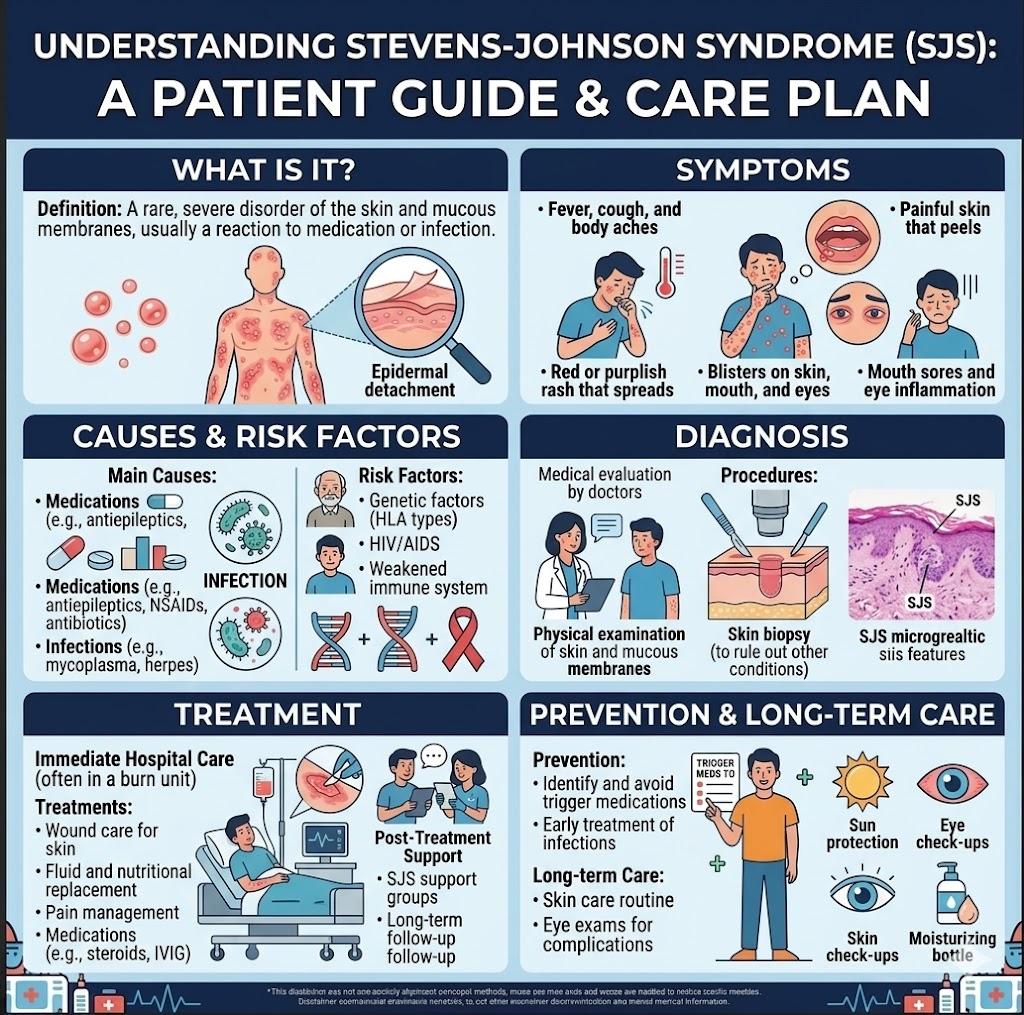
Stevens-Johnson syndrome (SJS) is a rare but very serious condition affecting the skin and moist linings of the body, like those in the mouth, nose, eyes, and genitals. It's usually a severe reaction to a medication, often starting with flu-like symptoms. This is quickly followed by a painful rash that spreads rapidly, forms blisters, and causes the top layer of skin to die and peel off. SJS is a medical emergency that requires immediate hospitalization. The most severe form, involving more than 30% of the skin surface, is called Toxic Epidermal Necrolysis (TEN). Recovery can take weeks to months, and if a medication caused SJS, it must be avoided permanently.
Understanding the Condition
Stevens-Johnson Syndrome (SJS): Understanding a Severe Skin Reaction
Understanding the Condition
Stevens-Johnson syndrome (SJS) is a rare but very serious condition affecting the skin and moist linings of the body, like those in the mouth, nose, eyes, and genitals. It's usually a severe reaction to a medication, often starting with flu-like symptoms. This is quickly followed by a painful rash that spreads rapidly, forms blisters, and causes the top layer of skin to die and peel off. SJS is a medical emergency that requires immediate hospitalization. The most severe form, involving more than 30% of the skin surface, is called Toxic Epidermal Necrolysis (TEN). Recovery can take weeks to months, and if a medication caused SJS, it must be avoided permanently.
Common Symptoms
Early Signs (1 to 3 days before rash): These symptoms may appear before the characteristic skin rash develops:* Fever* General body aches and feeling unwell* Sore throat* Cough* Burning sensation in the eyes
As the Condition Develops: Once the condition progresses, you may experience:* A widespread, painful, red or purplish rash that spreads quickly* Blisters that form on the skin, mouth, nose, eyes, and genital areas* The top layer of affected skin dying and peeling away* Severe pain in the affected skin and mucous membranes
Consultation Guide
Which Specialist to Meet
If you suspect Stevens-Johnson Syndrome, seek immediate emergency medical care. You will likely be managed by a team of specialists including dermatologists (skin doctors), critical care specialists, ophthalmologists (eye doctors) if eyes are affected, and potentially plastic surgeons for wound management.
Preparations Before Your Visit
Before meeting with medical professionals, try to gather the following information:* A complete list of all medications you are currently taking or have recently taken (prescription, over-the-counter, vitamins, supplements, herbal remedies).* Any recent illnesses, infections, or vaccinations.* A detailed timeline of when your symptoms started and how they have progressed.* Your full medical history, including any known allergies.* It can be helpful to bring a trusted family member or friend to help take notes and advocate on your behalf.
Book a doctor visit near me
Consultation Guide
Permanent Avoidance of Trigger Medications: If a medication is identified as the cause of your SJS, you must permanently avoid that drug and any others that are chemically similar. Always inform all healthcare providers, including dentists and pharmacists, about your history of SJS and the specific trigger medication. Consider wearing a medical alert bracelet.
Diagnostic Procedures
A skin biopsy is a procedure where a small sample of skin tissue is removed from your body and sent to a laboratory for detailed examination under a microscope. This helps doctors identify the specific type of skin reaction and confirm the diagnosis of Stevens-Johnson Syndrome, distinguishing it from other skin conditions.
What to Expect
During a skin biopsy, the area of skin to be sampled will first be cleaned and then numbed with a local anesthetic injection, similar to what you might receive at the dentist. You may feel a brief sting or burning sensation as the anesthetic is injected, but the procedure itself should be painless. The doctor will then use a specialized tool to remove the skin sample. There are a few different methods:* **Shave Biopsy:** The doctor uses a small blade to carefully scrape off the top layers of skin. This method usually doesn't require stitches, and a bandage will be applied to the site.* **Punch Biopsy:** A circular tool is used to remove a deeper, cylindrical piece of skin. Depending on the size of the sample, one or two stitches may be needed to close the wound, followed by a bandage.* **Excisional Biopsy:** For a larger or deeper sample, the doctor uses a scalpel to cut out an entire area of abnormal skin along with a small margin of surrounding healthy skin. This method typically requires stitches to close the wound and will be covered with a bandage.After the biopsy, you will receive instructions on how to care for the wound, which usually involves keeping it clean and dry. You may experience some mild soreness for a day or two. The skin sample is then sent to a lab, and results are typically available within several days to a week.
Treatment Options
Supportive Care and Management
Discontinuation of Triggering Medications: The most critical first step is to immediately stop any medication suspected of causing the reaction. This includes the drug itself and any chemically similar alternatives. (Duration: Permanent avoidance of the specific drug and similar medications.)
Pain Management: Severe pain is a hallmark of SJS. Strong pain-relieving medications are administered to keep patients comfortable. (Duration: As needed throughout the healing process, potentially weeks.)
Eye Care: Eye involvement is common and can be severe. Specialized eye drops, ointments, and regular assessments by an eye specialist are crucial to prevent vision loss and promote healing. (Duration: Ongoing, potentially long-term if severe eye damage occurs.)
Infection Control: Open skin areas are highly susceptible to infection. Antibiotics may be given if signs of bacterial infection develop. (Duration: As prescribed, typically 7-14 days or longer if infection persists.)
Topical Skin Treatments: Application of soothing and protective creams or medicated solutions to support skin healing and reduce discomfort. (Duration: During the healing phase, weeks to months.)
Advanced or Specific Procedures
Immunomodulating Therapies: Certain medications that modify the immune response may be used in select severe cases, though their effectiveness can vary and they are not universally recommended. (Duration: As determined by the medical team, typically for a defined period during the acute phase.)
Medication Awareness: Be vigilant when starting any new medication. Discuss potential risks and side effects with your doctor or pharmacist, especially if you have a history of allergies or adverse drug reactions.
Long-Term Monitoring and Support
Scar Management: Discuss options for managing any scarring with your dermatologist. Various treatments can help improve the appearance and texture of scars.
Prevention & Long-Term Wellbeing
Hospitalization and Intensive Care: Patients with SJS require admission to a hospital, often in a burn unit or intensive care unit, for specialized care due to the extensive skin damage. (Duration: Weeks to months, depending on severity and recovery pace.)
Fluid and Nutrition Management: Due to extensive skin loss, patients lose significant fluids and electrolytes. Intravenous fluids are administered to prevent dehydration, and nutritional support (often through a feeding tube) ensures the body has the energy to heal. (Duration: Throughout the acute phase of illness, typically days to weeks.)
Wound Care: Damaged skin and blistered areas are treated carefully with sterile dressings and gentle cleaning to prevent infection, manage pain, and promote healing. (Duration: Until skin fully regenerates, typically weeks to months.)
Skin Grafting: In very severe cases with extensive skin loss, skin grafts (transplanting healthy skin to damaged areas) may be considered to cover large wounds and aid healing. (Duration: Surgical procedure followed by a recovery period of weeks to months.)
Prevention
Regular Medical Follow-ups: Continued visits with your healthcare team, especially a dermatologist and ophthalmologist, are crucial to monitor your recovery, address any long-term complications, and ensure overall wellbeing.
Ongoing Skin Care: New skin can be fragile and sensitive. Maintain a gentle skincare routine, use mild soaps, moisturize regularly, and protect your skin from sun exposure with sunscreen and protective clothing.
Eye Health Management: Regular check-ups with an eye specialist are vital to manage potential chronic eye issues, such as dry eyes, scarring, or vision problems, which can be long-term complications of SJS.
Psychological Support: SJS can be a traumatic experience. Seeking counseling or joining support groups can help you cope with the emotional and psychological impact of a severe illness and the challenges of recovery.
Tags & Topics
Notice an error or need an update?
Help us keep medical information accurate. Report incorrect info or suggest an edit.


