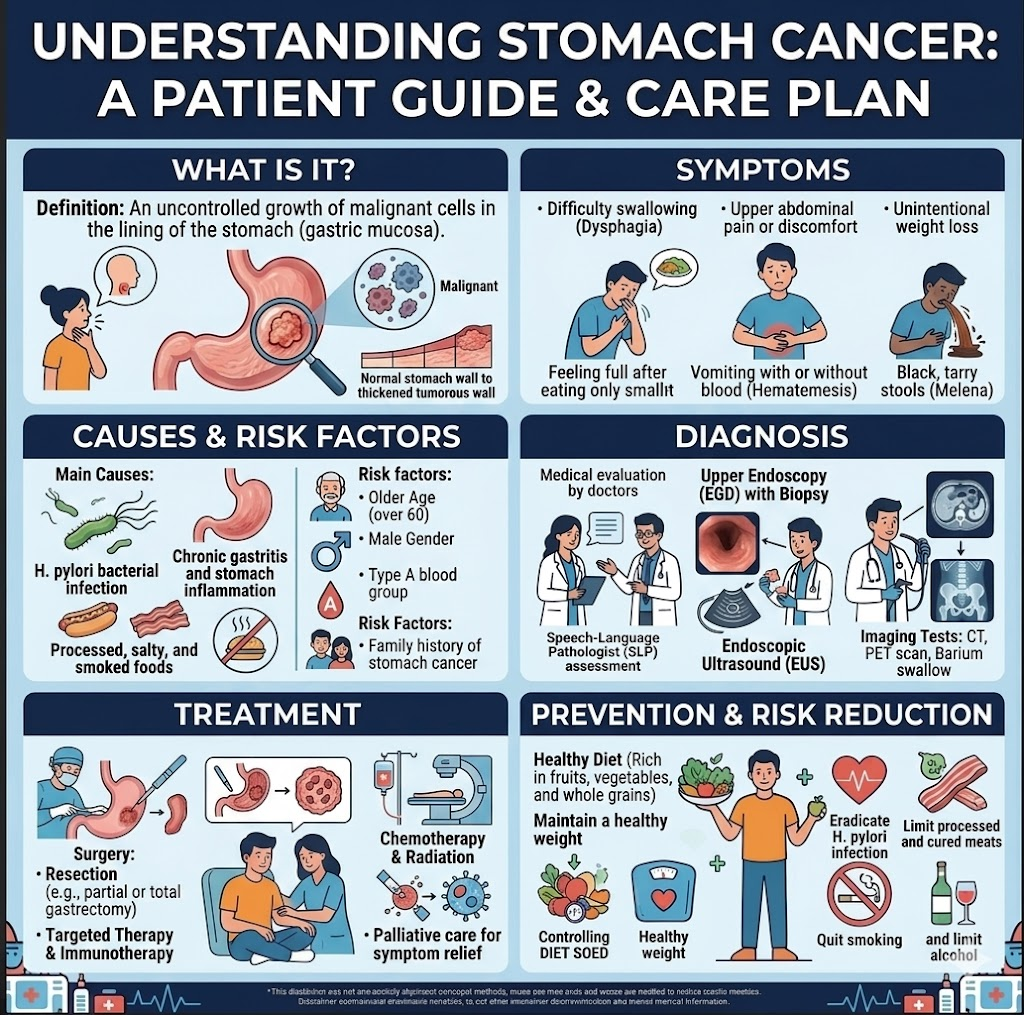
Stomach cancer, also known as gastric cancer, is a disease where cells in the stomach start to grow abnormally. The stomach, located in the upper middle part of your belly just below the ribs, plays a vital role in breaking down and digesting food. This cancer can develop in any section of the stomach. In most parts of the world, it frequently occurs in the main body of the stomach. However, in countries like the United States, it's more often found where the food pipe (esophagus) meets the stomach, a junction called the gastroesophageal junction. Early detection significantly improves treatment success rates, as small, localized cancers are much more likely to be cured.
Understanding the Condition
Stomach Cancer: A Guide for Non-Medical Individuals
Understanding the Condition
Common Symptoms
Trouble Swallowing: Difficulty or pain when trying to swallow food or liquids.
Bloating After Eating: A feeling of fullness or swelling in the abdomen, even after eating small amounts of food.
Feeling Full Quickly: Experiencing a sense of being full after consuming only a small portion of a meal.
Loss of Appetite: Not feeling hungry when you would typically expect to be, or a general disinterest in food.
Indigestion: Persistent heartburn, stomach discomfort, or a burning sensation.
If you experience persistent symptoms, consult a primary care doctor. They may refer you to a gastroenterologist (a doctor specializing in digestive system diseases) for diagnosis. If cancer is found, you will likely see an oncologist (cancer specialist), a surgeon, and potentially a radiation oncologist. For hereditary risk, a genetic counselor might be involved.
Preparations Before Your Visit
Before your appointment, prepare a list of all your symptoms, including when they started and how often they occur. Write down any medications you're taking, including supplements. Be ready to discuss your medical history, any known risk factors, and questions you have for the doctor.
Book a doctor visit near me
Radiation Therapy: Uses high-energy beams to precisely target and kill cancer cells. It can shrink tumors before surgery, kill remaining cells after surgery, or relieve symptoms of advanced cancer. (Duration: Typically given in daily sessions over several weeks (e.g., 5 days a week for 3-6 weeks). The total duration depends on the treatment goal.)
Palliative Care: Specialized medical care focused on providing relief from pain and other symptoms of a serious illness, as well as managing treatment side effects. It aims to improve quality of life for both the patient and their family, provided alongside other treatments. (Duration: Palliative care can be provided at any stage of illness and continues as long as needed to support the patient's wellbeing.)
Symptom Management: Report any new or worsening symptoms to your healthcare team promptly to address them effectively.
Diagnostic Procedures
An upper endoscopy involves examining the esophagus, stomach, and the first part of the small intestine (duodenum) using a thin, flexible tube with a camera on its end. This allows the doctor to visually inspect the lining for any abnormalities and take tissue samples (biopsies) for laboratory testing.
What to Expect
You will likely receive a sedative to help you relax and a local anesthetic to numb your throat. You'll lie on your side while the endoscope is gently passed down your throat. The procedure usually takes 15-30 minutes. You might feel some pressure or mild discomfort, but it shouldn't be painful. You'll need someone to drive you home afterward due to the sedative.
Endoscopic Ultrasound (EUS)
EUS combines endoscopy with ultrasound technology. A special endoscope with an ultrasound device at its tip is used to create detailed images of the stomach wall, nearby lymph nodes, and surrounding organs. This allows for a deeper view than a standard endoscopy and can guide a fine needle to collect tissue samples (biopsy) from suspicious areas.
What to Expect
Similar to an upper endoscopy, you will receive sedation. The EUS scope is inserted through your mouth. The ultrasound provides detailed images, and if a biopsy is needed, a small needle will be passed through the scope to collect tissue. The procedure can take 30-60 minutes, and you'll need time to recover from sedation.
CT Scan (Computed Tomography Scan)
What to Expect
You will lie on a narrow table that slides into a large, donut-shaped machine. You may receive an oral or intravenous contrast dye to make organs and tissues show up more clearly. The scan is painless and takes about 10-30 minutes. You might be asked to hold your breath for short periods.
PET Scan (Positron Emission Tomography Scan)
A PET scan is an imaging test that uses a small amount of a radioactive tracer, usually injected into a vein, to highlight areas of high metabolic activity in the body. Cancer cells typically have higher metabolic rates and will absorb more tracer, showing up as bright spots on the scan. It's often combined with a CT scan (PET-CT) for precise localization.
What to Expect
You'll receive an injection of the tracer and then wait about an hour for it to circulate through your body. You'll then lie on a table that moves into the PET scanner. The scan itself takes about 20-30 minutes. It's important to remain still during the scan. It is generally painless.
Needle Biopsy (for assessing spread)
This procedure uses a long, thin needle to remove cells or tissue from a suspicious area outside of the stomach, such as an enlarged lymph node or a potential secondary tumor. This is often guided by imaging like CT or ultrasound.
What to Expect
Local anesthetic will be used to numb the area. The doctor will use imaging to guide the needle to the correct spot. You may feel pressure or a brief, sharp sensation as the needle is inserted and the sample is taken. The procedure usually takes about 30-60 minutes, and you may have some tenderness afterward.
Family History Awareness: If stomach cancer runs in your family, discuss this with your doctor. They may recommend screening tests to detect cancer early, especially if there are known genetic syndromes in your family.
Long-Term Monitoring and Support
Regular Follow-ups: Adhere to your doctor's schedule for post-treatment check-ups, which may include imaging and blood tests, to monitor for recurrence or new issues.
Emotional and Psychological Support: Connect with support groups, therapists, or counselors to cope with the emotional challenges of cancer diagnosis and treatment.
Treatment Options
Stomach cancer, also known as gastric cancer, is a disease where cells in the stomach start to grow abnormally. The stomach, located in the upper middle part of your belly just below the ribs, plays a vital role in breaking down and digesting food. This cancer can develop in any section of the stomach. In most parts of the world, it frequently occurs in the main body of the stomach. However, in countries like the United States, it's more often found where the food pipe (esophagus) meets the stomach, a junction called the gastroesophageal junction. Early detection significantly improves treatment success rates, as small, localized cancers are much more likely to be cured.
A CT scan uses specialized X-ray equipment and computer processing to create detailed cross-sectional images (slices) of your body. It helps determine the extent of the cancer, if it has spread to other organs or lymph nodes, and aids in treatment planning.
Surgical Procedures
Surgery to Remove the Tumor: The primary treatment for stomach cancer, involving removal of part or all of the stomach (gastrectomy) along with nearby lymph nodes. The extent of surgery depends on the cancer's location and stage. (Duration: Recovery from surgery typically takes several weeks to months, with follow-up care and potential dietary adjustments long-term.)
Cytoreductive Surgery (CRS) with Hyperthermic Intraperitoneal Chemotherapy (HIPEC): For cancers that have spread to the abdominal lining, CRS involves removing all visible cancer. Immediately after, heated chemotherapy solution is circulated within the abdominal cavity to kill remaining microscopic cancer cells. (Duration: This is a lengthy surgery, often several hours. Recovery can be intensive, spanning several weeks to months. Follow-up monitoring is ongoing.)
Medications
Chemotherapy: Uses powerful drugs to kill fast-growing cancer cells. It can be given before surgery to shrink tumors, after surgery to kill remaining cells, or as the main treatment for advanced cancer. (Duration: Administered in cycles over several weeks to many months, depending on the treatment plan and response. Ongoing monitoring for side effects is crucial.)
Targeted Therapy: Drugs that target specific weaknesses or changes within cancer cells, often with fewer side effects than traditional chemotherapy. (Duration: Can be ongoing for several months or longer, depending on the specific drug and how the cancer responds.)
Immunotherapy: Utilizes the body's own immune system to recognize and attack cancer cells. (Duration: Typically given intravenously in cycles over several months to a year or more, as long as it is effective and well-tolerated.)
Therapies
Nutritional Support: Work with a dietitian to manage any digestive changes or nutritional deficiencies that may result from stomach surgery or treatments.
Prevention & Long-Term Wellbeing
Unexplained Weight Loss: Losing weight without intentionally trying through diet or exercise.
Persistent Tiredness (Fatigue): Feeling unusually and consistently exhausted, even with adequate rest.
Black Stools: Stools that appear dark and tar-like, often indicating bleeding in the upper digestive tract.
Upper Belly Pain: Discomfort or pain in the upper part of the abdomen.
Vomiting Blood: Throwing up blood, which may look bright red or like coffee grounds.
- Consultation Guide
Which Specialist to Meet
Prevention
Eat a Balanced Diet: Consume plenty of colorful fruits and vegetables daily. These foods are rich in nutrients and antioxidants that may help protect against cancer.
Limit Salty and Smoked Foods: Reduce your intake of highly processed, salty, and smoked foods, which have been linked to an increased risk of stomach cancer.
Quit Smoking: Smoking significantly increases the risk of stomach cancer and many other cancers. Quitting is one of the most impactful steps you can take for your health.
Manage Chronic Conditions: Address conditions like long-standing acid reflux (gastroesophageal reflux disease) and Helicobacter pylori infection, which can damage the stomach lining and increase risk.
Maintain a Healthy Lifestyle: Continue with a balanced diet, regular physical activity (as advised by your doctor), and avoid smoking and excessive alcohol to promote overall wellbeing.
Tags & Topics
Notice an error or need an update?
Help us keep medical information accurate. Report incorrect info or suggest an edit.


