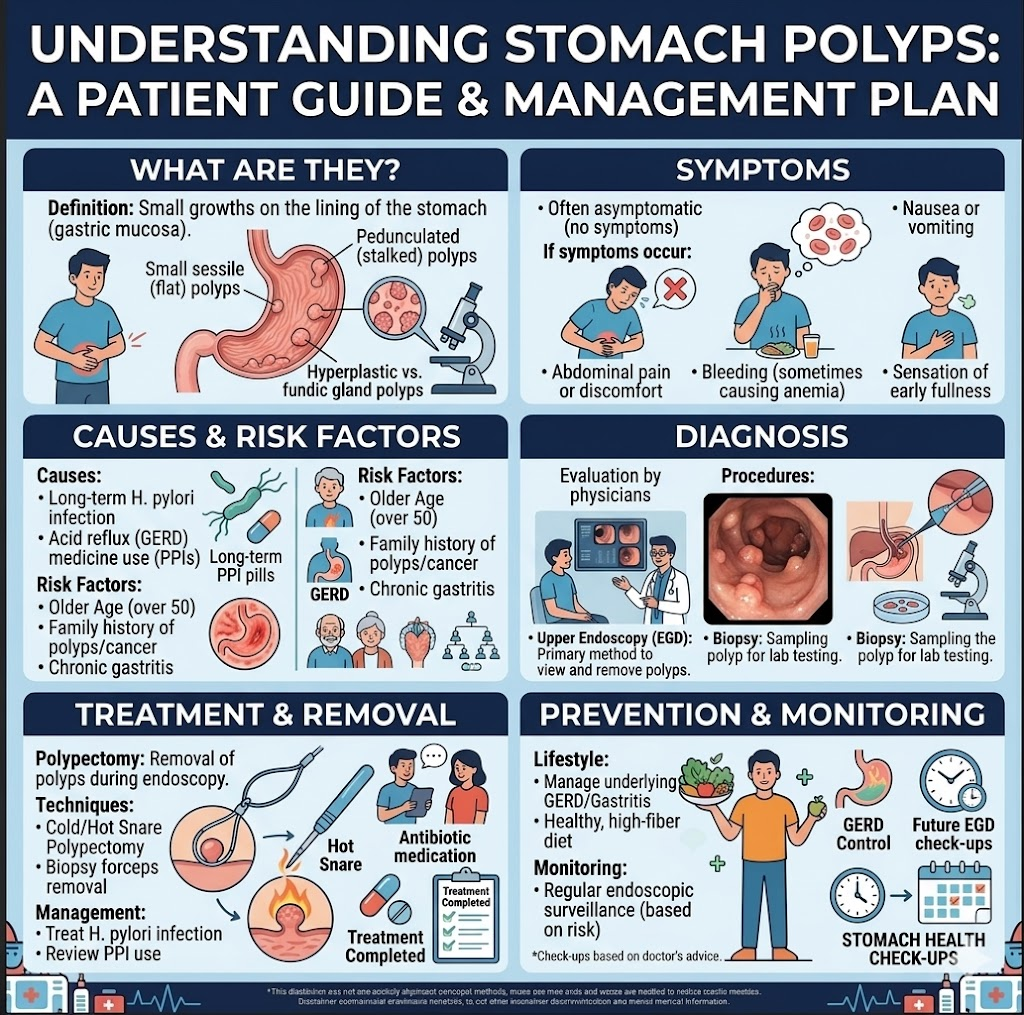
Stomach polyps, also known as gastric polyps, are unusual cell growths that develop on the inner lining of the stomach. These growths are uncommon and typically do not cause any noticeable symptoms. While most stomach polyps are harmless and do not become cancerous, certain types can increase the risk of developing stomach cancer. They are often discovered incidentally during medical examinations for other reasons. Treatment approaches vary depending on the specific type of polyp, often involving either watchful monitoring or removal.
Understanding the Condition
Understanding the Condition
Stomach polyps, also known as gastric polyps, are unusual cell growths that develop on the inner lining of the stomach. These growths are uncommon and typically do not cause any noticeable symptoms. While most stomach polyps are harmless and do not become cancerous, certain types can increase the risk of developing stomach cancer. They are often discovered incidentally during medical examinations for other reasons. Treatment approaches vary depending on the specific type of polyp, often involving either watchful monitoring or removal.
Common Symptoms
No Symptoms: Stomach polyps usually do not cause any symptoms, especially when they are small.
Stomach Ulcers or Bleeding: As a stomach polyp grows larger, it can develop open sores on its surface, known as ulcers. These ulcers may lead to symptoms like blood in the stool, which can appear black and tarry, or cause hidden blood loss over time.
Digestive Blockage (Rare): In very rare cases, a large polyp can block the opening between the stomach and the small intestine, leading to symptoms like nausea, vomiting, or difficulty digesting food.
Consultation Guide
Which Specialist to Meet
If you experience any symptoms such as blood in your stool or unexplained stomach discomfort, start by consulting your primary care doctor. They can provide an initial assessment and, if necessary, refer you to a gastroenterologist. A gastroenterologist is a specialist who focuses on diseases of the digestive system and is best equipped to diagnose and manage stomach polyps.
Preparations Before Your Visit
Before your visit, prepare a list of all your symptoms, including when they started and how often they occur. Also, bring a list of all medications, supplements, and vitamins you are currently taking, along with any relevant medical history. Be ready to discuss your diet and lifestyle habits.
Book a doctor visit near me
Watchful Waiting and Regular Monitoring: For small polyps that are not causing symptoms and have a low risk of becoming cancerous (e.g., some fundic gland polyps), the doctor might recommend periodic monitoring with follow-up endoscopies. This approach helps track any changes in size or appearance. (Duration: Typically involves follow-up endoscopies every 1-3 years, or as recommended by your doctor.)
Regular Medical Check-ups: While many stomach polyps are not preventable, regular check-ups with your doctor can help identify risk factors or conditions that might lead to polyp formation. Promptly address any persistent digestive symptoms.
Diagnostic Procedures
Upper Endoscopy (Esophagogastroduodenoscopy)
An upper endoscopy is a procedure used to visually examine the lining of your upper digestive system, which includes the esophagus (food pipe), stomach, and the first part of the small intestine (duodenum). During the procedure, a long, thin, flexible tube called an endoscope is gently passed down your throat. The endoscope has a tiny camera at its tip, which transmits real-time video images to a monitor, allowing the doctor to look for any abnormalities, including polyps. If a polyp is found, small tissue samples (biopsies) can be taken for further analysis, or the polyp itself might be removed during the same procedure. Some endoscopes can also have an ultrasound probe attached for a more detailed view of the layers of the stomach wall or nearby organs.
What to Expect
Treatment Options
Medication Review and Adjustment: If certain medications, such as a specific class of acid-reducing drugs, are linked to the development of fundic gland polyps, your doctor may suggest stopping or changing these medications if medically appropriate. (Duration: As long as the specific medication is a factor, potentially long-term under medical supervision.)
Procedural Treatments
Endoscopic Polyp Removal (Polypectomy): Most stomach polyps that require treatment are removed during an upper endoscopy. Using specialized tools passed through the endoscope, the doctor can safely snip off or cauterize the polyp. This is commonly done for adenomatous polyps due to their higher cancer risk, and for larger fundic gland polyps. The removed tissue is then sent to a lab for detailed analysis. (Duration: The removal itself is part of the endoscopy procedure (15-30 minutes); recovery is typically a few hours post-sedation, with full recovery from minor discomfort in 1-2 days.)
Surgical Procedures
Adherence to Medication Guidelines: If you are prescribed long-term medications, especially those that affect stomach acid, discuss any concerns about potential side effects, including polyp formation, with your doctor. Never stop or change medications without medical advice.
Scheduled Follow-up Endoscopies: For individuals with certain types of polyps, a history of polyps, or after polyp removal, regular follow-up endoscopies are crucial. These check-ups allow your doctor to monitor for new polyps or recurrence and to ensure ongoing digestive health, especially given the potential for some polyps to become cancerous.
Prevention & Long-Term Wellbeing
You will typically be asked not to eat or drink for several hours before the procedure. You will receive a sedative to help you relax and feel comfortable; often, you will be asleep during the endoscopy. Your throat may be numbed with a spray to suppress the gag reflex. You will lie on your side, and a mouth guard will be placed to protect your teeth and the endoscope. The doctor will then gently guide the endoscope down your throat into your esophagus, stomach, and duodenum. You won't feel pain. The procedure usually takes 15 to 30 minutes. After the endoscopy, you will be monitored in a recovery area until the effects of the sedation wear off. You will need someone to drive you home. You might experience a mild sore throat, bloating, or gas for a short time.
Monitoring and Lifestyle Adjustments
Gastrectomy (Partial or Total Stomach Removal - Rare): In extremely rare cases, such as when a very large polyp cannot be removed endoscopically, or if there is evidence of widespread cancerous changes, a surgical procedure to remove part or all of the stomach may be necessary. This is a major operation with significant recovery time. (Duration: Hospital stay typically several days to a week; full recovery can take weeks to months.)
Prevention and Risk Management
Healthy Lifestyle Choices: While not directly preventing polyps, maintaining a balanced diet rich in fruits, vegetables, and whole grains, staying hydrated, and avoiding excessive alcohol and smoking can support overall digestive health and general wellbeing.
Tags & Topics
Notice an error or need an update?
Help us keep medical information accurate. Report incorrect info or suggest an edit.


