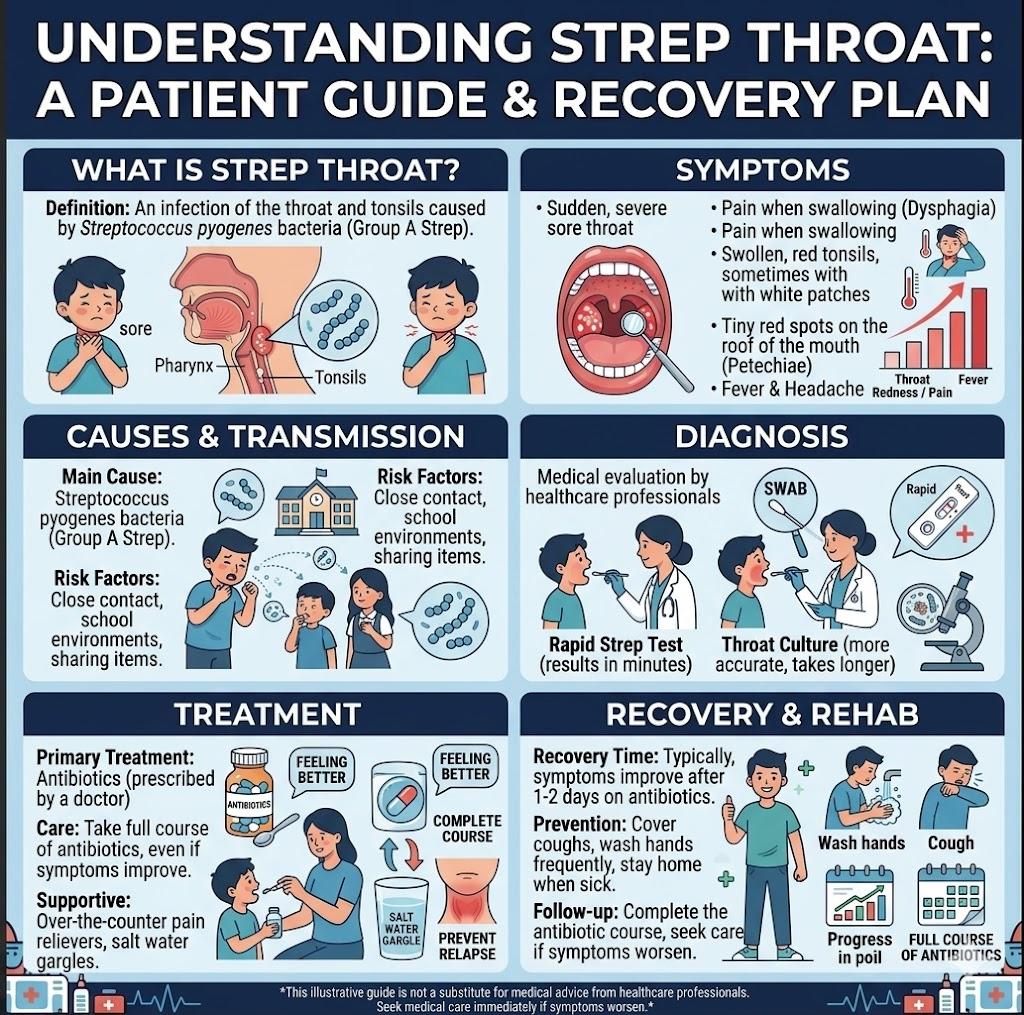
Strep throat is a common bacterial infection, primarily affecting the throat and tonsils, caused by Streptococcus pyogenes, also known as group A streptococcus. While many sore throats are caused by viruses, strep throat requires prompt treatment to prevent serious complications such as kidney inflammation or rheumatic fever, which can lead to joint problems, a specific rash, or even heart valve damage. Although most common in school-age children, strep throat can affect people of all ages.
Understanding the Condition
Strep Throat: Understanding and Managing a Common Bacterial Infection
Understanding the Condition
Common Symptoms
Sudden Throat Pain: Often develops quickly and can feel severe, making your throat sore and scratchy.
Difficulty Swallowing: Pain can make it hard or uncomfortable to swallow food and liquids.
Red and Swollen Tonsils: The tonsils and back of the throat may appear inflamed, sometimes with white patches or streaks of pus, or tiny red spots on the soft or hard palate (roof of the mouth).
Fever: A temperature of 101°F (38.3°C) or higher is common.
Tender, Swollen Lymph Nodes: Glands located on the sides of the neck may feel swollen and tender to the touch.
Headache: A common accompanying symptom.
Stomach Upset, Nausea, or Vomiting: These symptoms are particularly common in younger children.
Body Aches: General discomfort and muscle soreness.
Before your visit, make a list of all symptoms, including when they started and how severe they are. Note any recent exposure to someone with strep throat and any home remedies or over-the-counter medications you have tried. Be prepared for a throat swab, which is a key part of the diagnostic process.
Book a doctor visit near me
A healthcare professional will collect a sample from your throat using a sterile swab, just like with the rapid test. While waiting for the culture results, your doctor may decide to start treatment based on clinical suspicion, especially if symptoms are severe or there's a strong likelihood of strep. If the culture comes back negative, antibiotics may be stopped.
Antibiotics: A course of antibiotics is essential to treat strep throat. These medications kill the bacteria, reduce symptom duration and severity, and prevent complications. It is crucial to complete the entire course of antibiotics, even if symptoms improve, to ensure all bacteria are eliminated and to prevent recurrence or complications. (Duration: Typically 10 days for oral antibiotics. A single injection may also be an option.)
Home Remedies and Symptom Relief
Over-the-Counter Pain Relievers: Medications such as acetaminophen or ibuprofen can help reduce fever and throat pain. Always follow dosage instructions. (Duration: As needed, until symptoms subside.)
Warm Liquids and Cool Foods: Drinking warm liquids like tea with honey or eating cool, soft foods like popsicles or yogurt can soothe a sore throat. (Duration: As needed, until symptoms subside.)
Saltwater Gargle: Gargling with a mixture of warm water and salt several times a day can help relieve throat discomfort. (Duration: As needed, until symptoms subside.)
Humidifier: Using a cool-mist humidifier can add moisture to the air, which may help soothe a dry, irritated throat. (Duration: As needed, especially during sleep.)
Complete Antibiotic Course: Always finish the entire course of prescribed antibiotics, even if symptoms improve quickly. Stopping early can lead to recurrence and increase the risk of serious complications or antibiotic resistance.
Monitor for Complications: Be aware of symptoms that could indicate complications like rheumatic fever (e.g., joint pain, rash, heart murmurs) or kidney inflammation (e.g., dark urine, swelling) and seek immediate medical attention if they appear.
Understand Strep Carriers: Some individuals can carry the strep bacteria without showing symptoms. These 'carriers' usually don't need antibiotic treatment unless they are repeatedly spreading the infection to others, as they typically don't face the same risk of complications.
Recognize Recurring Infections: If strep throat recurs frequently, discuss this with your doctor to explore possible reasons and appropriate management strategies, which might include considering a different antibiotic or tonsillectomy in specific cases.
Consultation Guide
Strep throat is a common bacterial infection, primarily affecting the throat and tonsils, caused by Streptococcus pyogenes, also known as group A streptococcus. While many sore throats are caused by viruses, strep throat requires prompt treatment to prevent serious complications such as kidney inflammation or rheumatic fever, which can lead to joint problems, a specific rash, or even heart valve damage. Although most common in school-age children, strep throat can affect people of all ages.
Rash: Sometimes, a fine, sandpaper-like rash can appear, known as scarlet fever, which is also caused by group A streptococcus.
Loss of Appetite: Especially noted in young children due to throat pain and general illness.
Consultation Guide
Which Specialist to Meet
A healthcare professional will use a long cotton swab to gently rub the back of your throat, tonsils, and any red or white patches to collect a sample. This takes only a few seconds and may cause a brief gagging sensation or slight discomfort. The swab is then tested immediately, and results are typically available within 5-10 minutes.
Diagnostic Procedures
Rapid Strep Test (Rapid Antigen Detection Test - RADT)
This quick test can detect the presence of strep bacteria from a throat swab within minutes. It is highly specific, meaning a positive result is usually accurate. However, it may not detect all infections.
What to Expect
Molecular Strep Test (PCR Test)
This test uses molecular methods to detect bacterial DNA and is highly sensitive and specific. It offers rapid results, often within minutes to an hour, and is more accurate than the rapid antigen test.
What to Expect
Similar to the rapid strep test, a healthcare professional will take a throat swab sample. The process is identical, involving a quick, gentle rub at the back of the throat. The sample is then sent for molecular analysis, providing accurate results more quickly than a traditional throat culture.
Considered the most accurate test, a throat culture involves growing bacteria from a throat swab in a lab dish to identify strep. It can take 24-48 hours for results.
What to Expect
Treatment Options
You should consult your primary care physician or a pediatrician if you or your child shows signs of strep throat. For recurrent infections or if surgery is being considered, an Ear, Nose, and Throat (ENT) specialist, also known as an otolaryngologist, may be recommended.
Preparations Before Your Visit
Medications
Tonsillectomy (Tonsil Removal): Surgery to remove the tonsils may be considered in cases of recurrent strep throat, particularly if a person experiences frequent infections that significantly impact their health. The decision for surgery involves weighing potential benefits, such as reduced infection frequency and severity, against surgical risks including anesthesia complications, bleeding, and post-operative pain or vomiting. It's important to discuss this option thoroughly with a healthcare professional. (Duration: Recovery typically takes 1-2 weeks. Surgery is generally considered for: seven or more strep episodes in one year; five or more episodes a year for two consecutive years; or three or more episodes a year for three consecutive years.)
Prevention & Long-Term Wellbeing
Rest and Hydration: Getting plenty of rest helps your body fight the infection. Drinking lots of fluids is crucial to prevent dehydration and keep the throat moist. (Duration: Until full recovery.)
Prevention
Frequent Hand Washing: Wash hands thoroughly with soap and water for at least 20 seconds, especially after coughing or sneezing, and before eating.
Avoid Sharing Personal Items: Do not share eating utensils, drinking glasses, food, or towels with others, especially if someone is sick.
Cover Coughs and Sneezes: Teach proper respiratory etiquette: cough or sneeze into a tissue, then dispose of it, or into your elbow if a tissue isn't available.
Stay Home When Sick: If you or your child has strep throat, stay home from work, school, or daycare until fever-free for 24 hours and after taking antibiotics for at least 24 hours, to prevent spreading the infection.
Long-Term Monitoring and Management
Tags & Topics
Notice an error or need an update?
Help us keep medical information accurate. Report incorrect info or suggest an edit.


