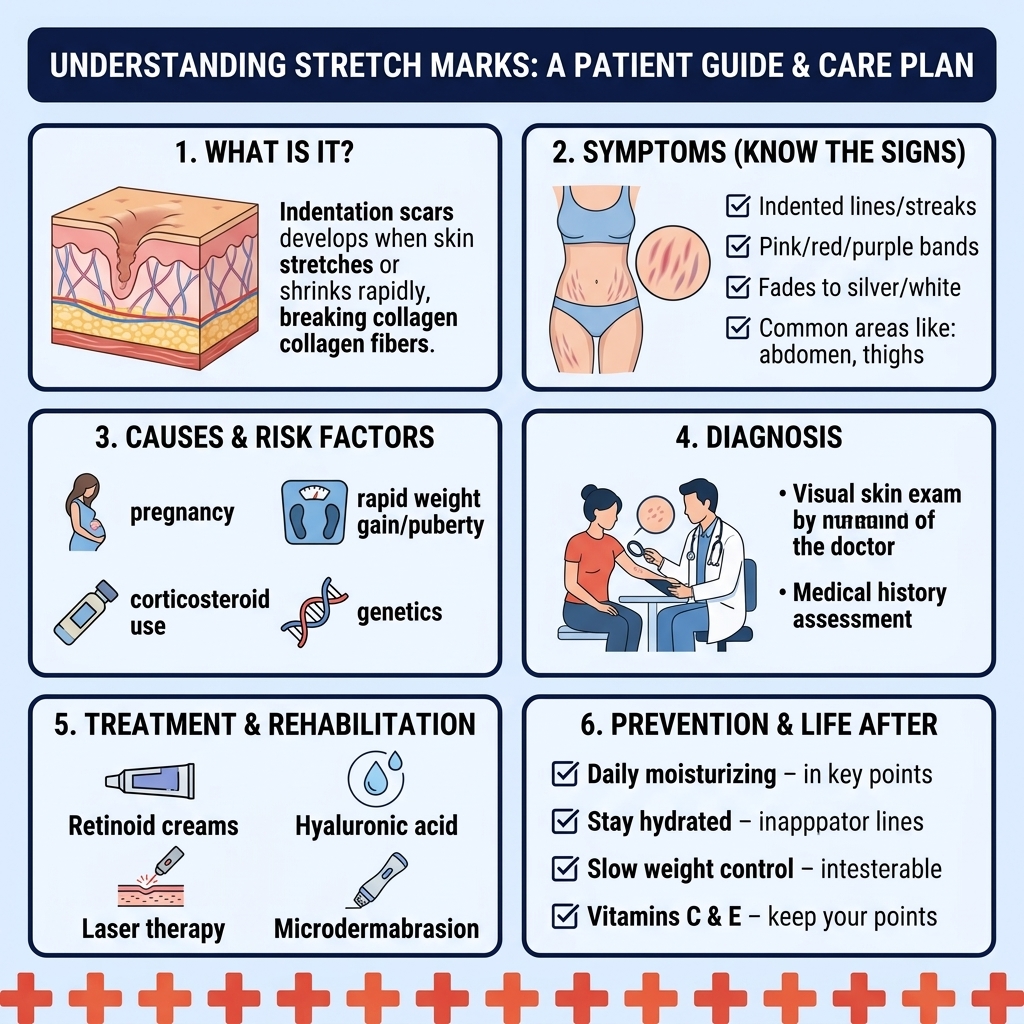
Stretch marks, medically known as striae, are a common type of skin scarring that appear as indented streaks on the skin. They typically form on areas like the abdomen, breasts, hips, buttocks, and thighs. While not painful or harmful to health, their appearance can be a cosmetic concern for some individuals. Stretch marks occur when the skin stretches rapidly, causing the elastic fibers just beneath the skin's surface to break. Factors like genetics, the degree of skin stretching, and levels of the hormone cortisol (which can weaken skin elasticity) all play a role in their development. Though they often fade over time, with or without treatment, they may not disappear completely.
Understanding the Condition
Stretch Marks: Understanding and Managing Skin Changes
Understanding the Condition
Common Symptoms
Before your visit, make a list of your concerns, including when you first noticed the stretch marks, any associated symptoms, medications you are currently taking (including supplements), and your complete medical history. Be prepared to show the affected areas of your skin to the doctor during the examination.
Book a doctor visit near me
During the examination, you will be asked to expose the areas of your body where you have stretch marks so the doctor can observe them directly. The doctor will gently feel your skin and note the color, texture, and pattern of the streaks. They will also ask questions about your general health, recent lifestyle changes, and any other symptoms you might be experiencing. This process is typically quick and painless, focusing on visual assessment and a discussion of your health background.
Consultation Guide
Appearance: Stretch marks are distinct as indented streaks or lines on the skin surface. They can vary in appearance depending on how long they have been present, their cause, location on the body, and your individual skin type.
Color: Initially, new stretch marks often appear in vibrant colors such as bright pink, red, blue, black, or purple. As they mature and become older, they typically fade to a lighter, silvery-white, or brownish hue, often appearing less noticeable than when they first formed.
Location: Commonly found on the abdomen, breasts, hips, buttocks, and thighs. Some individuals may also develop them on their upper arms.
Texture: The affected skin may feel slightly different, often thinner or rippled, compared to the surrounding unaffected skin.
Diagnostic Procedures
The primary way stretch marks are diagnosed is through a thorough physical examination of your skin. A doctor will visually inspect the affected areas to confirm the presence and characteristics of the stretch marks. They will also inquire about your medical history, recent weight changes, growth spurts, use of any medications (especially corticosteroids), and any family history of stretch marks or related conditions. If the stretch marks are widespread or unusual, they may look for signs of underlying conditions that could be contributing factors.
What to Expect
Treatment Options
Stretch marks, medically known as striae, are a common type of skin scarring that appear as indented streaks on the skin. They typically form on areas like the abdomen, breasts, hips, buttocks, and thighs. While not painful or harmful to health, their appearance can be a cosmetic concern for some individuals. Stretch marks occur when the skin stretches rapidly, causing the elastic fibers just beneath the skin's surface to break. Factors like genetics, the degree of skin stretching, and levels of the hormone cortisol (which can weaken skin elasticity) all play a role in their development. Though they often fade over time, with or without treatment, they may not disappear completely.
Widespread Occurrence (Rare): In rare instances, stretch marks can cover extensive areas of the body. This can sometimes be linked to the use of certain corticosteroid medications or underlying health conditions like Cushing syndrome.
Consultation Guide
Which Specialist to Meet
Preparations Before Your Visit
Home Remedies and Over-the-Counter Options
Moisturizers and Oils: Regular application of moisturizing creams, lotions, or natural oils (like cocoa butter, shea butter, or vitamin E oil) can help keep the skin hydrated and may improve its elasticity. While they don't eliminate stretch marks, they might help soften the appearance of newer marks. (Duration: Ongoing, daily use for several weeks to months to see potential benefits.)
Retinoid Creams: Prescription creams containing retinoids (a form of vitamin A) can help rebuild collagen, a protein that gives skin its strength and elasticity. These are most effective on new, red or pink stretch marks, helping them to fade and appear smoother. (Duration: Typically applied daily for several weeks to months, often showing noticeable improvement after 2-6 months. Not recommended during pregnancy or breastfeeding.)
Hyaluronic Acid: Topical products containing hyaluronic acid can improve skin hydration and elasticity, potentially making stretch marks less noticeable. This ingredient is found in many over-the-counter and prescription skin care products. (Duration: Daily application for several weeks to months to observe results.)
Laser Therapy: Various laser treatments are available. Pulsed dye laser therapy can target the blood vessels in new, red stretch marks, reducing their color. Fractional laser therapy (like fractional photothermolysis) stimulates collagen and elastin production, which can improve the texture and appearance of older, faded stretch marks. (Duration: Typically requires 3-6 sessions, spaced several weeks apart, with results becoming apparent over several months.)
Dermabrasion / Microdermabrasion: This procedure uses a fast-spinning tool or fine crystals to gently remove the top layer of skin. This process encourages new, smoother skin to grow, which can make stretch marks less noticeable. Microdermabrasion is a less invasive version. (Duration: Multiple sessions (5-12) are often required, usually spaced 1-4 weeks apart, with gradual improvement over several months.)
Chemical Peels: Chemical peels involve applying an acidic solution to the skin to exfoliate the top layers. This stimulates skin regeneration, which can improve the texture and discoloration of stretch marks. (Duration: Several sessions, typically 4-6 treatments spaced 2-4 weeks apart, over a period of months.)
Microneedling: This treatment involves using a device with tiny needles to create microscopic punctures in the skin. These controlled injuries trigger the body's natural healing process, stimulating collagen and elastin production, which can improve the appearance of stretch marks. (Duration: Usually requires 3-6 sessions, spaced 4-6 weeks apart, with results developing over several months.)
Radiofrequency Therapy: This technique uses energy waves to heat the deep layers of the skin, stimulating collagen production and tightening the skin. It can help improve the texture and appearance of stretch marks. (Duration: Typically requires 3-5 sessions, spaced 2-4 weeks apart, with results appearing over several months.)
Manage Expectations: Understand that while treatments can significantly improve the appearance of stretch marks, they may not disappear completely. Many stretch marks fade naturally over time, becoming less noticeable.
Sun Protection: Protect stretch marks from sun exposure. Tanning can make stretch marks more noticeable, as the scar tissue does not tan, creating a stark contrast with tanned skin.
Prevention & Long-Term Wellbeing
Prevention Strategies
Maintain a Healthy Weight: Avoid rapid weight gain or loss. Gradual changes in weight give your skin more time to adapt, reducing the likelihood of severe stretching and the formation of stretch marks.
Stay Hydrated: Drinking plenty of water helps keep your skin supple and elastic, making it less prone to tearing during periods of growth or expansion.
Eat a Balanced Diet: Consume a diet rich in vitamins A, C, D, E, zinc, and protein. These nutrients are vital for skin health, collagen production, and elasticity. Foods like fruits, vegetables, nuts, and lean proteins are beneficial.
Moisturize Regularly: Keep your skin well-moisturized, especially during periods of rapid growth, such as puberty or pregnancy. While moisturizers don't prevent stretch marks entirely, they can help improve skin elasticity and reduce dryness, potentially minimizing their severity.
Long-Term Management
Continued Skin Care: Maintain a consistent skincare routine. Regular moisturizing and a healthy lifestyle continue to support overall skin health and can help keep the skin looking its best.
Tags & Topics
Notice an error or need an update?
Help us keep medical information accurate. Report incorrect info or suggest an edit.


