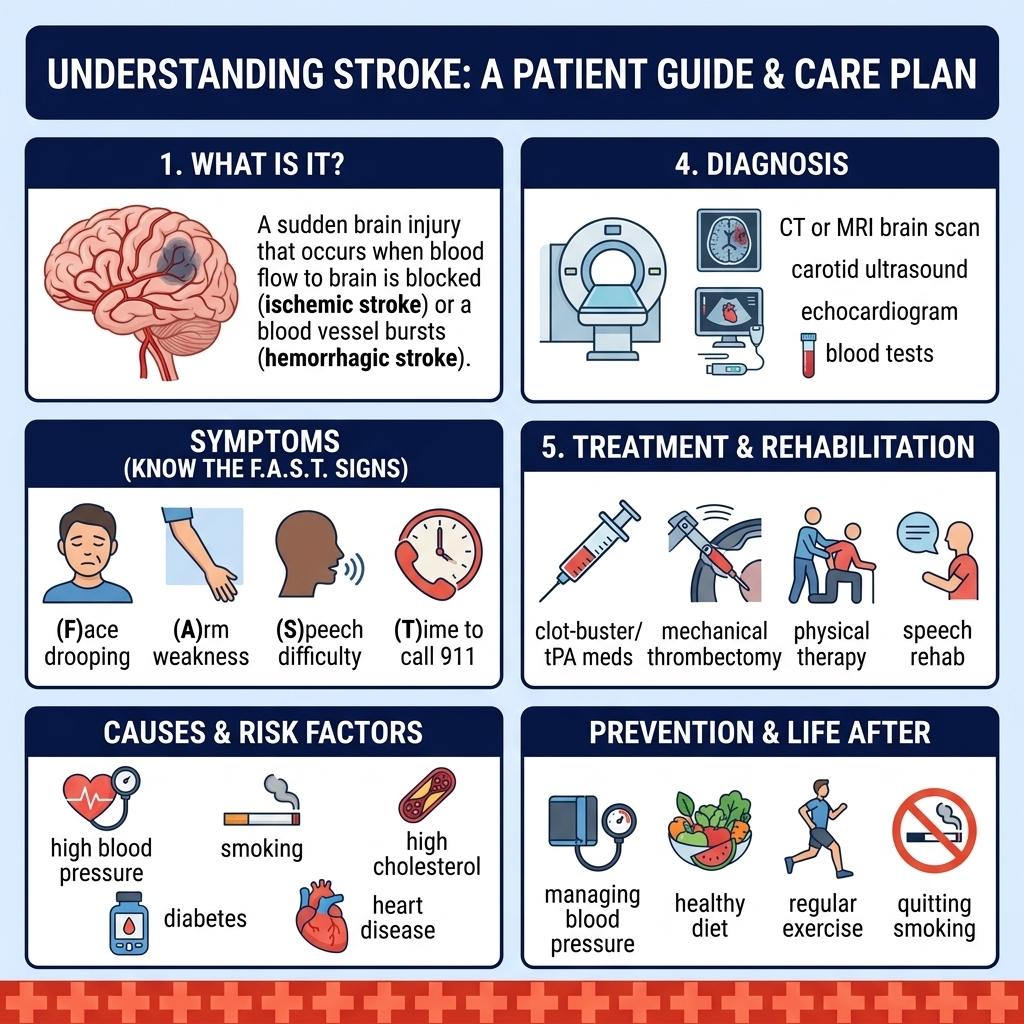
A stroke is a critical medical emergency where part of the brain loses blood supply. This lack of oxygen and nutrients causes brain cells to die rapidly. There are two main types: ischemic stroke, caused by a blocked blood vessel (often a clot), and hemorrhagic stroke, caused by a leaking or burst blood vessel. Both require immediate treatment to minimize brain damage and prevent severe complications. Early intervention greatly improves recovery chances.
Understanding the Condition
Stroke: Understanding This Medical Emergency
Understanding the Condition
Common Symptoms
Speech and Understanding Issues: Confusion, slurred speech, or difficulty comprehending others.
One-Sided Weakness/Numbness: Sudden weakness or numbness, often paralyzing the face, arm, or leg on one side (e.g., drooping smile, one arm falling when raised).
Vision Problems: Sudden blurred, blackened, or double vision in one or both eyes.
Severe Headache: An abrupt, intense headache, possibly with vomiting, dizziness, or altered consciousness.
Balance Issues: Sudden trouble walking, stumbling, or loss of balance and coordination.
Remember "FAST": Always remember "FAST" and act immediately:* **Face**: Does one side droop when smiling?* **Arms**: Does one arm drift down when raised?* **Speech**: Is speech slurred or strange when repeating a simple phrase?* **Time**: If any of these signs appear, call emergency medical help without delay.
Consultation Guide
Which Specialist to Meet
Be ready to provide symptom onset time, current medications, allergies, and medical history. This information guides immediate treatment.
Book a doctor visit near me
Clot-Busting Medication: An intravenous medicine designed to dissolve the blood clot blocking brain blood flow. (Duration: Administered within 3 to 4.5 hours of symptom onset.)
Mechanical Clot Removal (Thrombectomy): A catheter-based procedure to physically remove large clots from brain arteries. (Duration: Performed within 6 to 24 hours of symptom onset for eligible patients.)
Consultation Guide
A stroke is a critical medical emergency where part of the brain loses blood supply. This lack of oxygen and nutrients causes brain cells to die rapidly. There are two main types: ischemic stroke, caused by a blocked blood vessel (often a clot), and hemorrhagic stroke, caused by a leaking or burst blood vessel. Both require immediate treatment to minimize brain damage and prevent severe complications. Early intervention greatly improves recovery chances.
Heart ultrasound using sound waves for moving pictures of heart chambers, valves, and blood flow, identifying heart conditions (e.g., clots) that could cause stroke.
Maintain a Healthy Weight: Being overweight or obese contributes to other stroke risk factors like high blood pressure and diabetes.
Exercise Regularly: Aim for at least 150 minutes of moderate-intensity aerobic activity (e.g., brisk walking, swimming) weekly to improve heart health and manage risk factors.
Drink Alcohol in Moderation: Limit intake (one drink/day for women, two for men) or abstain; discuss appropriate levels with your doctor.
Avoid Illicit Drugs: Certain illegal drugs like cocaine and methamphetamine are strong risk factors for stroke.
Regular Medical Follow-ups: Consistent check-ups with your healthcare team are essential for monitoring risk factors, adjusting medications, and tracking recovery progress.
Diagnostic Procedures
Neurological Examination
Assesses brain, spinal cord, nerve, and muscle function to identify affected areas.
What to Expect
A doctor evaluates balance, reflexes, vision, strength, and mental status through tasks like walking in a straight line or answering questions.
CT Scan (Brain CT Scan)
Quick X-ray imaging creating detailed brain "slices," detecting bleeding, swelling, or tumors rapidly.
What to Expect
You'll lie still on a table sliding into a donut-shaped machine. You may hear humming. Contrast dye might be injected into a vein, causing a warm sensation.
Uses strong magnets and radio waves for highly detailed brain images, excellent for subtle damage. No radiation.
What to Expect
You'll lie still in a loud, tube-shaped machine (earplugs provided). Some may feel enclosed. Contrast dye might be used.
Sound waves image neck arteries (carotids) supplying the brain, checking for narrowing, blockages (plaque), or clots.
What to Expect
You'll lie down. Gel is applied to your neck, then a handheld device (transducer) moves over your skin to create images. It's painless.
What to Expect
You'll lie down. Gel is applied to your chest, and a transducer is pressed against your skin. You might be asked to change positions or hold your breath briefly. It's a painless procedure.
What to Expect
A small blood sample is drawn from a vein, usually in your arm. You might feel a brief pinch.
Treat Sleep Apnea: If diagnosed, use prescribed treatments like a continuous positive airway pressure (CPAP) device to keep airways open during sleep.
Treatment Options
Check clotting ability, cholesterol, blood sugar, and inflammation. Help determine stroke risk, type, and guide treatment.
Emergency Treatments for Ischemic Stroke (Blocked Artery)
Medications for Prevention and Management
Antiplatelet Medicines: Help prevent blood platelets from forming clots. (Duration: Long-term, often for life.)
Anticoagulants (Blood Thinners): Reduce the blood's clotting ability, especially for heart-related clot risks. (Duration: Long-term, often for life.)
Blood Pressure/Cholesterol Medications: Control high blood pressure and reduce "bad" cholesterol to prevent artery plaque buildup. (Duration: Long-term, often for life.)
Surgical Procedures
Carotid Endarterectomy: Surgery to open the carotid artery in the neck and remove fatty plaque buildup. (Duration: One-time procedure with a recovery period of several weeks.)
Craniotomy (for Hemorrhagic Stroke/Swelling): A surgical procedure where a section of the skull is removed to repair leaking vessels, remove clots, or relieve dangerous brain swelling. (Duration: One-time major surgery with an extensive recovery period lasting weeks to months.)
Stroke Rehabilitation Program: A tailored program of various therapies (physical, occupational, speech, cognitive) designed to help individuals regain lost skills and improve daily living abilities. (Duration: Can begin within 24-48 hours of stroke and continue for months or even years, adapting to individual progress.)
Control High Blood Pressure: Regularly monitor and manage blood pressure through a balanced diet (low in sodium), regular exercise, and prescribed medications.
Manage Cholesterol: Eat a diet low in cholesterol and unhealthy fats; use medication if needed to prevent artery plaque buildup.
Quit All Tobacco Use: Smoking, including exposure to secondhand smoke, significantly increases stroke risk. Quitting is crucial.
Manage Diabetes: Maintain healthy blood sugar levels with diet, exercise, weight control, and prescribed medications.
Adhere to Treatment Plans: Consistently follow all medical advice and take prescribed medications to prevent recurrence and manage existing conditions.
Continue Stroke Rehabilitation: Engage in ongoing therapies to maximize physical, cognitive, and communicative abilities and adapt to any lasting changes.
Address Emotional Health: Seek support for common emotional changes like depression or anxiety through counseling or support groups.
Build a Strong Support System: Connect with family, friends, and support groups for emotional and practical assistance.
Prevention & Long-Term Wellbeing
In an emergency, you'll see emergency physicians and neurologists (brain specialists). For ongoing care and prevention, consult your primary care physician, cardiologists (heart specialists), and rehabilitation therapists.
Preparations Before Your Visit
Carotid Angioplasty and Stenting: A balloon is used to widen a narrowed carotid artery, and a small metal mesh tube (stent) is inserted to keep it open. (Duration: One-time procedure with a recovery period of days to weeks.)
Prevention
Eat a Healthy Diet: Emphasize fruits, vegetables, and whole grains. A diet like the Mediterranean diet is often recommended.
Tags & Topics
Notice an error or need an update?
Help us keep medical information accurate. Report incorrect info or suggest an edit.


