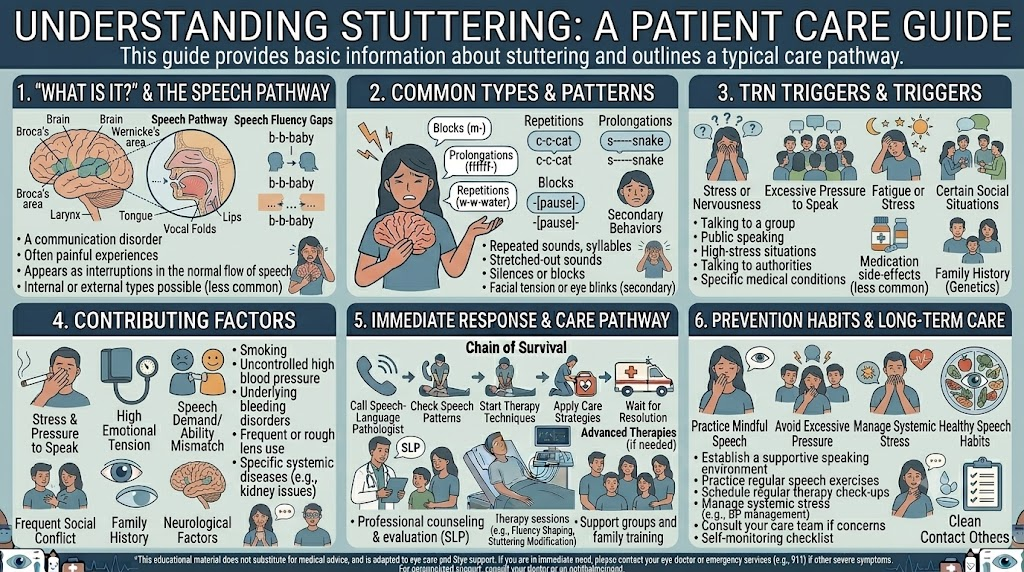
Stuttering, also known as stammering, is a common speech condition where the normal flow and rhythm of speech are disrupted. Individuals who stutter often know what they want to say but find it challenging to express it smoothly. This can involve repeating sounds, syllables, or words; stretching out sounds; or pausing because a word is difficult to get out. While many young children experience "developmental stuttering" as a normal part of learning to speak and often outgrow it, for some, stuttering can be a long-term condition extending into adulthood. Persistent stuttering can impact self-esteem and effective communication. Various treatments, including speech therapy and specialized mental health support, can help manage stuttering in both children and adults.
Understanding the Condition
Stuttering: Understanding and Managing Speech Fluency Challenges
Understanding the Condition
Common Symptoms
Difficulty Starting Speech: Struggling to begin a word, phrase, or sentence.
Repeating Sounds or Words: Repeating a sound, syllable, or an entire word.
Stretching Sounds: Drawing out certain consonant or vowel sounds within words.
Pauses in Speech: Brief silences before or within words, or when trying to produce a difficult sound.
Adding Filler Words: Inserting extra words like "um" or "like" when anticipating difficulty with the next word.
Physical Tension: Visible tension, tightness, or movements in the face, jaw, or upper body while attempting to speak a word.
Speech-Related Anxiety: Feeling nervous, anxious, or fearful about speaking in various social or professional situations.
Communication Challenges: Difficulty effectively conveying thoughts, participating in conversations, or avoiding speaking situations.
Consultation Guide
Which Specialist to Meet
For children, start with your pediatrician who can refer to a speech-language pathologist (SLP). For adults, you can consult your primary care doctor for a referral to an SLP, or contact an SLP directly. If there are concerns about underlying neurological issues, a neurologist may be involved. If anxiety or emotional distress related to stuttering is significant, a mental health professional like a psychologist or psychiatrist may also be beneficial.
Preparations Before Your Visit
Before your visit, make notes about when and how the stuttering typically occurs, including specific situations or words that are particularly challenging. Be prepared to discuss your medical history, any family history of stuttering, and any related emotional or social impacts. For children, observe how they communicate at home and in different environments, noting patterns and triggers.
Book a doctor visit near me
Consultation Guide
Stuttering, also known as stammering, is a common speech condition where the normal flow and rhythm of speech are disrupted. Individuals who stutter often know what they want to say but find it challenging to express it smoothly. This can involve repeating sounds, syllables, or words; stretching out sounds; or pausing because a word is difficult to get out. While many young children experience "developmental stuttering" as a normal part of learning to speak and often outgrow it, for some, stuttering can be a long-term condition extending into adulthood. Persistent stuttering can impact self-esteem and effective communication. Various treatments, including speech therapy and specialized mental health support, can help manage stuttering in both children and adults.
Diagnostic Procedures
Speech-Language Evaluation
A comprehensive speech-language evaluation is the primary way to diagnose stuttering. A speech-language pathologist (SLP) will assess your or your child's speech patterns, fluency, and overall communication abilities. This process helps determine the type and severity of stuttering and identify any contributing factors. The SLP will also consider the impact of stuttering on daily life, social interactions, and academic or professional performance.
What to Expect
The SLP will begin by asking detailed questions about your medical history, family history of stuttering, and when the stuttering first started. For adults, you might discuss your experiences and challenges with communication in various settings. For children, the SLP will observe their speech during play and conversation, and may interact with the child and parents. You may be asked to read a passage aloud or engage in various conversational tasks to allow the SLP to observe speech fluency in different contexts. The SLP may also use standardized tests to assess language skills, articulation, and the physical aspects of speech production. This comprehensive assessment helps the SLP understand the specific nature of the stuttering and create a personalized treatment plan.
Treatment Options
Therapies
Speech-Language Therapy: Provided by a speech-language pathologist (SLP), this therapy teaches techniques to improve speech fluency and manage stuttering. Methods include "fluency shaping" to establish smooth speech patterns through controlled breathing and slow speech, and "stuttering modification" to reduce tension and fear during stuttering moments. It also builds communication strategies and addresses attitudes towards speaking. (Duration: Varies; often several months to a few years, depending on individual needs, age, severity, and consistent practice.)
Cognitive Behavioral Therapy (CBT): CBT is a type of talk therapy that helps identify and change negative thoughts and behaviors related to stuttering, such as anxiety, avoidance, or low self-esteem. It equips individuals with coping strategies for challenging speaking situations, indirectly improving confidence and reducing the emotional impact of stuttering. (Duration: Typically 10 to 20 structured sessions over several months, with ongoing practice of learned skills.)
Electronic Fluency Aids: These small, ear-worn devices can alter a person's voice feedback (e.g., delayed or frequency-altered audio) to create a "chorus effect." This can sometimes help individuals speak more fluently by changing how they perceive their own voice. (Duration: Used as needed, often on an ongoing basis for specific speaking situations or as a supplement to therapy.)
Practicing Relaxed Speech: Consciously speaking slowly, calmly, and with relaxed vocal cords can help reduce stuttering instances. Reading aloud or practicing in comfortable settings also aids fluency and confidence. (Duration: Ongoing, with regular daily practice for best results.)
Creating a Supportive Environment (for Children): For children, parents and caregivers can foster fluency by listening patiently, not interrupting or completing sentences, and speaking slowly and calmly themselves. This encourages open communication without pressure. (Duration: Ongoing throughout the child's speech development and beyond.)
Medications
Addressing Associated Conditions: There are no medications that specifically cure stuttering. However, if stuttering is accompanied by significant anxiety, depression, or other mental health conditions, a doctor may prescribe medication to manage these co-occurring issues, which can indirectly help in managing stuttering's impact. (Duration: As prescribed by a healthcare provider, potentially short-term or long-term depending on the condition being treated.)
Surgical Procedures
No Surgical Treatment: Currently, there are no surgical procedures available or recommended for directly treating stuttering. (Duration: Not applicable.)
Prevention & Long-Term Wellbeing
Prevention & Early Intervention (for Children)
Early Assessment for Children: If a child shows persistent stuttering for more than 6-12 months, or if it is severe, seeking an early speech-language evaluation is crucial. Early intervention can significantly improve outcomes and prevent the stutter from becoming chronic.
Creating a Calm Communication Environment: Ensure a relaxed home environment where the child feels no pressure to speak quickly. Listen patiently and give the child ample time to express themselves without interruption or finishing their sentences.
Long-Term Management & Coping
Consistent Practice of Strategies: Regularly practice techniques learned in speech therapy and CBT to reinforce new speech patterns and coping mechanisms. Consistency is key for long-term improvement and maintenance.
Join Support Groups: Connecting with others who stutter can provide invaluable emotional support, shared experiences, and practical advice, reducing feelings of isolation and building confidence in communication.
Educate Others: Inform family, friends, and colleagues about stuttering to foster understanding and create a more supportive communication environment. Explain how they can best listen and respond to you.
Focus on Overall Communication: Shift focus from striving for perfect fluency to effective communication. Emphasize conveying messages clearly and confidently, even if some stuttering occurs, rather than avoiding speaking altogether.
Manage Stress and Anxiety: Implement stress-reduction techniques like mindfulness, deep breathing, or regular exercise. Addressing anxiety related to speaking can significantly improve fluency and overall well-being.
Tags & Topics
Notice an error or need an update?
Help us keep medical information accurate. Report incorrect info or suggest an edit.


