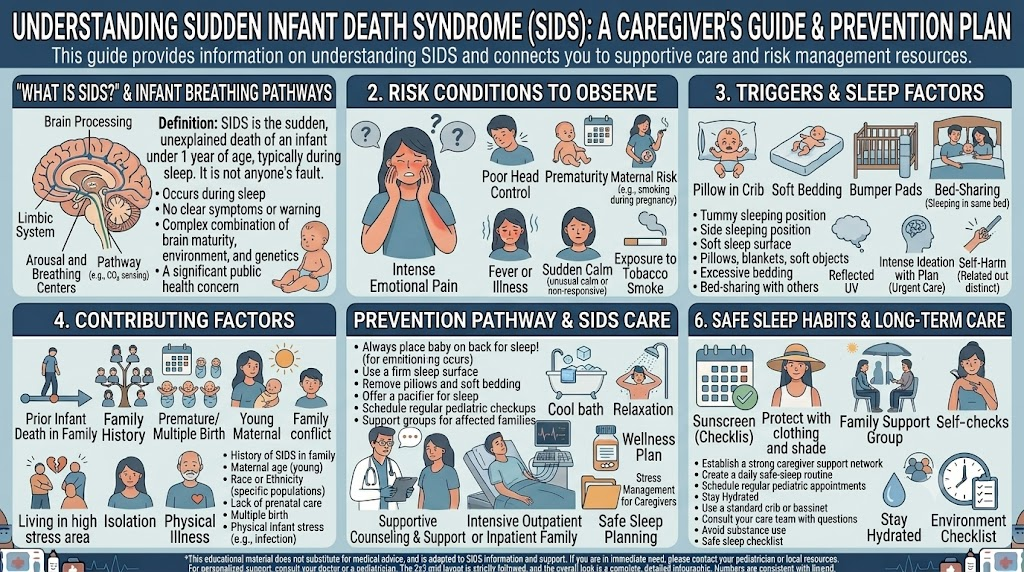
Sudden Infant Death Syndrome (SIDS), commonly known as crib death, is the unexplained death of a seemingly healthy baby younger than one year old. It most often occurs during sleep. Despite extensive research, the exact cause of SIDS remains unknown. However, it is believed that some infants may have underlying brain problems, particularly in areas that control breathing and the ability to wake up from sleep, making them more vulnerable. While there's no way to completely prevent SIDS, specific safe sleep practices and attention to known risk factors can significantly reduce a baby's risk.
Understanding the Condition
Sudden Infant Death Syndrome (SIDS)
Understanding the Condition
Common Symptoms
Lack of Pre-existing Symptoms: Sudden Infant Death Syndrome (SIDS) is defined by the sudden, unexplained death of an infant who appeared healthy. There are no warning signs or symptoms that occur before the event.
Consultation Guide
Which Specialist to Meet
Consultation Guide
Sudden Infant Death Syndrome (SIDS), commonly known as crib death, is the unexplained death of a seemingly healthy baby younger than one year old. It most often occurs during sleep. Despite extensive research, the exact cause of SIDS remains unknown. However, it is believed that some infants may have underlying brain problems, particularly in areas that control breathing and the ability to wake up from sleep, making them more vulnerable. While there's no way to completely prevent SIDS, specific safe sleep practices and attention to known risk factors can significantly reduce a baby's risk.
You should consult with your pediatrician. They can provide essential guidance on safe sleep practices, assess your baby's individual risk factors, and offer advice on overall infant health and development.
Preparations Before Your Visit
Before your visit, prepare a list of questions about safe sleep environments, crib setup, breastfeeding, pacifier use, and your baby's vaccination schedule. Inform your doctor about any family history of SIDS, if you or anyone in your household smokes, and details about your pregnancy and delivery. Bring your baby's health records if visiting a new doctor.
Book a doctor visit near me
Sudden Infant Death Syndrome (SIDS) is a diagnosis made only after a thorough medical investigation rules out all other potential causes of death. This process involves a comprehensive examination of the infant, their medical history, and the environment where they died.
The investigation typically includes several key steps. First, a detailed review of the infant's medical history, including any illnesses, medications, and the mother's prenatal care. Second, a careful examination of the death scene is conducted to identify any unsafe sleep conditions or other environmental factors. Third, a complete autopsy is performed by a forensic pathologist. This involves an external examination of the body, internal organ inspection, microscopic examination of tissue samples, and toxicology tests (checking for drugs or poisons). The purpose of these steps is to meticulously search for any identifiable cause of death. If, after all these investigations, no explanation for the infant's death is found, the diagnosis of SIDS is made.
No Active Treatment: Sudden Infant Death Syndrome (SIDS) is a tragic, fatal event. Therefore, there are no medical treatments available for the condition itself once it has occurred. Medical and public health efforts are entirely focused on understanding risk factors and implementing preventive strategies to protect infants. (Duration: N/A)
Key Risk Factors for SIDS
Brain Development Issues: Some infants may be born with problems in brain areas that control vital functions like breathing and waking from sleep, making them more vulnerable to SIDS.
Low Birth Weight or Prematurity: Babies born early or with a low birth weight may have less developed brains, which can affect their control over automatic processes like breathing and heart rate.
Recent Respiratory Infection: Many infants who died of SIDS had recently experienced a common cold or other mild respiratory infection, which could potentially contribute to breathing difficulties.
Age: The risk of SIDS is highest for infants between 2 and 4 months of age.
Sex: Male infants have a slightly higher incidence of SIDS compared to female infants.
Race/Ethnicity: For reasons not fully understood, SIDS occurs more frequently in Black, Native American, and Alaska Native infants.
Family History: The risk of SIDS is elevated for babies who have siblings who previously died of SIDS.
Maternal Factors: Babies whose mothers were younger than 20, smoked, used drugs or alcohol, or did not receive adequate prenatal care during pregnancy have an increased risk of SIDS.
Diagnostic Procedures
Post-Mortem Investigation for SIDS Diagnosis
What to Expect
Treatment Options
No Direct Treatment for SIDS
Prevention & Long-Term Wellbeing
Prevention Strategies for SIDS
Always Place Baby on Their Back to Sleep: Ensure your baby sleeps on their back for every nap and every night, until they are one year old. This is the single most effective way to reduce the risk of SIDS. Once your baby can consistently roll over both ways independently, you do not need to reposition them if they roll onto their stomach during sleep.
Provide a Safe Sleep Environment: Use a firm, flat mattress in a crib or bassinet that meets safety standards. Keep the sleep area clear of all soft objects, such as blankets, pillows, bumper pads, stuffed animals, and loose bedding, as these can block your baby's airway. Avoid thick, fluffy padding or sleeping surfaces that are angled more than 10 degrees.
Room Share, But Don't Bed Share: It is safest for your baby to sleep in the same room as you for at least the first six months, and ideally up to a year, but in their own separate crib or bassinet. Adult beds are not safe for infants due to risks of entrapment, suffocation by bedding, or a parent accidentally rolling over onto the baby.
Avoid Overheating: Dress your baby in light layers for sleep, or use a sleep sack. The room temperature should be comfortable for an adult. Do not cover your baby's head with hats or blankets during sleep, as this can lead to overheating.
Breastfeed if Possible: Breastfeeding for at least six months to a year is associated with a reduced risk of SIDS.
Offer a Pacifier: Offering a pacifier at naptime and bedtime may help reduce the risk of SIDS. If you are breastfeeding, wait until your baby's nursing routine is well-established (usually 3-4 weeks) before introducing a pacifier. Do not force the pacifier if your baby isn't interested, and do not reinsert it if it falls out during sleep. Ensure the pacifier does not have a strap or cord.
Ensure Vaccinations Are Up-to-Date: There is no evidence that recommended childhood immunizations increase the risk of SIDS; in fact, some studies suggest they may even help protect against it. Keep your baby's vaccination schedule current.
Avoid Exposure to Smoke: Do not smoke or allow anyone else to smoke around your baby, either before or after birth. Exposure to secondhand smoke significantly increases a baby's risk of SIDS.
Seek Good Prenatal Care: Mothers who receive comprehensive medical care throughout their pregnancy help reduce their baby's risk of SIDS.
Avoid Alcohol and Drugs During Pregnancy: Maternal use of alcohol or illicit drugs during pregnancy increases the baby's risk of SIDS.
Supervised Tummy Time: Engage your baby in short, supervised "tummy time" sessions while they are awake to help them build neck and upper body strength. Always supervise your baby during tummy time and never leave them alone.
Avoid Unproven SIDS Monitors: Do not rely on commercial baby monitors or other devices that claim to prevent SIDS. These devices are not proven to reduce SIDS risk and should never replace safe sleep practices.
Tags & Topics
Notice an error or need an update?
Help us keep medical information accurate. Report incorrect info or suggest an edit.


