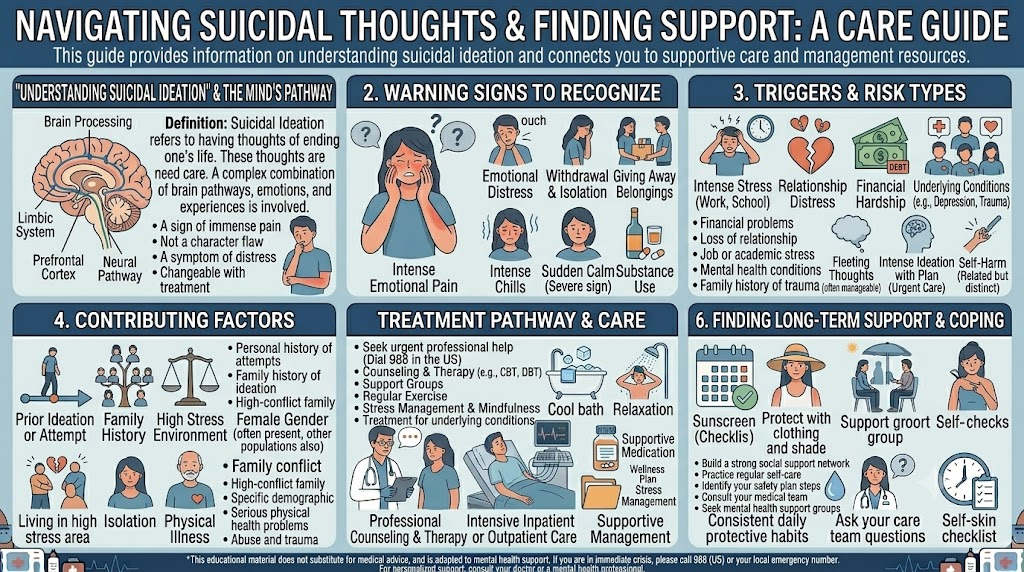
Suicide, or taking one's own life, is a tragic and often preventable outcome of overwhelming life situations. It can feel like there's no escape from pain or problems, leading to a mistaken belief that suicide is the only solution. However, effective steps can be taken to stay safe and rediscover enjoyment in life. Recognizing warning signs and seeking immediate professional help and treatment is crucial, as it can save lives.
Understanding the Condition
Suicide and Suicidal Thoughts: Understanding and Finding Help
Understanding the Condition
Common Symptoms
Talking About Suicide: Making statements like 'I'm going to kill myself,' 'I wish I were dead,' or 'I wish I hadn't been born.'
Mental Health Medications: For some individuals, medications designed to improve mood, reduce anxiety, or stabilize emotions can be prescribed by a doctor or psychiatrist. These medications help manage symptoms of underlying conditions, making it easier to engage in therapy and develop coping strategies. (Duration: Often taken for several months to years, with dosage and type monitored and adjusted by a medical professional.)
Support and Safety Planning
Safety Plan Development: Working with a professional to create a personalized written plan that outlines specific steps to take when suicidal thoughts arise or during a crisis. It includes identifying warning signs, coping strategies, and contacts for support and professional help. (Duration: Typically developed over one or more sessions and can be updated as needed.)
Support Groups: Joining groups with others who have similar experiences can provide a sense of community, reduce feelings of isolation, and offer shared wisdom, practical advice, and emotional support. (Duration: Ongoing, as long as beneficial for the individual.)
Consultation Guide
Prioritize Mental Health Treatment: Consistently seek and engage in treatment for any underlying mental health conditions, such as depression or substance abuse. Addressing these root causes is vital for preventing the recurrence of suicidal thoughts and fostering overall well-being.
Build a Strong Support Network: Actively connect with trusted friends, family, community groups, or spiritual organizations. Sharing your feelings, even when difficult, can reduce isolation and provide essential support during challenging times.
Recognize Personal Warning Signs: Learn to identify your own unique triggers and early indicators that your mental health might be declining or that suicidal thoughts are returning. Early recognition allows for prompt action and intervention.
Ongoing Support and Coping
Practice Healthy Coping Strategies: Develop and regularly use constructive ways to manage stress and difficult emotions. This can include exercise, mindfulness, creative hobbies, or other activities that promote mental and emotional resilience.
Diagnostic Procedures
Clinical Mental Health Assessment
This is a comprehensive evaluation conducted by a mental health professional to understand your thoughts, feelings, behaviors, and life circumstances. It's a conversation-based process, not a physical test, designed to assess your mental well-being, identify any underlying conditions, and determine the level of risk for suicide.
What to Expect
Treatment Options
Suicide, or taking one's own life, is a tragic and often preventable outcome of overwhelming life situations. It can feel like there's no escape from pain or problems, leading to a mistaken belief that suicide is the only solution. However, effective steps can be taken to stay safe and rediscover enjoyment in life. Recognizing warning signs and seeking immediate professional help and treatment is crucial, as it can save lives.
Seeking Means to End Life: Actively looking for ways to take one's own life, such as acquiring a firearm or collecting medications.
Social Withdrawal: Pulling away from friends, family, and social activities, preferring to be alone.
Extreme Mood Swings: Experiencing rapid shifts in emotions, such as being very happy one day and deeply despondent the next.
Preoccupation with Death: Constantly thinking or talking about death, dying, or violence.
Feeling Trapped or Hopeless: Believing there is no way out of a difficult situation or that nothing will ever get better.
Increased Substance Use: Drinking more alcohol or using more drugs than usual.
Changes in Routine: Significant alterations in daily habits, including eating patterns or sleep schedules.
Risky or Self-Destructive Behavior: Engaging in dangerous activities, like reckless driving or increased drug use.
Giving Away Possessions: Distributing personal belongings or getting affairs in order without a clear, logical reason.
Saying Unusual Goodbyes: Bidding farewell to people in a way that suggests they won't be seen again.
Personality Changes or Agitation: Developing noticeable shifts in personality, or showing severe anxiety or agitation, especially alongside other warning signs.
Consultation Guide
Which Specialist to Meet
You should seek help from a medical doctor or a mental health professional. A primary care doctor can provide an initial assessment and refer you to specialists like a psychiatrist (a medical doctor specializing in mental health who can prescribe medication) or a psychologist or licensed counselor (who provide talk therapy). In an emergency, go to the nearest emergency room.
Preparations Before Your Visit
Be prepared to openly discuss your feelings, thoughts about suicide, and any current struggles. It can be helpful to bring a trusted family member or friend for support. Make a list of any medications you are taking and be honest about your medical and mental health history, including any substance use.
Book a doctor visit near me
You will have a confidential discussion with the professional. They will ask a range of questions about your mood, energy levels, sleep and eating habits, past experiences, current stressors, and directly about any suicidal thoughts or plans. This is a safe space to share openly and honestly. The assessment aims to understand your unique situation and collaboratively develop a safety and treatment plan. It may take one or more sessions.
Psychotherapy (Talk Therapy): Engaging in regular sessions with a mental health provider to explore your issues, understand how your thoughts and behaviors affect your feelings, and learn healthy coping skills. This helps you gain control over your life and respond to challenges more effectively. (Duration: Duration varies widely, from a few weeks to several months or longer, depending on individual needs and progress.)
Remember Feelings Are Temporary: During periods of intense despair, remind yourself that these feelings are often temporary and will improve with time and treatment. Avoid making impulsive decisions and focus on taking one step at a time.
Limit Access to Harmful Means: If you or someone you know is at risk, remove or securely store firearms, excess medications, or other potentially harmful items. This creates a critical barrier during impulsive moments.
Maintain Regular Follow-Ups: Keep consistent appointments with your mental health professional and doctor. Regular check-ins ensure your progress is monitored, treatments are adjusted as needed, and your coping skills and safety plan remain effective.
Prevention & Long-Term Wellbeing
Prevention and Early Intervention
Tags & Topics
Notice an error or need an update?
Help us keep medical information accurate. Report incorrect info or suggest an edit.


