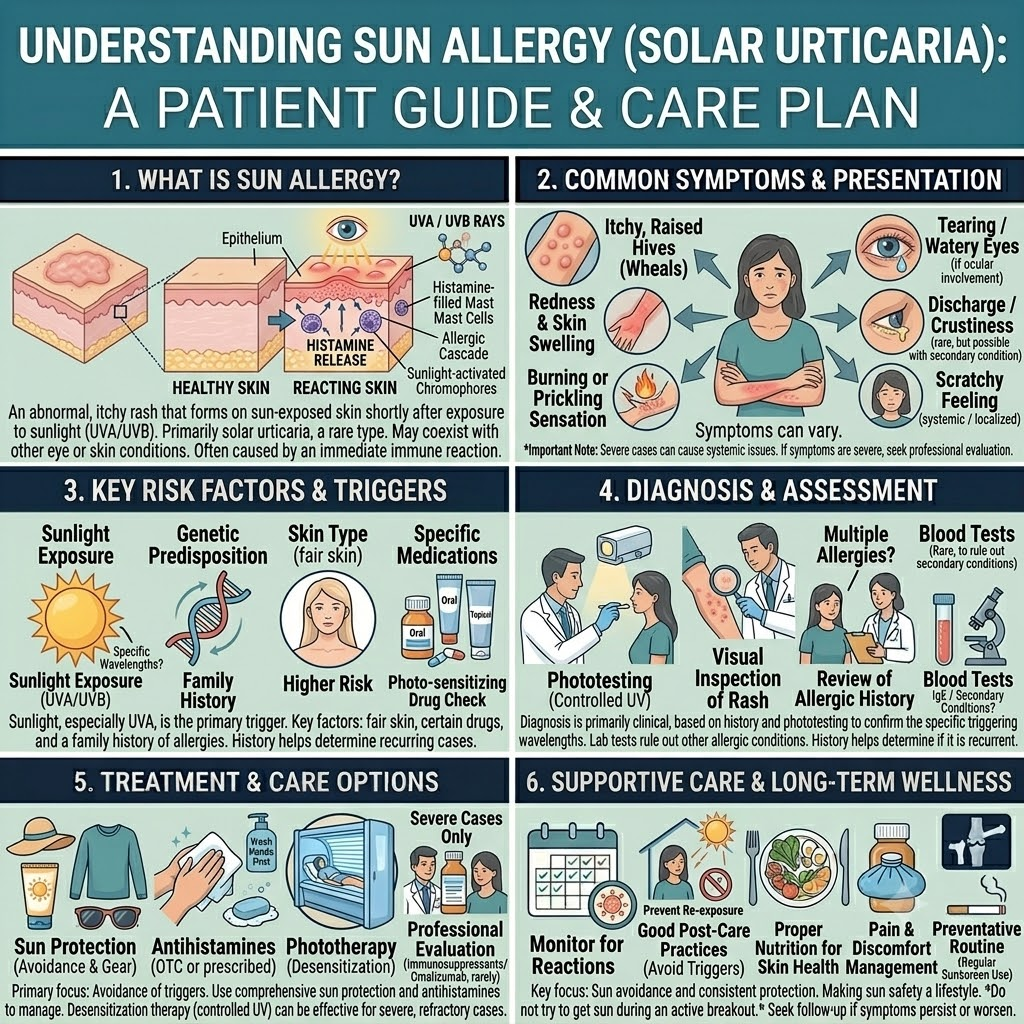
Sun allergy is a broad term describing various conditions where skin develops an itchy rash after exposure to sunlight or other sources of ultraviolet (UV) radiation. The most common form is polymorphous light eruption. For some individuals, sun allergy is inherited, while for others, symptoms emerge when triggered by factors like certain medications or contact with specific plants. In some cases, the reasons behind these sun-related reactions remain unclear. The immune system often plays a key role in these reactions. Mild sun allergy often resolves on its own, but more severe rashes may require medical treatment.
Understanding the Condition
Understanding Sun Allergy: Symptoms, Diagnosis, and Management
Understanding the Condition
Sun allergy is a broad term describing various conditions where skin develops an itchy rash after exposure to sunlight or other sources of ultraviolet (UV) radiation. The most common form is polymorphous light eruption. For some individuals, sun allergy is inherited, while for others, symptoms emerge when triggered by factors like certain medications or contact with specific plants. In some cases, the reasons behind these sun-related reactions remain unclear. The immune system often plays a key role in these reactions. Mild sun allergy often resolves on its own, but more severe rashes may require medical treatment.
Common Symptoms
Itchy Skin: An intense itching sensation, medically known as pruritus, is a common initial symptom. This can range from mild to severe and is often one of the most bothersome aspects of a sun allergy reaction.
Blisters or Hives: In more severe reactions, fluid-filled blisters can form, which may burst and crust over. Alternatively, hives, which are distinct, raised, red welts, may develop on the sun-exposed skin. These symptoms typically appear within minutes to hours after sun exposure.
Consultation Guide
Which Specialist to Meet
Initially, you should consult your primary care doctor (general practitioner) if you experience unusual or bothersome skin reactions after sun exposure. For persistent, severe symptoms, or to receive a definitive diagnosis and specialized treatment plan, it is recommended to see a dermatologist (a doctor specializing in skin disorders).
Preparations Before Your Visit
Before your appointment, gather information about your symptoms, including when they started, how long they last, and what appears to trigger them. Be ready to discuss your medical history, any medications you are currently taking (including over-the-counter drugs and supplements), and whether any blood relatives have similar sun sensitivities. Taking photos of your skin reaction at different stages can also be very helpful for the doctor.
Book a doctor visit near me
Before the procedure, the area to be biopsied will be cleaned, and a local anesthetic will be injected to numb your skin, ensuring you feel no pain during the sample collection. The type of biopsy performed depends on the nature of your symptoms and the location on your body.During a **shave biopsy**, a sterile scalpel or razor blade is used to carefully scrape away the outermost layers of the skin, removing the irregular tissue. Stitches are generally not required after this type of biopsy, and the wound typically heals with a flat scar.During a **punch biopsy**, a specialized round cutting tool is used to remove a small, cylindrical piece of skin that includes deeper layers. Depending on the size of the removed sample, one or more stitches may be needed to close the wound, which usually heals into a small, round scar.During an **excisional biopsy**, a scalpel is used to completely cut out an entire suspicious lump or an area of irregular skin, along with a small margin of surrounding healthy tissue. This type of biopsy usually requires stitches to close the incision, resulting in a linear scar.After the sample is collected, it will be sent to a laboratory for examination. Your doctor will provide instructions on how to care for the biopsy site, which may include keeping it clean and covered, until it heals.
Consultation Guide
Bumps and Patches: Small, raised bumps may appear on the skin. These tiny bumps can sometimes merge together to form larger, elevated patches of skin. The appearance can vary significantly based on skin tone and the specific cause.
Redness (Flushing): The affected skin area that has been exposed to the sun may become noticeably red, indicating inflammation. This redness can be a widespread flush across the exposed skin.
Diagnostic Procedures
A skin biopsy is a procedure to collect a small sample of skin tissue for laboratory analysis. This sample is examined under a microscope to help diagnose or rule out specific skin conditions and determine the type of sun allergy present.
What to Expect
Treatment Options
Waiting and Observation: For mild forms of sun allergy, the rash may clear up on its own without specific medical intervention. Avoiding further sun exposure is key during this period to allow the skin to heal. (Duration: Days to weeks)
Medications
Topical Corticosteroids: These are creams or ointments applied directly to the affected skin. They work by reducing inflammation, redness, and itching associated with the allergic reaction. (Duration: As prescribed by your doctor, typically short-term use for flare-ups)
Oral Corticosteroids: For more severe or widespread rashes, corticosteroid pills taken by mouth may be prescribed. These powerful anti-inflammatory medications help to quickly reduce significant inflammation and discomfort throughout the body. (Duration: As prescribed by your doctor, usually a short course (e.g., 5-10 days))
Identify and Avoid Triggers: If you know certain substances or medications worsen your sun allergy, make an effort to avoid them. Common triggers include specific fragrances, disinfectants, chemicals in some sunscreens, contact with plants like wild parsnip, limes, or certain medications such as tetracycline antibiotics, sulfa-based drugs, and some pain relievers like ketoprofen.
Apply UV-Blocking Window Film: Consider applying UV-blocking films to the windows in your home and car. This helps reduce UV radiation exposure indoors and while driving, offering an additional layer of protection.
Ongoing Self-Monitoring: Continuously observe your skin's reaction to sun exposure and adjust your preventive measures as needed. Keep a record of triggers and effective strategies.
Regular Doctor Check-ups: For individuals with severe, recurrent, or difficult-to-manage sun allergies, regular follow-up appointments with a dermatologist are beneficial to monitor the condition, adjust treatment plans, and ensure effective long-term management.
Prevention & Long-Term Wellbeing
Prevention
Strategic Sun Exposure: Avoid direct sun exposure during peak hours, typically between 10 a.m. and 4 p.m., when UV rays are strongest. Schedule outdoor activities for earlier mornings or late afternoons. If you must be outside, seek shade whenever possible. For seasonal sun allergy, gradually increase your time outdoors at the start of sunny seasons to allow your skin to adapt.
Wear Protective Clothing: Shield your skin with long-sleeved shirts, long pants, and wide-brimmed hats. Choose clothing made from tightly woven fabrics, as loose weaves or thin materials may allow UV rays to pass through. Don't forget sunglasses to protect your eyes and delicate skin around them.
Regular Sunscreen Use: Apply a broad-spectrum, water-resistant sunscreen with a Sun Protection Factor (SPF) of at least 30, even on cloudy days. Apply generously to all exposed skin at least 15-30 minutes before going outside and reapply every two hours, or more often if swimming or sweating. For sensitive skin, sunscreens containing physical blockers like zinc oxide or titanium dioxide are often recommended and should be applied as the last layer over other products (except insect repellent).
Tags & Topics
Notice an error or need an update?
Help us keep medical information accurate. Report incorrect info or suggest an edit.


