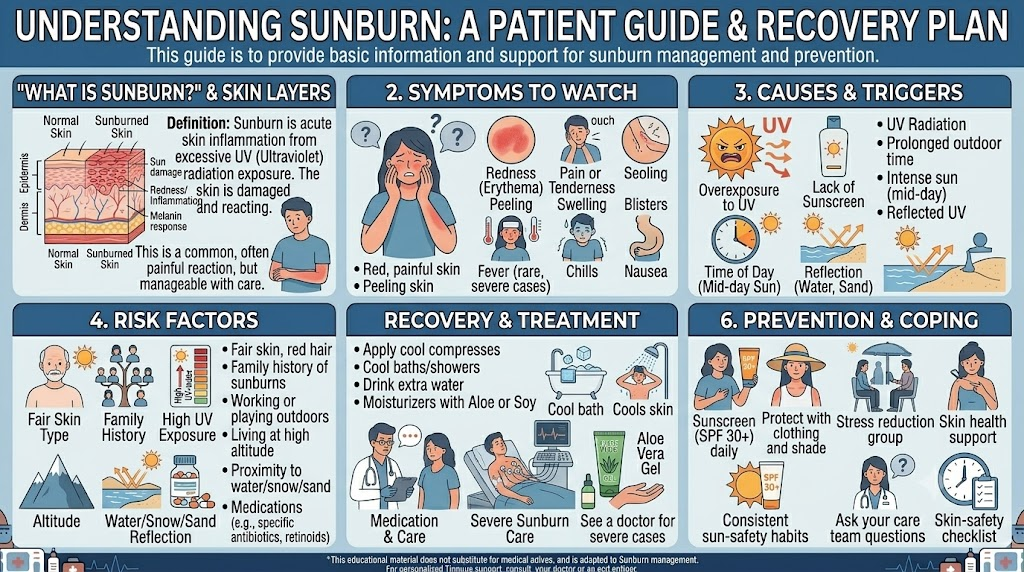
Sunburn is an inflammatory reaction of the skin caused by overexposure to ultraviolet (UV) radiation from sunlight or artificial sources like tanning beds. It damages skin cells, prompting the immune system to increase blood flow to the affected areas, leading to warm, painful, and red or inflamed skin. Over time, repeated UV exposure destroys collagen and elastin fibers, speeding up the aging process (photoaging) and significantly raising the risk of precancerous skin lesions and skin cancers, including melanoma.
Understanding the Condition
Common Symptoms
Inflamed Skin: Skin appears pink or red on lighter skin tones, and may feel warm or hot to the touch. On brown or Black skin, this inflammation may be less visible but will still feel tender and hot.
Pain, Tenderness, and Itching: The burned area is highly sensitive to touch, pressure, or movement, often accompanied by a persistent itching sensation.
Blistering: Small, fluid-filled blisters may develop on the surface of the skin, which can eventually rupture and peel.
Systemic Symptoms: Severe sunburn can cause flu-like symptoms, including fever, chills, headache, nausea, and extreme fatigue.
Ocular Sunburn: The eyes can become sunburned, feeling painful, dry, gritty, or highly sensitive to light.
Premature Aging and Spots: Long-term UV damage leads to deep wrinkles, dry texture, visible fine red veins, freckles, and dark spots (solar lentigines) on highly exposed areas.
Consultation Guide
Which Specialist to Meet
For severe burns, blistering, or systemic symptoms, see a primary care physician. For long-term sun damage, suspicious spots, or annual skin checks, consult a board-certified dermatologist.
Preparations Before Your Visit
Before your visit, note when the sunburn or skin changes occurred, list any systemic symptoms like fever, and compile a list of all medications, supplements, or cosmetics you currently use, as some can increase sun sensitivity.
Book a doctor visit near me
Consultation Guide
Sunburn is an inflammatory reaction of the skin caused by overexposure to ultraviolet (UV) radiation from sunlight or artificial sources like tanning beds. It damages skin cells, prompting the immune system to increase blood flow to the affected areas, leading to warm, painful, and red or inflamed skin. Over time, repeated UV exposure destroys collagen and elastin fibers, speeding up the aging process (photoaging) and significantly raising the risk of precancerous skin lesions and skin cancers, including melanoma.
Hydration Support: Drinking extra water to replenish lost fluids and prevent systemic dehydration caused by fluid draw to the skin surface. (Duration: Throughout the healing process, typically 3 to 7 days.)
Cryotherapy: Using liquid nitrogen to freeze and destroy precancerous skin patches (actinic keratoses) caused by chronic sun exposure. (Duration: A rapid, in-office procedure lasting a few minutes per spot; treated areas heal within 1 to 3 weeks.)
Topical Prescription Therapies: Creams that stimulate the immune system or deliver localized chemotherapy to clear widespread precancerous sun damage. (Duration: Typically applied daily at home for a cycle of 2 to 6 weeks as prescribed.)
Avoid Artificial UV Exposure: Do not use tanning beds or sunlamps. Artificial UV light causes the same cellular damage and premature aging as natural sunlight.
Diagnostic Procedures
Visual Skin Examination
A thorough physical examination of the affected skin to evaluate the severity of the burn or identify signs of chronic sun damage.
What to Expect
The doctor will inspect your skin under bright light, assessing the depth of the burn, checking for blisters, and scanning for atypical moles or spots.
A non-invasive diagnostic technique using a specialized magnifying tool to examine skin lesions and pigment patterns up close.
What to Expect
The specialist will place a small, lighted magnifying device directly over suspicious spots or patches of sun damage to check for structural changes indicative of skin cancer.
A minor procedure to remove a small sample of skin if the doctor suspects a precancerous lesion (actinic keratosis) or skin cancer.
What to Expect
The area is numbed with a local anesthetic. The doctor removes a small tissue sample, which is sent to a lab for analysis. You may require a tiny stitch or a small bandage.
Treatment Options
Sunburn and Sun Damage: Prevention, Treatment, and Long-Term Skin Health
Understanding the Condition
Home Remedies and Self-Care
Cool Compresses and Baths: Applying clean, cool damp towels or taking cool baths to lower the skin's temperature and soothe irritation. (Duration: Apply for 10 to 15 minutes several times a day until the acute pain and heat subside.)
Medications
Oral Anti-Inflammatory Agents: Over-the-counter pain relievers to reduce swelling, inflammation, and physical discomfort. (Duration: First 48 to 72 hours following sun exposure.)
Topical Corticosteroid Creams: Prescription or mild over-the-counter creams applied directly to inflamed areas to decrease swelling and pain. (Duration: Apply sparingly for 2 to 5 days; do not use on open blisters.)
Dermatological Procedures
Prevention & Long-Term Wellbeing
Sun Protection Strategies
Broad-Spectrum Sunscreen Application: Apply a water-resistant, broad-spectrum sunscreen with an SPF of at least 30 to all exposed skin 30 minutes before going outdoors. Reapply every two hours, or more frequently if swimming or sweating.
Avoid Peak Radiation Hours: Limit direct exposure to the sun between 10 a.m. and 4 p.m., when ultraviolet rays are at their strongest.
Wear Protective Clothing: Cover up with dark, tightly woven clothing, wide-brimmed hats, and UV-blocking sunglasses to shield sensitive areas like the scalp, eyes, and neck.
Long-Term Skin Monitoring
Routine Skin Self-Examinations: Perform monthly skin checks to monitor for new, changing, or growing spots, moles, or rough patches. Early detection of changes reduces skin cancer risks.
Tags & Topics
Notice an error or need an update?
Help us keep medical information accurate. Report incorrect info or suggest an edit.


