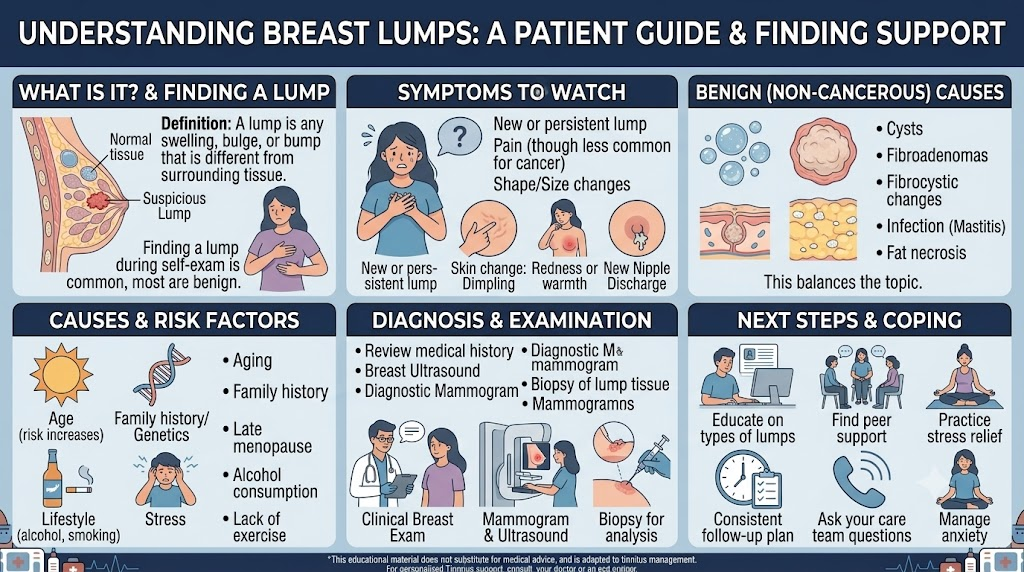
A breast lump is a growth of tissue within the breast. While most breast lumps are harmless (benign) and not cancerous, it is crucial to have any new or changing lump evaluated promptly by a healthcare professional.
Understanding the Condition
Understanding Breast Lumps
Understanding the Condition
A breast lump is a growth of tissue within the breast. While most breast lumps are harmless (benign) and not cancerous, it is crucial to have any new or changing lump evaluated promptly by a healthcare professional.
Common Symptoms
Normal Breast Tissue and Minor Changes: Breast tissue naturally varies and can feel lumpy or ropy. Tenderness often changes with the menstrual cycle.
Concerning Changes to Look For: If you notice changes in how your breasts usually feel, it's important to seek medical advice. These changes can include: a new lump that feels round, smooth, and firm; a lump that feels firm and moves easily under the skin (though this can also be benign); a hard lump with irregular edges that feels fixed; skin changes like dimpling (resembling an orange peel), redness, or altered color; new changes in breast size or shape; fluid leaking from the nipple, especially if clear or bloody; a nipple turning inward (inversion); or swelling of lymph nodes in the armpit or near the collarbone.
Consultation Guide
Which Specialist to Meet
Start with your primary care physician, who may then refer you to a specialist such as a breast surgeon, radiologist, or oncologist for further evaluation.
Preparations Before Your Visit
Before your appointment, gather your medical history, including any previous breast issues, family history of breast cancer, and the timing of your menstrual periods. List all medications you are currently taking. Be prepared to describe when you first noticed the lump, if it has changed, and any associated symptoms. Write down any questions you have for your doctor.
Book a doctor visit near me
Medication (for Fibrocystic Changes): Over-the-counter pain relievers or hormonal adjustments may help manage discomfort and tenderness. (Duration: As needed for symptom relief, potentially ongoing during menstrual cycles.)
Consultation Guide
Each breast is placed on a special platform and compressed between two plates for a few seconds while X-ray images are taken. This can cause brief discomfort or pressure.
Uses sound waves to create images of the breast. It's often used to determine if a lump is solid or fluid-filled (a cyst).
Screening Mammograms: Follow recommended guidelines for regular mammograms, typically starting at age 40 or 50, or earlier if you have specific risk factors.
Diagnostic Procedures
A physical examination where your doctor carefully feels your breasts and armpits for lumps or other changes.
What to Expect
You will lie down or sit while your doctor gently examines your breasts, armpits, and collarbone area with their hands to check for any abnormalities.
An X-ray of the breast tissue used to detect changes that may be too small to feel.
What to Expect
What to Expect
You will lie down, and a gel will be applied to your breast. A handheld device (transducer) will be moved over the skin to capture images. This procedure is usually painless.
Breast MRI (Magnetic Resonance Imaging)
Uses powerful magnets and radio waves to create detailed images of breast tissue. Often used for high-risk individuals or when other tests are inconclusive.
What to Expect
You will lie face down on a padded table that slides into a large, tunnel-like machine. A contrast dye may be injected into your arm vein. The machine can be noisy, and you may be given headphones. The procedure typically lasts 30-60 minutes.
Biopsy (Tissue Sample)
A procedure where a small sample of breast tissue is removed for examination under a microscope to determine if cells are cancerous.
What to Expect
Adherence to Treatment: If diagnosed with a breast condition, follow your treatment plan and attend all follow-up appointments.
Treatment Options
Observation: Many benign lumps (like small cysts or fibroadenomas) are monitored over time with regular check-ups and imaging. (Duration: Ongoing, as advised by your doctor.)
Cyst Aspiration: Fluid is drained from a breast cyst using a fine needle. (Duration: A single procedure, often providing immediate relief.)
Antibiotics (for Infections/Abscesses): Oral medication to clear bacterial infections. (Duration: Typically 7-14 days.)
Abscess Drainage: Surgical incision and drainage of a pus-filled pocket. (Duration: A single procedure, with follow-up wound care for several days to weeks.)
Surgery: Removal of the cancerous lump (lumpectomy) or the entire breast (mastectomy), often with lymph node assessment. (Duration: A single procedure, followed by a recovery period of weeks.)
Radiation Therapy: Uses high-energy rays to kill cancer cells, usually after surgery. (Duration: Typically daily treatments over several weeks.)
Chemotherapy: Medications given orally or intravenously to kill cancer cells throughout the body. (Duration: Cycles typically last several months, depending on the type and stage of cancer.)
Hormone Therapy: Medications that block or reduce hormones that can fuel certain types of breast cancer. (Duration: Often taken for 5-10 years.)
Targeted Therapy: Medications that specifically target vulnerabilities in cancer cells. (Duration: Varies, often given over months or years, sometimes alongside other treatments.)
Prevention & Long-Term Wellbeing
There are different types of biopsies:- Fine Needle Aspiration (FNA): A very thin needle is used to extract fluid or cells from a lump. After numbing the area, a thin needle is inserted into the lump, often guided by ultrasound, to withdraw a sample. It's a quick procedure.- Core Needle Biopsy: A slightly larger, hollow needle is used to remove small tissue cylinders (cores). The area is numbed, and a small incision may be made. A spring-loaded needle is used to collect several tissue samples, often guided by imaging. You may feel pressure. A small marker might be left to identify the site.- Surgical (Excisional) Biopsy: The entire lump, or a portion of it, is surgically removed. Performed under local or general anesthesia, a surgeon makes an incision to remove the lump and some surrounding tissue. Stitches close the wound. Recovery involves managing discomfort and following wound care instructions.
Surgical Removal: The lump is surgically excised for larger fibroadenomas, intraductal papillomas, or persistent benign lumps. (Duration: A single surgical procedure with a recovery period of several days to weeks.)
Prevention (of Cancerous Lumps/Breast Cancer Risk)
Maintain a Healthy Weight: Aim for a healthy body mass index, especially after menopause.
Engage in Regular Physical Activity: Strive for at least 150-300 minutes of moderate-intensity exercise weekly.
Limit Alcohol Intake: If you drink alcohol, do so in moderation (up to one drink per day for women).
Balanced Diet: Focus on fruits, vegetables, whole grains, and lean proteins; limit processed foods, sugary drinks, and unhealthy fats.
Discuss Hormone Use: Talk to your doctor about the risks and benefits of hormonal birth control and menopausal hormone therapy.
Consider Breastfeeding: If possible, breastfeeding may offer a slight protective benefit against breast cancer.
Long-Term Monitoring and Management
Regular Self-Exams: Become familiar with how your breasts normally look and feel, and report any changes to your doctor.
Clinical Breast Exams: Have regular breast examinations by a healthcare professional as part of your routine check-ups.
Understand Your Risk: If you have a benign breast condition that increases cancer risk (e.g., atypical hyperplasia), discuss personalized screening and prevention strategies with your doctor.
Tags & Topics
Notice an error or need an update?
Help us keep medical information accurate. Report incorrect info or suggest an edit.


