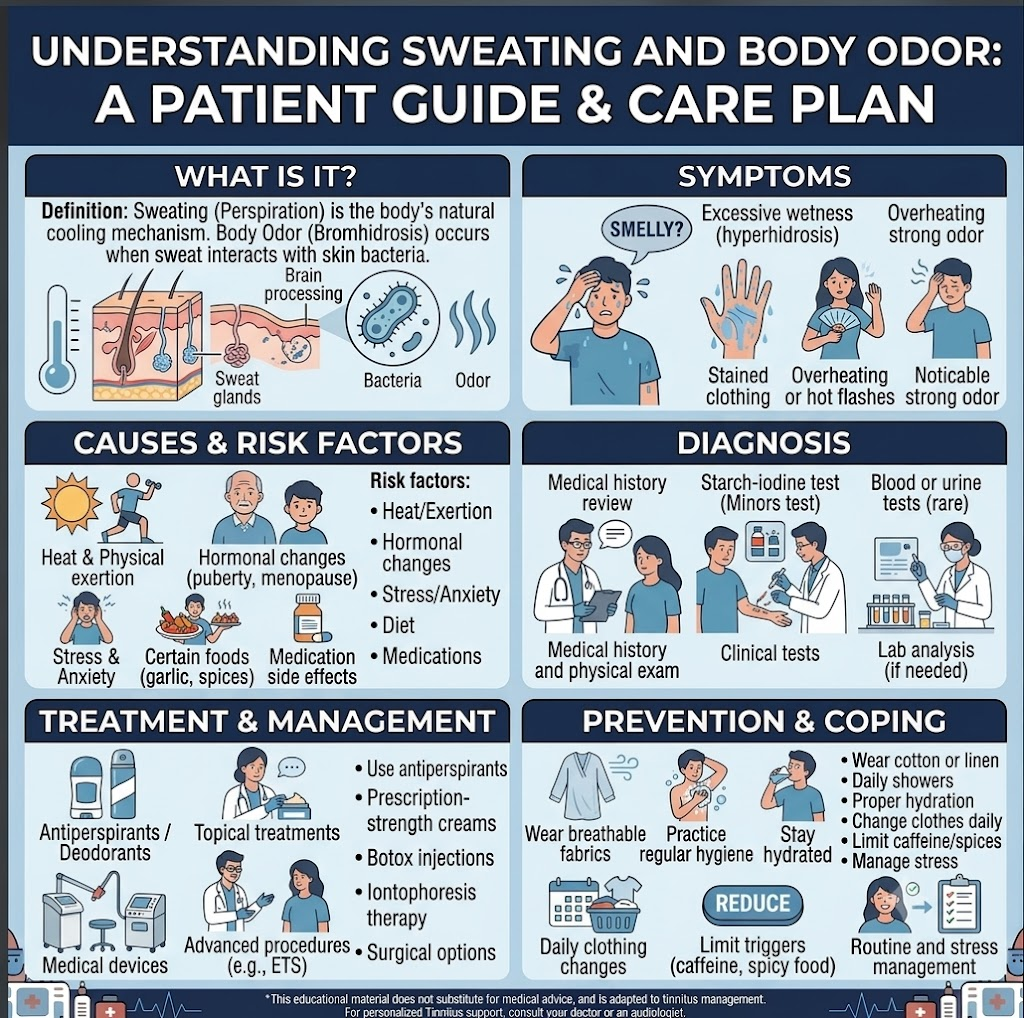
Sweating is a natural and vital process your body uses to cool itself, primarily when you're warm, exercising, or experiencing stress. Most people have a natural body odor, even with minimal sweating. This odor becomes noticeable when sweat mixes with bacteria on the skin. While often a normal bodily function, significant changes in how much you sweat or a sudden shift in your body odor can sometimes signal an underlying health issue. Excessive sweating, a condition known as hyperhidrosis, can significantly impact daily life. Understanding the causes and available management strategies can help you address these concerns.
Understanding the Condition
Understanding Sweating and Body Odor
Understanding the Condition
Common Symptoms
Night Sweats: Waking up drenched in sweat, even when your bedroom is cool and you haven't exercised or been unwell, can be a symptom that warrants medical attention, as it may be linked to certain underlying health conditions or hormonal changes.
Consultation Guide
Which Specialist to Meet
Initially, consult your family doctor or general practitioner. They can assess your symptoms and, if needed, refer you to a dermatologist (a skin specialist) for issues related to excessive sweating or a change in odor, or an endocrinologist (a specialist in hormones) if a hormonal imbalance is suspected.
Preparations Before Your Visit
Before your visit, it's helpful to: 1) Keep a diary of when you sweat excessively or notice changes in odor, noting triggers like stress, specific foods, or physical activity. 2) List any other symptoms you are experiencing. 3) Make a list of all medications, supplements, and herbal remedies you are currently taking. 4) Be prepared to discuss your medical history and any relevant family history.
Book a doctor visit near me
Your doctor will discuss your symptoms, medical history, and lifestyle habits. They will likely ask about when your symptoms started, how often they occur, what makes them better or worse, and how they impact your daily life. A physical examination may also be performed.
During this initial visit, you will answer questions about your health and symptoms. The doctor may examine areas where you experience excessive sweating or odor to look for skin changes or other visible signs. This is a conversation-based assessment aimed at understanding your condition.
Dietary Modifications: Some foods and drinks, such as spicy foods, caffeine, and alcohol, can trigger sweating in some individuals. Identifying and limiting these triggers may help reduce symptoms. (Duration: Ongoing, as needed)
Stress Management: Since stress can trigger sweating, practicing relaxation techniques like deep breathing, meditation, or yoga can help reduce stress-induced sweating. (Duration: Ongoing, daily practice)
Regular Medical Check-ups: If your sweating or body odor is linked to an underlying health condition (like thyroid issues or diabetes), consistent management and monitoring of that condition are essential for controlling related symptoms.
Stay Hydrated and Cool: Drinking plenty of water helps regulate body temperature. Avoiding prolonged exposure to heat and wearing appropriate clothing can minimize normal sweating and discomfort.
Consultation Guide
Sweating is a natural and vital process your body uses to cool itself, primarily when you're warm, exercising, or experiencing stress. Most people have a natural body odor, even with minimal sweating. This odor becomes noticeable when sweat mixes with bacteria on the skin. While often a normal bodily function, significant changes in how much you sweat or a sudden shift in your body odor can sometimes signal an underlying health issue. Excessive sweating, a condition known as hyperhidrosis, can significantly impact daily life. Understanding the causes and available management strategies can help you address these concerns.
Excessive Sweating (Hyperhidrosis): This refers to sweating much more than is necessary for your body to regulate its temperature. It can occur without a clear trigger and might affect specific areas like the underarms, palms, soles of the feet, head, face, or groin, or even the entire body. It might be noticeable enough to disrupt daily activities, stain clothes, or cause skin irritation.
Blood tests may be ordered to check for underlying medical conditions that can cause excessive sweating or changes in body odor. These can include tests for thyroid function, blood sugar levels (to rule out diabetes), or other hormonal imbalances.
Diagnostic Procedures
Clinical Assessment and History
What to Expect
Sweat Test (Thermoregulatory Sweat Test)
This specialized test helps identify and map areas of excessive sweating across the body. It can be used to diagnose generalized hyperhidrosis or to understand sweat gland function.
What to Expect
You will be covered with a special powder that changes color in the presence of sweat. You may then be placed in a controlled, warm environment or engage in light activity. The doctor or technician will observe the color changes on your skin to identify the exact locations and patterns of your sweating. The test is non-invasive, though you might feel warm due to the controlled environment.
Urinalysis (Urine Test)
A urinalysis is a test of your urine used to detect and manage a wide range of disorders, such as urinary tract infections, kidney disease, and diabetes, all of which can sometimes contribute to changes in body odor or overall health affecting sweating.
What to Expect
You will be asked to provide a urine sample in a sterile cup, typically after cleaning the genital area. The sample is then sent to a lab where it will be examined for its appearance (color, clarity), concentration, and content (e.g., presence of protein, sugar, blood, or bacteria). The process is quick and non-invasive.
What to Expect
A healthcare professional will draw a small sample of blood, usually from a vein in your arm, using a needle. You might feel a brief sting or pinch. The blood sample is then sent to a laboratory for analysis. The procedure typically takes only a few minutes.
Treatment Options
Medications
Prescription Antiperspirants: Stronger antiperspirants containing higher concentrations of active ingredients (like aluminum chloride) can be prescribed. These are applied to affected areas, often overnight. (Duration: Daily or several times a week, as directed)
Topical Creams: Certain creams or wipes may be prescribed to reduce sweat and odor in specific areas. Some contain agents that block sweat glands or reduce bacterial growth. (Duration: Daily or as directed)
Oral Medications: For generalized excessive sweating, doctors may prescribe oral medications that help block the chemical signals that stimulate sweat glands throughout the body. These must be taken under medical supervision due to potential side effects. (Duration: Daily, as prescribed)
Procedures and Therapies
Iontophoresis: This procedure uses a device that delivers a low-level electrical current through water to the hands or feet, temporarily blocking sweat glands. It is effective for treating excessive sweating in these areas. (Duration: Multiple sessions per week initially, then maintenance sessions as needed (e.g., weekly or bi-weekly))
Botulinum Toxin Injections: Injections of a specific neurotoxin into the skin can temporarily block the nerves that activate sweat glands. This is commonly used for underarm sweating but can also be applied to hands and feet. (Duration: Effective for 4-12 months, then repeat injections are needed)
Microwave Energy Devices: Certain devices use targeted microwave energy to destroy sweat glands in the underarm area, offering a more permanent reduction in sweating. (Duration: Typically 1-2 sessions, with results lasting long-term)
Surgical Procedures
Sweat Gland Removal: For severe underarm sweating, sweat glands can be removed through various surgical techniques, such as curettage (scraping), liposuction, or excision (cutting them out). (Duration: One-time procedure, results are typically permanent for the treated area)
Sympathectomy: This is a more invasive surgical procedure where nerves that control sweating are cut, clipped, or destroyed. It is typically reserved for very severe cases of hand or facial sweating that haven't responded to other treatments. (Duration: One-time procedure, results are typically permanent, but can have side effects like compensatory sweating in other areas)
Prevention & Long-Term Wellbeing
Changes in Body Odor: Body odor naturally varies among individuals and can smell tangy, oniony, sour, or otherwise strong. However, a sudden or unusual change in your typical body odor, especially if persistent and not related to diet or hygiene, could indicate a health problem. This odor typically develops when sweat from certain glands (apocrine glands in areas like armpits and groin) mixes with bacteria on the skin.
Home Remedies and Lifestyle Adjustments
Daily Hygiene: Bathing daily with antibacterial soap can reduce bacteria on the skin. Thoroughly dry your body, especially sweat-prone areas. Using over-the-counter antiperspirants, which reduce sweat production, is often the first step for managing underarm sweat and odor. (Duration: Ongoing, daily)
Clothing Choices: Wear loose-fitting clothing made from natural, breathable fabrics like cotton, linen, or wool. These materials allow air circulation and wick away moisture, helping to keep skin dry. Change clothes frequently, especially after sweating. (Duration: Ongoing, daily)
Prevention and Long-Term Monitoring
Maintain Good Hygiene: Consistent daily bathing and the use of antiperspirants or deodorants, especially in areas prone to sweating, are crucial for preventing odor and managing sweat levels.
Identify and Avoid Triggers: Pay attention to what makes you sweat more or influences your body odor. This could include certain foods, drinks, stressful situations, or clothing types. Modifying these aspects can significantly improve comfort.
Tags & Topics
Notice an error or need an update?
Help us keep medical information accurate. Report incorrect info or suggest an edit.


